
Making a traditional English toffee recipe at home is one of the most rewarding culinary projects you can undertake in your kitchen. This beloved confection delivers an unmistakable golden crunch, marrying the deep caramel notes of simmered brown sugar with rich dairy butter. When poured into a smooth slab and dressed with melted chocolate and toasted chopped almonds, each bite provides a balance of snappy brittle texture, velvety cocoa, and roasted nut flavor.
Whether you are assembling festive gift tins, setting out party dessert platters, or simply craving an old-fashioned candy-counter treat, this recipe offers reliable results without unnecessary complication. With a dependable heavy-bottomed pan and a candy thermometer, you can confidently turn basic pantry staples into an unforgettable homemade confection.
Table of Contents
Why You’ll Love This Recipe
- Authentic snap and texture: Boiling the sugar-butter mixture to the hard-crack stage guarantees a crisp, brittle bite that never sticks stubbornly to your teeth.
- Balanced butterscotch flavor: Using light brown sugar introduces rich molasses undertones that complement the salty, creamy dairy butter base.
- Straightforward pantry ingredients: Requires only butter, sugar, water, and simple aromatic accents to build complex flavor from scratch.
- Exceptional gift longevity: The finished candy holds its signature crunch for weeks at room temperature when kept dry and sealed.
Key Ingredients & Substitutions
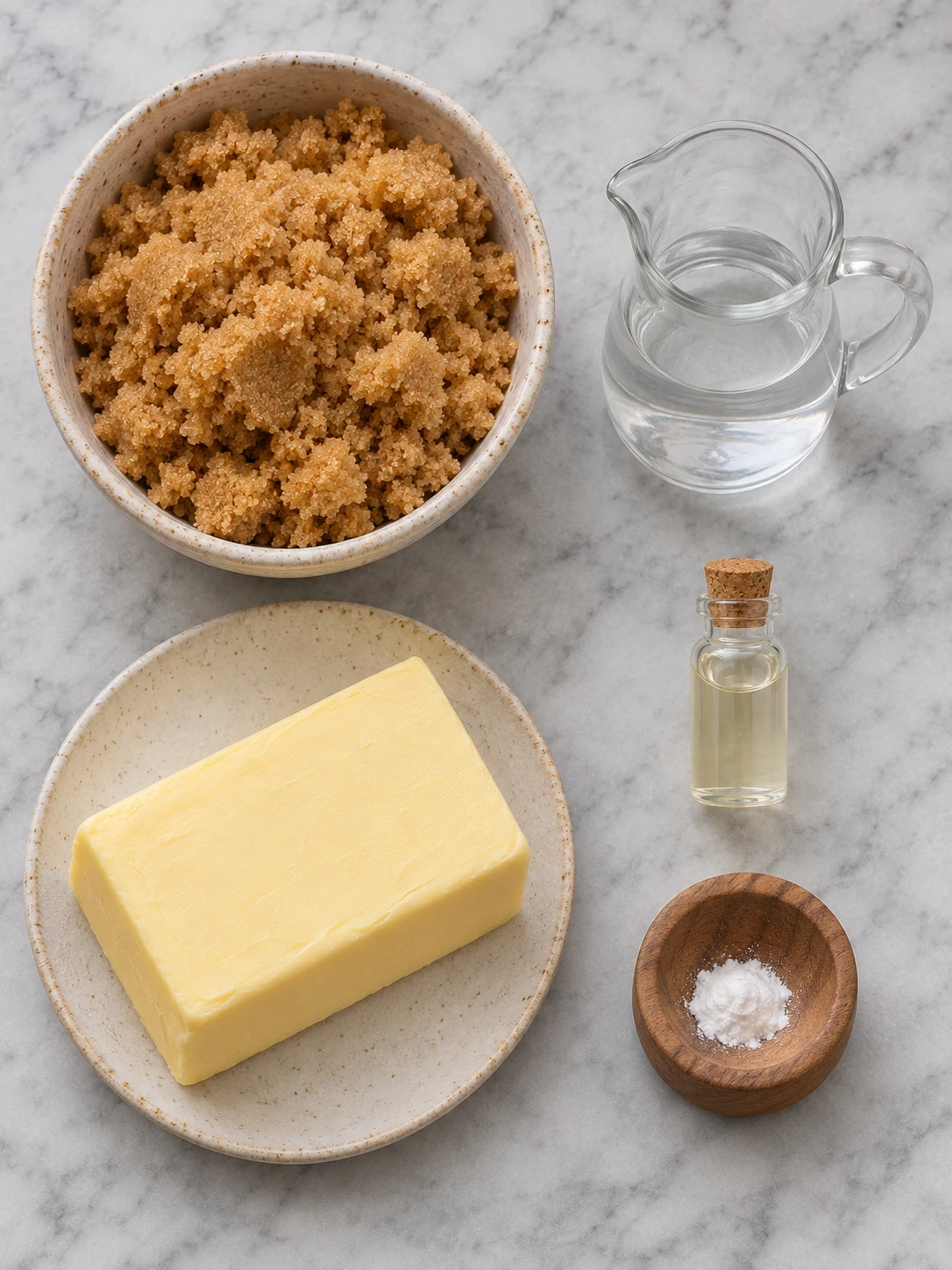
Every ingredient in this English toffee recipe serves an essential chemical or textural purpose during the boiling and cooling phases.
- Light Brown Sugar: Provides both sucrose for candy structure and a touch of residual molasses for color and depth. Dark brown sugar can be used for a more pronounced molasses profile, though light brown creates the classic golden toffee hue.
- Salted Butter: Butter provides emulsified dairy fats that soften the sugar brittle slightly, creating a tender crunch rather than glass-like hard candy. The inherent salt in salted butter cuts through the intense sweetness of cooked sugar. If using unsalted butter, stir in 1/4 teaspoon of fine sea salt during the initial melt.
- Water: Hydrates the sugar granules at the beginning of cooking, ensuring that the crystals dissolve completely before reaching a full boil. This step is vital to prevent graininess.
- Cream of Tartar (Optional): An acidic stabilizer that hydrolyzes a small portion of the sucrose into glucose and fructose (invert sugar). This chemical barrier prevents sugar crystals from latching together and turning the syrup grainy. A few drops of fresh lemon juice can serve the same purpose.
- Lemon Extract: Adds a subtle touch of citrus brightness that cuts through the dense dairy richness of the hot candy base without overwhelming the caramelized taste.
For the classic finishing layer, you can spread semi-sweet chocolate chips directly over the hot toffee slab immediately after pouring. The residual heat melts the chocolate in minutes, allowing you to smooth it out with a spatula and scatter chopped toasted almonds over the surface.
Step-by-Step Instructions
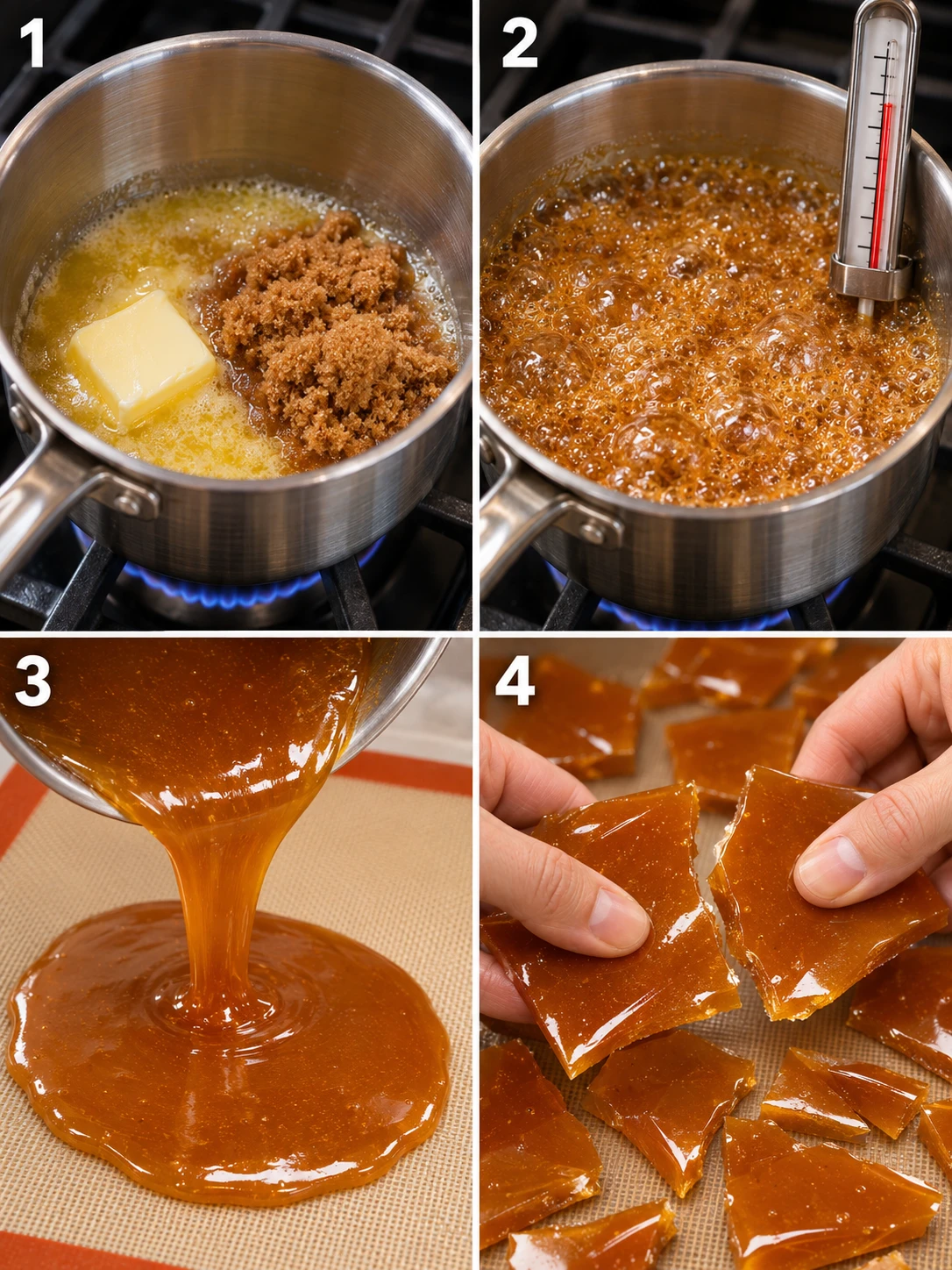
1. Combine the light brown sugar, water, and salted butter in a medium saucepan and place it over low heat, stirring until the sugar has dissolved.
2. Bring the mixture to a boil, then reduce the heat to medium-low and simmer for 5-8 minutes, or until the mixture reaches 220°F (105°C).
3. Increase the heat to medium and continue cooking, stirring occasionally, until the mixture reaches the hard crack stage (300-310°F / 150°C) on a candy thermometer.
4. Remove the saucepan from the heat and stir in the lemon extract and cream of tartar (if using).
5. Pour the toffee mixture into a prepared pan, such as a silicone mat or a greased piece of parchment paper, and let it cool and set for 10 minutes.
6. Break the toffee into pieces and serve.
Expert Chef Tips & Troubleshooting
Candy making is fundamentally an exercise in moisture reduction and temperature control. Understanding the transition points of boiled sugar will ensure your toffee turns out crisp rather than chewy or oily.
Temperature Accuracy and Tools
A reliable candy thermometer is the best tool for this recipe. Unlike savory cooking where you monitor safe minimum internal temperatures on a safe internal temperature chart to verify food safety, confectionery cooking uses temperature exclusively to measure moisture evaporation. At 300°F to 310°F (150°C), virtually all water has evaporated from the syrup, leaving pure cooked sugar and butterfat that solidify into a hard, brittle state upon cooling.
Ensure the bulb of your thermometer is fully submerged in the bubbling liquid without resting directly against the hot metal base of the pan, which can generate a falsely elevated reading.
Preventing Separation (Butter Break)
One common challenge when boiling toffee is “breaking,” where liquid butter separates from the sugar syrup and floats on top in an oily sheen. This separation typically happens when the heat is increased too rapidly or if the pan bottom develops hot spots.
- Always use a heavy-bottomed stainless steel or enameled cast iron saucepan that distributes heat evenly across the entire surface.
- Maintain steady, moderate heat. Do not rush the cooking time by cranking the burner to high.
- If you notice butterfat separating slightly around 250°F to 260°F, reduce the heat slightly and stir steadily and gently with a heatproof silicone spatula to re-emulsify the mixture.
Adding the Chocolate and Almond Topping
If you love holiday confectionery like saltine-based Christmas Crack, you will appreciate how authentic boiled sugar toffee delivers an even richer caramelized depth. To add the traditional chocolate and almond finish:
1. As soon as you pour the hot toffee onto your prepared silicone mat or parchment-lined baking sheet, scatter one cup of semi-sweet chocolate chips evenly across the surface.
2. Allow the chips to sit undisturbed for 3 to 5 minutes so the rising heat from the toffee softens the cocoa butter.
3. Use an offset spatula to spread the melted chocolate into an even, glossy sheet.
4. Immediately sprinkle half a cup of finely chopped toasted almonds over the wet chocolate, pressing gently so the nuts adhere firmly as the chocolate sets.
Much like our favorite Christmas Crack Recipe, this homemade confection makes an exceptional gift during the winter holidays and holds up well when shipped in decorative tins.
Storage, Make-Ahead & Reheating
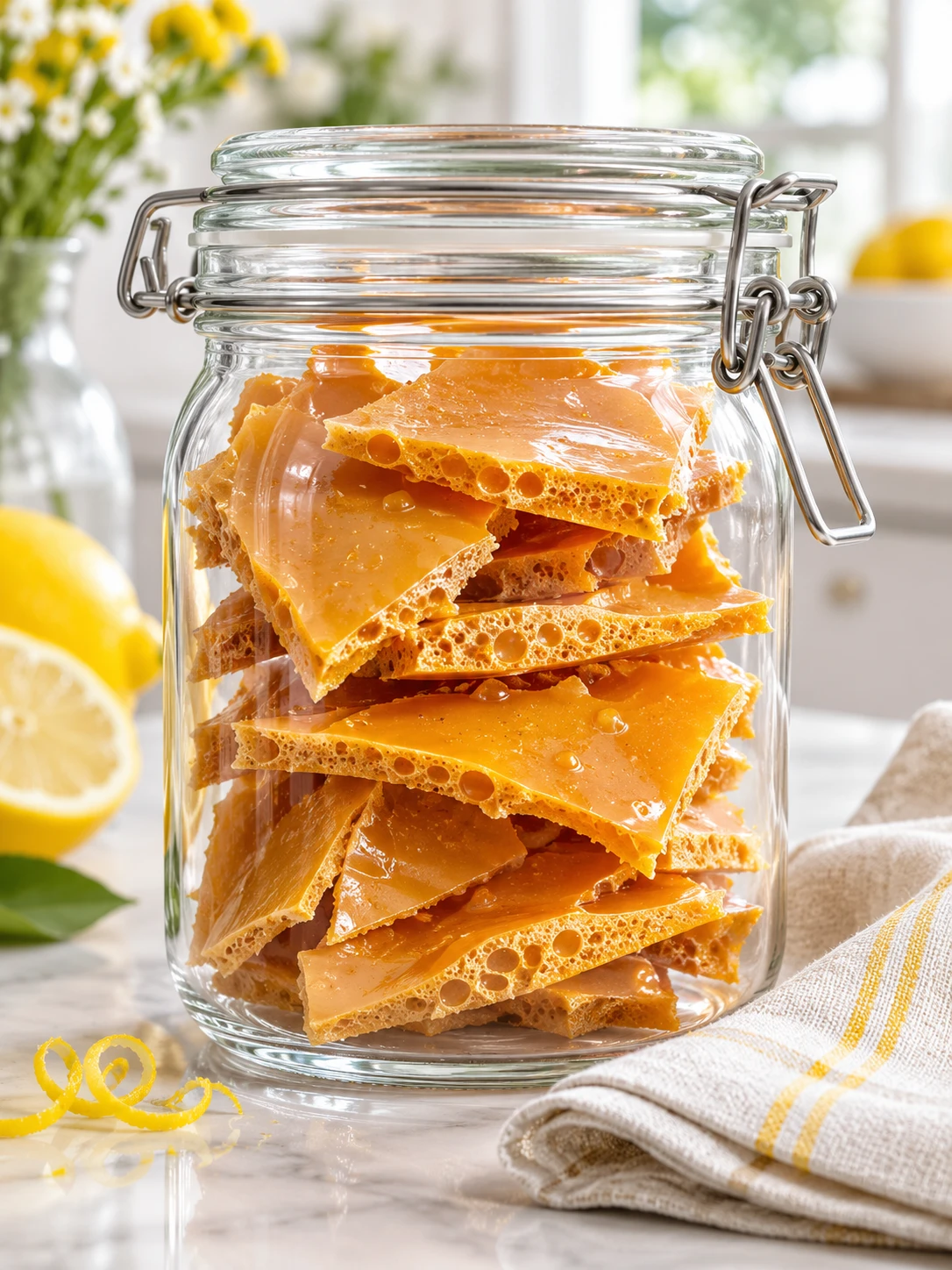
Proper storage is essential to keep toffee from softening or becoming sticky. Boiled sugar is hygroscopic, meaning it actively draws ambient moisture from the surrounding air.
- Room Temperature: Once the toffee has cooled completely and the chocolate layer has set firmly, break the slab into bite-sized shards using your hands or the edge of a chef’s knife. Transfer the pieces into an airtight tin or glass container, placing sheets of wax paper or parchment between layers. Store in a cool, dry pantry away from direct heat or humidity for up to three weeks.
- Freezing: English toffee freezes exceptionally well. Place broken pieces in an airtight freezer-safe container with parchment separating the layers. Freeze for up to three months. To thaw, transfer the sealed container to the refrigerator overnight, then bring it to room temperature before opening the lid. Opening the container while cold will cause airborne condensation to settle directly on the candy, turning the surface sticky.
- Reheating: Candy brittle should never be reheated after setting, as melting will destroy the crystal structure and ruin the crisp snap.

English Toffee Recipe with Chocolate and Almonds

Equipment
- Medium heavy-bottomed saucepan
- Candy thermometer
- Heatproof silicone spatula
- Baking sheet lined with silicone mat or parchment paper
Ingredients
Toffee Base
- 2 1/4 cups light brown sugar packed
- 3/4 cup water
- 1 cup salted butter
- 1/4 to 1/2 teaspoon lemon extract
- 1 pinch cream of tartar optional
Instructions
- Combine the light brown sugar, water, and salted butter in a medium saucepan and place it over low heat, stirring until the sugar has dissolved.
- Bring the mixture to a boil, then reduce the heat to medium-low and simmer for 5-8 minutes, or until the mixture reaches 220°F (105°C).
- Increase the heat to medium and continue cooking, stirring occasionally, until the mixture reaches the hard crack stage (300-310°F / 150°C) on a candy thermometer.
- Remove the saucepan from the heat and stir in the lemon extract and cream of tartar (if using).
- Pour the toffee mixture into a prepared pan, such as a silicone mat or a greased piece of parchment paper, and let it cool and set for 10 minutes.
- Break the toffee into pieces and serve.
Notes
- Calories: 170
- Protein: 0g
- Carbohydrates: 15g
- Fat: 12g
- Saturated fat: 8g
- Cholesterol: 20mg
- Sodium: 50mg
- Potassium: 0mg
- Fiber: 0g
- Sugar: 12g
- Vitamin A: 0 IU
- Vitamin C: 0mg
- Calcium: 0mg
- Iron: 0mg
Frequently Asked Questions
What is the importance of reaching the hard crack stage in making English toffee?
Reaching the hard crack stage, which is between 300-310°F (150°C), is crucial in making English toffee because it ensures that the toffee sets properly and has the right texture. If the mixture does not reach this temperature, the toffee may be too soft or chewy. Using a candy thermometer is the best way to monitor the temperature and ensure that the toffee reaches the hard crack stage.
Can I make English toffee without a candy thermometer?
While a candy thermometer is highly recommended to ensure that the toffee reaches the correct temperature, it is possible to make English toffee without one. However, this requires experience and skill in judging the temperature of the boiling mixture. If you do not have a candy thermometer, you can test the syrup by dropping a small spoonful into a bowl of ice-cold water; if it forms brittle threads that snap cleanly when bent, it has reached the hard crack stage.
How do I prevent the English toffee from crystallizing or becoming grainy?
To prevent the English toffee from crystallizing or becoming grainy, avoid stirring the mixture excessively once the sugar has completely dissolved and the pot reaches a rolling boil. Stirring hot syrup can agitate sugar molecules into forming grainy crystalline clusters. Adding a pinch of cream of tartar also introduces beneficial acid that hinders crystallization, keeping the finished brittle completely smooth.
What is the best way to store English toffee to keep it fresh?
To keep English toffee fresh, store it in an airtight container placed in a cool, dark, and dry pantry. Ambient humidity softens hard candy, so keeping the container tightly sealed with wax paper between layers prevents the shards from sticking together or losing their signature brittle snap.