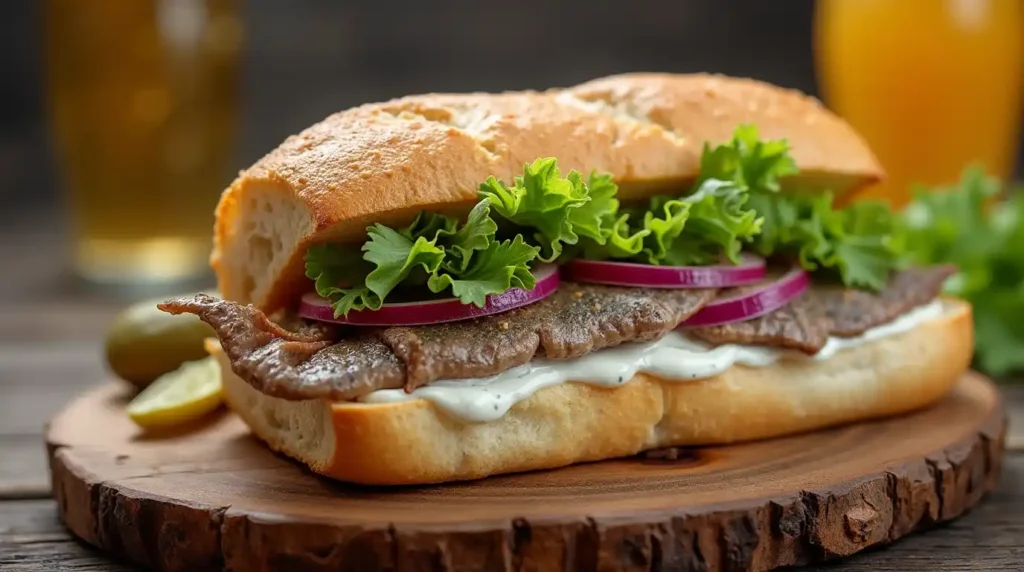
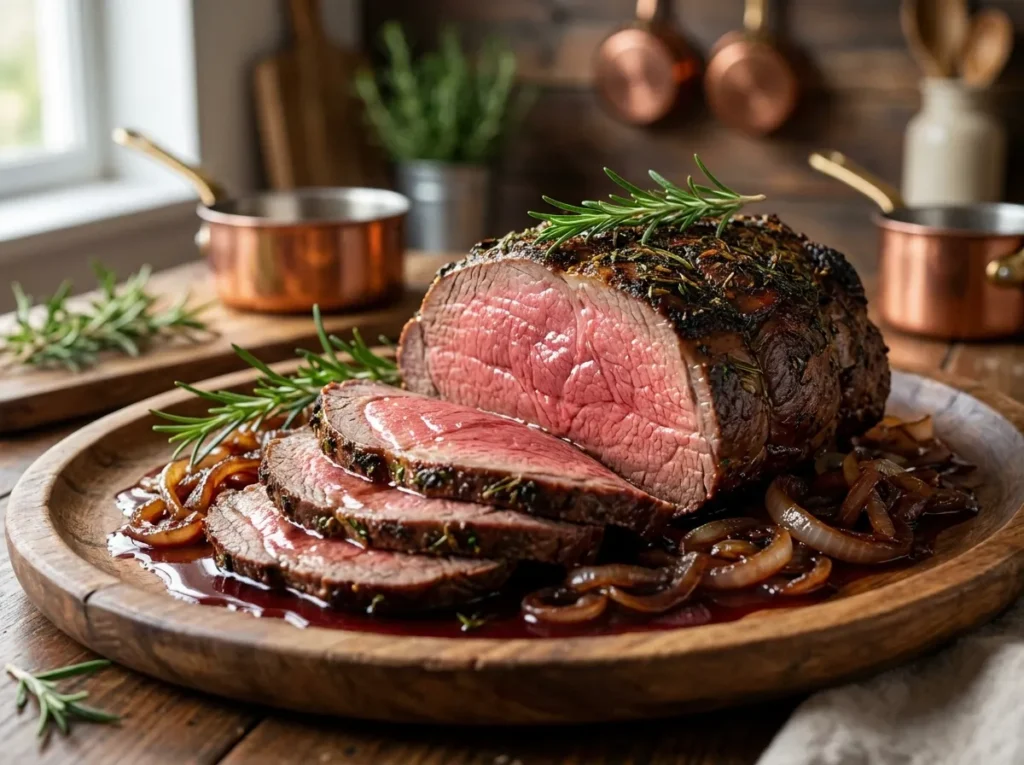
Welcome to your new favorite dinner centerpiece. Whether you are hosting a festive holiday gathering or simply preparing a comforting Sunday supper for the family, finding the perfect beef rump roast recipe changes everything. Known for its rich, beefy flavor, the rump roast is a lean cut that transforms into a tender, melt-in-your-mouth masterpiece when cooked correctly.
Table of Contents
Many home cooks shy away from leaner cuts of beef, fearing they will turn out dry or tough. However, with the right techniques, a low-and-slow cooking method, and a handful of aromatic herbs, you can elevate this humble cut into a gourmet meal. This guide will walk you through exactly how to achieve a juicy, sliceable roast that rivals any high-end steakhouse offering.
The beauty of this dish lies in its simplicity. You do not need complicated culinary skills to master it. By allowing the meat to gently roast and properly rest, you guarantee a succulent texture that pairs beautifully with savory pan drippings. Let’s dive into the ultimate method for creating a memorable beef dinner.
Essential Equipment Needed
Before we begin, having the right tools is critical for a flawless rump roast recipe oven preparation. Here is what you need to guarantee success:
- Quality Meat Thermometer: This is non-negotiable. Cooking by exact temperature rather than time is the only way to ensure a perfect medium-rare without drying out the beef.
- Cast-Iron Skillet or Dutch Oven: Essential for achieving a deeply browned, caramelized crust during the initial searing phase.
- Heavy-Duty Aluminum Foil: Needed to loosely tent the meat during the crucial resting period, locking in the juices.
Why This is the Best Beef Rump Roast Recipe
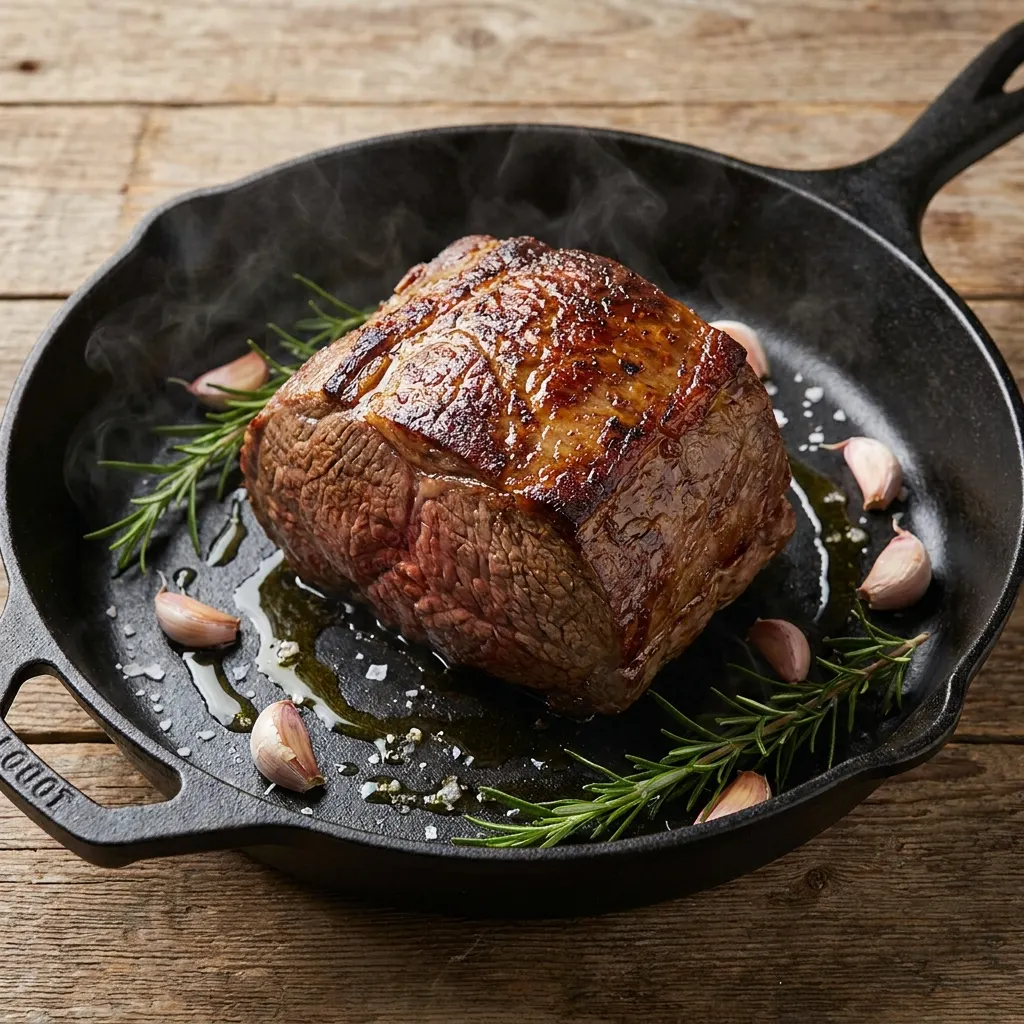
Creating an easy rump roast recipe starts with understanding your ingredients. The bottom round, or rump, is a hard-working muscle, meaning it is packed with incredible flavor but lacks heavy marbling. To maximize moisture and taste, we use a technique of making small incisions in the meat and stuffing them with garlic. This infuses the beef from the inside out with incredible aromatics.
To ensure a beautiful crust, we rub the exterior with olive oil and a generous blend of kosher salt, crushed peppercorns, rosemary, and thyme. This step is crucial for locking in moisture while building a savory exterior.
Alternative Cooking Methods
One of the greatest advantages of this cut of beef is its adaptability. While the oven method detailed below yields an elegant top rump roast recipe perfect for slicing, modern appliances offer fantastic variations.
- Instant Pot / Pressure Cooker: If you prefer a rich, fall-apart texture, an Instant Pot transforms this into a luxurious braised rump roast recipe. Sear the meat on the sauté setting, add your liquids and onions, and cook on high pressure for 60-75 minutes. The result is fork-tender, shreddable beef.
- Slow Cooker: Short on hands-on time? You can easily adapt these ingredients into a simple rump roast recipe slow cooker meal. Sear the meat in a skillet, then toss all ingredients into the crockpot. Cook on LOW for 8 hours.
- Air Fryer: For smaller 2-pound roasts, an air fryer can work in a pinch. Sear at 400°F for 10 minutes, then drop the heat to 300°F until the internal temperature hits 135°F.
- Outdoor Smoker: Do not think this is just a winter meal; a summer rump roast recipe can be achieved by moving the cooking process to an outdoor smoker, keeping your kitchen cool while infusing the beef with a rich, smoky flavor.
Need to feed a crowd? This easily scales up into a 5lb rump roast recipe by simply extending the cooking time while relying on your meat thermometer for accuracy.
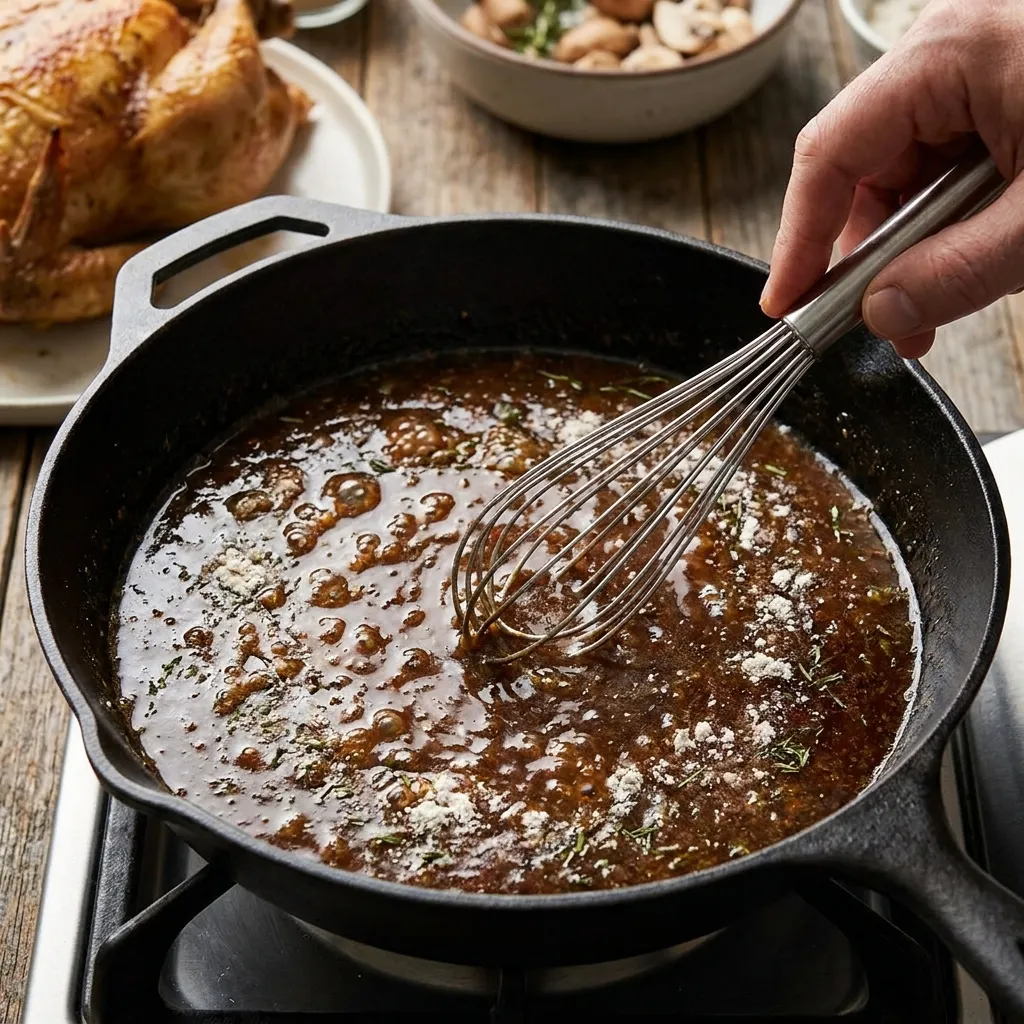
How to Make the Perfect Pan Gravy
Step 10 of our recipe mentions using the pan drippings to make a gravy. Do not let those incredible, flavor-packed juices go to waste! Here is a foolproof method to turn them into a rich au jus or thick gravy:
- Strain the Drippings: Once the roast is resting on a cutting board, strain the liquid left in your Dutch oven or roasting pan to remove large onion bits or burnt herbs. Return the smooth liquid to the stovetop over medium heat.
- Make a Slurry: In a small bowl, whisk together 1 tablespoon of cornstarch with 1 tablespoon of cold water until completely smooth.
- Thicken: Slowly pour the slurry into the gently boiling pan drippings, whisking constantly.
- Simmer: Let the gravy simmer for 2-3 minutes until it thickens and coats the back of a spoon. Season with additional salt and pepper if needed.
Perfect Pairings
A magnificent roast deserves equally impressive side dishes. For a classic pairing, serve your beef alongside garlic herb roasted potatoes and a crisp green salad. If you want to add a vibrant, zesty contrast to the rich meat, a fresh black bean and corn relish works surprisingly well to cut through the savory fat.
If you love the savory, tangy flavors of braised beef, you might also enjoy exploring a Mississippi pot roast for your next culinary adventure. For a lighter lunch the next day, pair a small portion of leftover sliced roast with a warming bowl of healthy lentil soup.
Ingredients
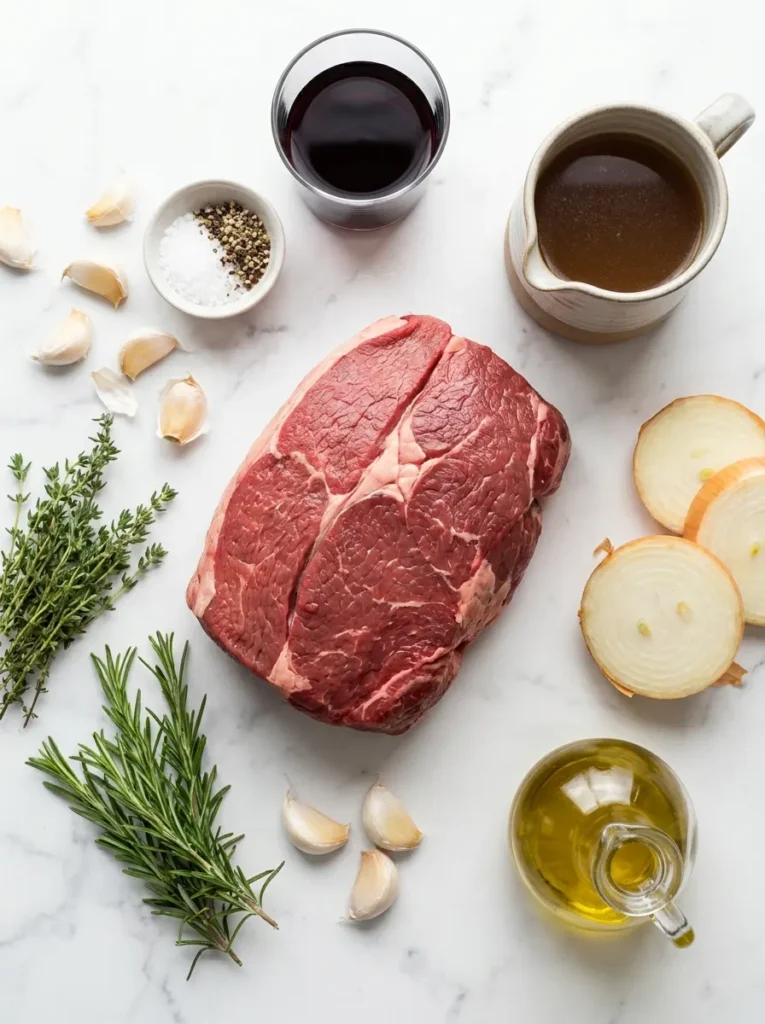
- 3-4 lb beef rump roast (bottom round)
- 4 cloves fresh garlic, sliced
- 1 tbsp sea salt or kosher salt
- 1 tbsp black peppercorns, crushed
- 1 tbsp fresh rosemary, chopped
- 1 tbsp fresh thyme, chopped
- 1 tsp dried oregano
- 2 tbsp olive oil
- 2 tbsp salted butter
- 1 cup beef broth
- 1/2 cup dry red wine
- 1 large yellow onion or shallots, sliced
Instructions
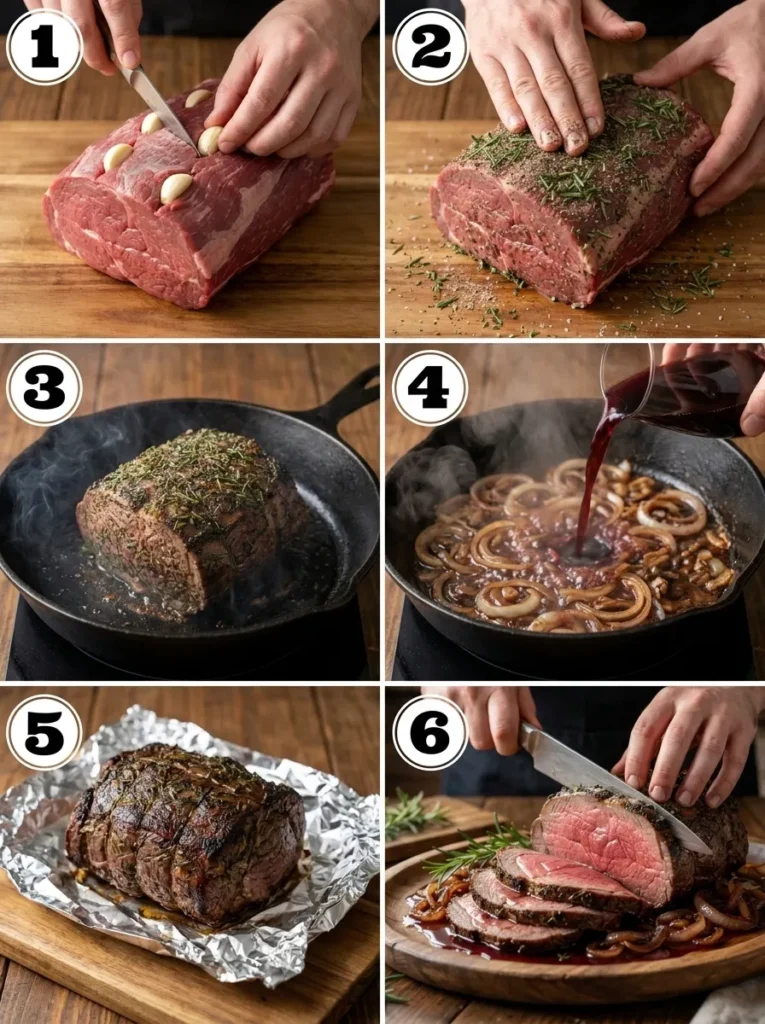
- Remove the rump roast from the refrigerator and let it sit at room temperature for 30-60 minutes before cooking.
- Preheat your oven to 250 degrees Fahrenheit for a low and slow cooking process.
- Using a sharp knife, make small slits all over the meat and stuff them with the sliced fresh garlic.
- Rub the roast generously with olive oil, sea salt, black pepper, rosemary, thyme, and oregano.
- Heat a cast-iron skillet or Dutch oven over medium-high heat and sear the beef on all sides to develop a rich, brown crust.
- Remove the meat briefly, reduce the heat, and deglaze the pan with dry red wine and beef broth, scraping up any browned bits from the bottom.
- Add the salted butter and sliced onions to the liquid, then return the roast to the pan.
- Transfer to the oven and roast until a meat thermometer inserted into the thickest part reads 135 degrees Fahrenheit for medium-rare.
- Remove the roast from the oven, tent it loosely with aluminum foil, and let it rest for 20 minutes to allow the juices to redistribute and account for carryover cooking.
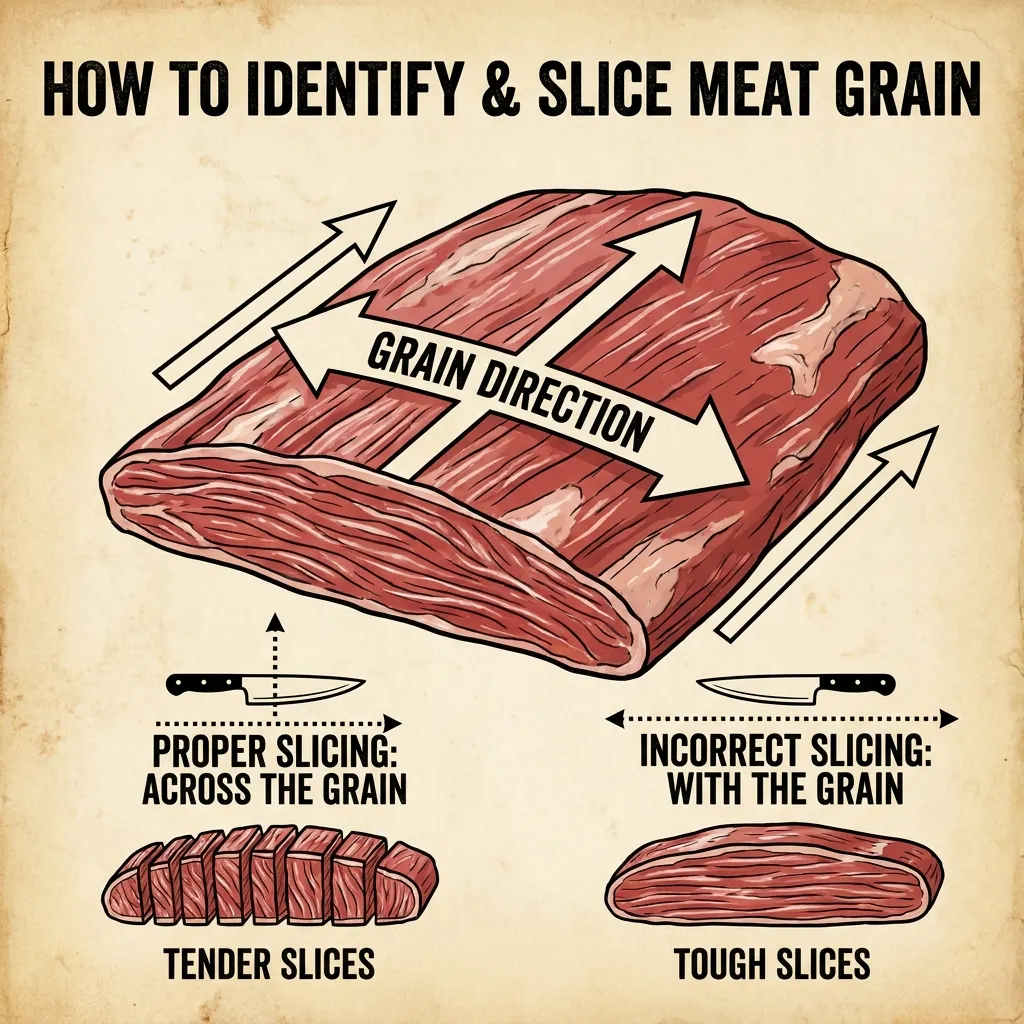
- Identify the grain of the meat and slice thinly against the grain to serve, using the pan drippings to make a gravy if desired.
Frequently Asked Questions
How do I ensure my rump roast comes out tender rather than tough or chewy?
The secret to a tender rump roast is a low oven temperature and avoiding overcooking. Cooking the roast at 250 degrees Fahrenheit allows the meat to cook gently. You must pull the roast from the oven when it reaches 135 degrees Fahrenheit for a perfect medium-rare. Additionally, letting the meat rest for 20 minutes before slicing is crucial, as is slicing it very thinly against the grain.
What is the difference between cooking a rump roast as sliceable roast beef versus a fall-apart pot roast?
A sliceable roast beef is cooked using dry heat (roasting in the oven) to a specific internal temperature (usually medium-rare to medium). A fall-apart pot roast is cooked using a braising method, where the meat is partially submerged in liquid and cooked for several hours until the tough connective tissues break down and melt, resulting in shreddable meat.
How can I tell which way the grain runs so I can slice the roast correctly against the grain?
Look closely at the surface of the meat. You will see parallel lines or muscle fibers running in one distinct direction. To slice against the grain, position your knife perpendicular (at a 90-degree angle) to these lines. Cutting through the fibers rather than parallel to them shortens the muscle strands, making the meat significantly easier to chew.
What is the best way to salvage or fix a rump roast if it ends up being overcooked or dry?
If your roast is overcooked, do not panic. The best way to salvage it is to slice the meat paper-thin. Once sliced, soak the beef in warm au jus, beef broth, or gravy for about 10 minutes before serving. The thin slices will absorb the liquid and become much more palatable. Alternatively, you can chop the dry roast into small cubes and use it in a hearty beef stew or chili.
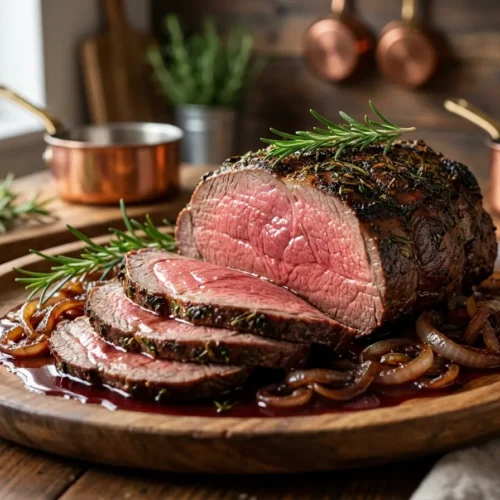
Rump Roast Recipe

Equipment
- Cast-Iron Skillet or Dutch Oven
- Sharp Knife
- Meat Thermometer
- Oven
- Aluminum Foil
Ingredients
Roast
- 3-4 lb beef rump roast bottom round
- 4 cloves fresh garlic sliced
- 1 tbsp sea salt or kosher salt
- 1 tbsp black peppercorns crushed
- 1 tbsp fresh rosemary chopped
- 1 tbsp fresh thyme chopped
- 1 tsp dried oregano
- 2 tbsp olive oil
- 2 tbsp salted butter
- 1 cup beef broth
- 1/2 cup dry red wine
- 1 large yellow onion or shallots sliced
Instructions
- Remove the rump roast from the refrigerator and let it sit at room temperature for 30–60 minutes before cooking.
- Preheat your oven to 250°F (120°C) for a low and slow cooking process.
- Using a sharp knife, make small slits all over the meat and stuff them with the sliced fresh garlic.
- Rub the roast generously with olive oil, sea salt, black pepper, rosemary, thyme, and oregano.
- Heat a cast-iron skillet or Dutch oven over medium-high heat and sear the beef on all sides until a rich brown crust develops.
- Remove the roast briefly, reduce the heat, and deglaze the pan with the red wine and beef broth, scraping up any browned bits.
- Add the butter and sliced onions to the liquid, then return the roast to the pan.
- Transfer to the oven and roast until a meat thermometer inserted into the thickest part reads 135°F (57°C) for medium-rare.
- Remove the roast from the oven, tent loosely with aluminum foil, and let it rest for 20 minutes.
- Slice thinly against the grain and serve with the pan drippings or gravy if desired.