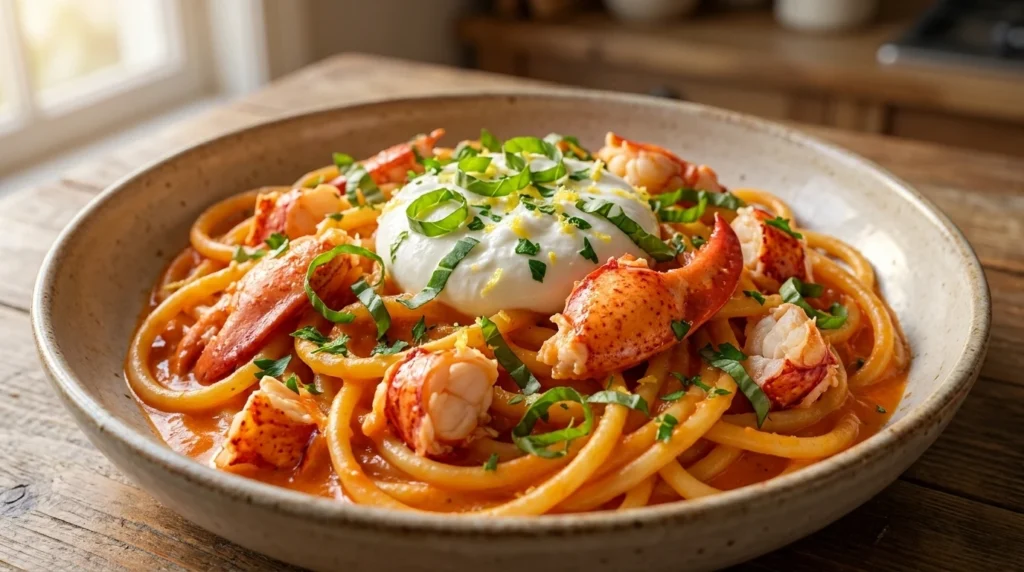
There are few culinary experiences that feel as luxurious, comforting, and visually stunning as a perfectly executed lobster bucatini. Whether you are planning an intimate anniversary dinner, celebrating a milestone, or simply treating yourself to a restaurant-quality meal at home, this dish delivers an unforgettable symphony of flavors. By combining sweet, tender Maine lobster with a complex, slightly spicy tomato-cream sauce that flawlessly coats thick, hollow pasta, you elevate standard weeknight dining into an event.
Table of Contents
In this comprehensive guide, we move beyond basic seafood cooking and walk you through the essential “shell-to-sauce” technique, ensuring you extract every ounce of deep, briny flavor. Forget paying premium bistro prices or endlessly searching for “lobster bucatini near me”; it is time to master the art of high-end Italian-American seafood right in your own kitchen.
Why You’ll Love This Lobster Pasta
This isn’t just another standard seafood dish. It is meticulously crafted to balance sheer richness with bright acidity and a gentle, warming heat. If you love the deep, complex broth of a traditional Cioppino, you will deeply appreciate the flavor profile we build here.
Instead of discarding the shells, we use them to infuse the heavy cream, creating a luxurious, velvety base that acts as the backbone of the entire meal. Paired with the iconic toothsome bite of bucatini—a hollow pasta that acts like a straw, trapping the sauce inside and out—every bite guarantees the perfect ratio of succulent lobster to vibrant, creamy tomato sauce.
Sourcing Your Seafood: Fresh, Frozen, and Sustainability
The foundation of any spectacular seafood masterpiece is the quality of its ingredients. When shopping for this meal, you will need to choose between fresh live lobsters, fresh tails, or frozen tails.
Cold-water Maine lobsters (or Canadian lobsters) are globally renowned for their firm, chewy texture and unparalleled sweet meat. They vastly outperform warm-water lobsters (such as those from the Caribbean), which tend to be mushier and lack the structural integrity needed to stand up to a hearty bucatini pasta. To understand what makes this protein so beneficial, you can review the nutritional profile of lobster and the official USDA nutritional data for lobster. It’s a phenomenal source of lean protein and essential minerals, not to mention the presence of heart-healthy omega-3 fatty acids.
Sustainability Matters: When purchasing, always look for the blue MSC (Marine Stewardship Council) certified label to ensure your seafood is sustainably sourced. Furthermore, you can enjoy this dish knowing that lobster generally maintains favorable mercury levels in seafood compared to larger predatory fish.
Thawing Frozen Tails: If using frozen lobster tails, you must thaw them gradually in the refrigerator for 24 hours before cooking. Never microwave them or run them under warm water, as this will destroy the cell structure, resulting in a rubbery, unappealing texture.
Ingredients
To recreate this restaurant-quality dish, gather the following ingredients:
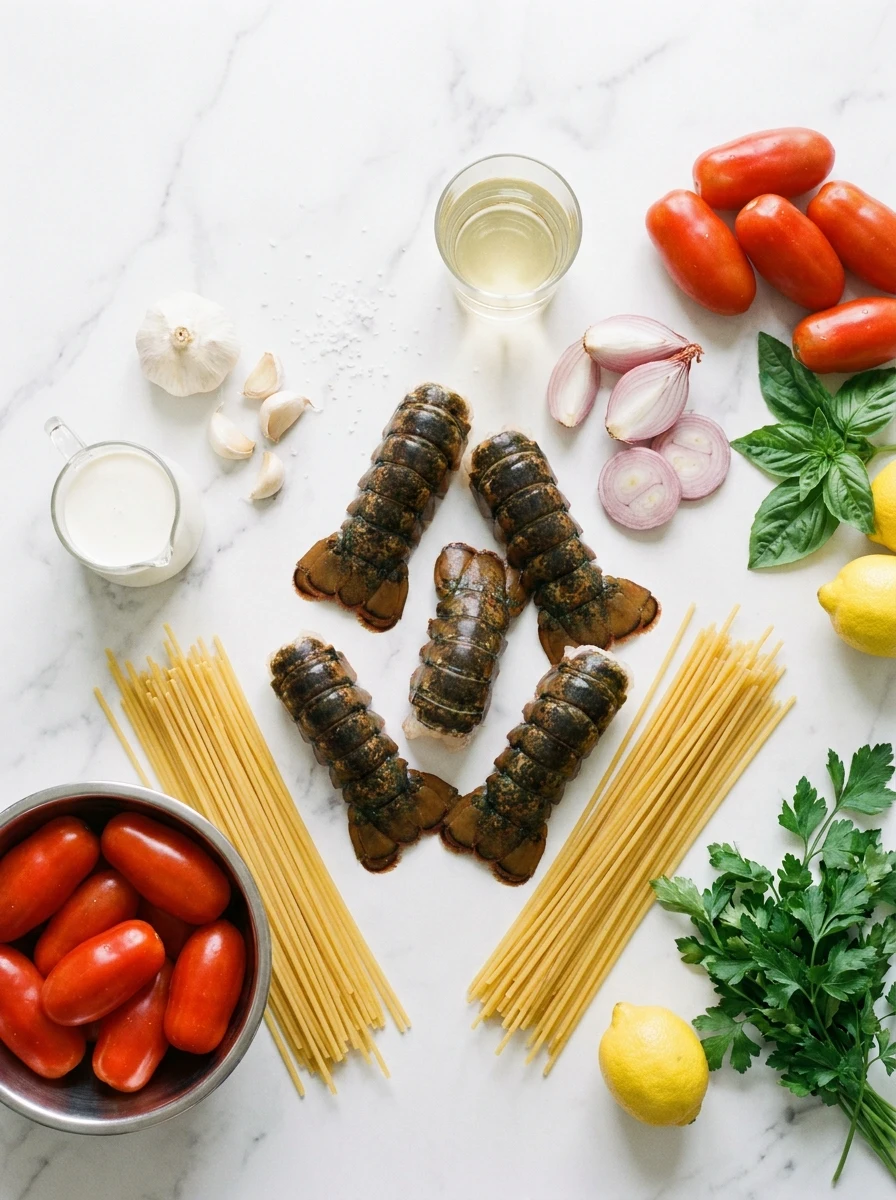
- 1 lb Bucatini pasta
- 2-4 Maine lobster tails
- 28 oz can San Marzano tomatoes
- 1/2 cup Heavy cream
- 4 tbsp Unsalted butter
- 2 tbsp Olive oil
- 1/2 cup Pinot Grigio or dry white wine
- 2 Shallots, finely minced
- 4 cloves Garlic, minced
- 1/2 tsp Red pepper flakes or Calabrian chiles
- 1 handful Fresh Basil, chopped
- 1 handful Fresh Parsley, chopped
- 1 Lemon, zested
- 1 ball Burrata cheese (optional topper)
- 1 pinch Salt and black pepper to taste
Using high-quality staples maximizes the health benefits of your meal. The antioxidant properties of tomatoes, specifically lycopene, are enhanced when cooked with healthy fats. Additionally, you gain the cardiovascular health benefits of extra virgin olive oil and the immune-supporting health benefits of garlic.
Substitutes and Creative Variations
Can’t find bucatini at your local grocer? Do not panic. While the hollow center of bucatini is ideal for trapping the luxurious cream sauce, you can confidently substitute it with Perciatelli, thick spaghetti (spaghettoni), or linguine. Opting for a whole-wheat variety can even increase the positive impact of fiber in pasta for your digestion.
If lobster is unavailable or out of budget, this shell-to-sauce technique works beautifully for large Gulf shrimp or rich Langostino recipes. Looking to experiment? You might encounter trendy variations like lobster bucatini black and blue (incorporating blackened spices and a touch of blue cheese). For those who enjoy bold aromatics, you can repurpose this technique into a vibrant lobster curry recipe or a coconut-infused lobster curry Thai dish for a completely different cultural spin.
Step-by-Step Instructions
Follow these exact steps to ensure your seafood remains tender and your sauce perfectly emulsified.
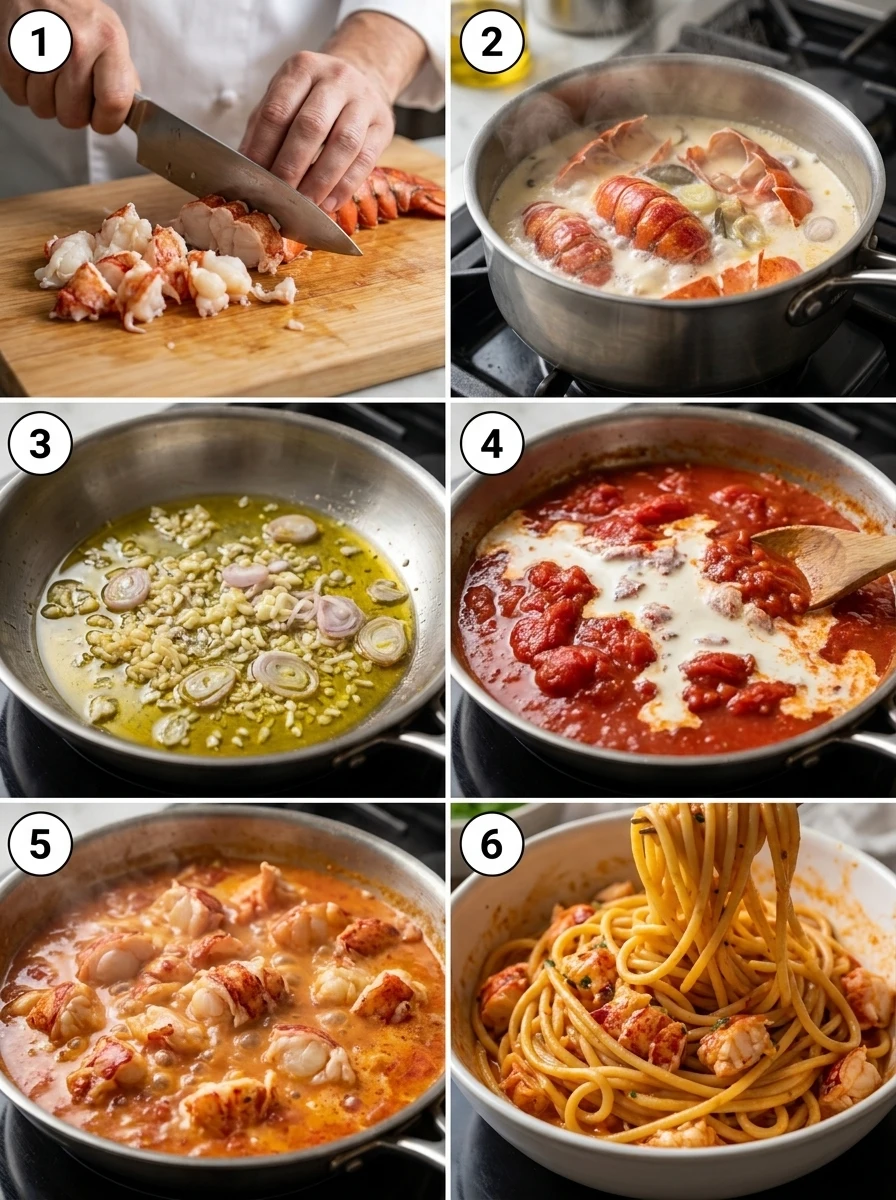
Cleaning and Prepping the Lobster
1. Prepare the lobster by using kitchen shears to carefully cut down the back of the shell. Remove the intestinal vein running down the tail and discard the gritty stomach sack. Extract the meat, chop into bite-sized pieces, and reserve the shells.
Building the Sauce and Cooking
2. In a saucepan, simmer the reserved lobster shells in the heavy cream for 15-20 minutes to infuse the sauce with deep seafood flavor. Strain through a fine-mesh sieve and discard the shells.
3. Cook the bucatini in a large pot of salted boiling water until al dente. Reserve 1 cup of pasta water before draining.
4. In a large Dutch oven or skillet, melt the butter with the olive oil over medium heat. Sauté the minced shallots and garlic until translucent and fragrant.
5. Add the red pepper flakes and deglaze the pan with the white wine, simmering until the liquid is reduced by half.
6. Stir in the San Marzano tomatoes and the shell-infused cream. Simmer the sauce for 10 minutes until it thickens and emulsifies.
7. Gently add the chopped lobster meat to the simmering sauce and poach for 3-5 minutes until just opaque and tender, being careful not to overcook.
8. Toss the cooked bucatini into the sauce. Add the reserved pasta water a tablespoon at a time as needed to help the sauce perfectly coat the pasta.
9. Finish the dish by folding in the lemon zest, fresh basil, and parsley. Serve immediately, optionally topped with torn burrata cheese.
Expert Tips for the Perfect Dish
Nailing the Lobster Texture: The single biggest mistake home cooks make is overcooking luxury seafood. Poaching the raw meat directly in the simmering sauce for just 3 to 5 minutes ensures it remains incredibly tender.
The Power of Spice: Do not skip the red pepper flakes. Aside from the metabolism-boosting effects of capsaicin, the subtle heat cuts through the richness of the butter and cream, creating a perfectly balanced flavor profile.
Managing Richness: This is undeniably a decadent dish. While it is wonderful for celebrations, it is always wise to be informed about managing saturated fat intake. If you are lightening up your diet or following regimens involving Japanese Mounjaro, you can omit the heavy cream entirely and rely on reserved starchy pasta water and extra virgin olive oil to emulsify your sauce.
Menu Pairings & Weekly Planning
Creating a cohesive menu is the secret to an unforgettable dinner party. To balance the heavy, luscious nature of this main course, consider starting your evening with an elegant artichoke, spinach, and white bean dip or a bright, acidic black bean and corn relish. On the side, serve traditional Garlic Bread or a simple, peppery Arugula Salad dressed in lemon vinaigrette.
For dessert, a nostalgic, creamy strawberry banana milkshake provides a delightfully sweet end to a sophisticated meal. And since this dish is a true indulgence, you might plan your weekly menu to balance it out—perhaps following up the next day with a comforting, healthy lentil soup, or pivoting to lean, earthy meats later in the week with a savory ground venison recipe.
The Perfect Wine Pairing
Because this sauce features a delicate balance of acidic tomatoes, rich heavy cream, and sweet seafood, you need a wine that offers bright acidity without overpowering the dish. A dry, crisp Italian white wine such as Pinot Grigio, Vermentino, or an unoaked Chablis is perfect. The high acidity will cleanse your palate between bites of the rich, creamy sauce. Pro tip: Use the same high-quality wine to deglaze the pan during step 5!
Storage and Make-Ahead Instructions
While seafood pasta is always best enjoyed fresh off the stove, leftovers can be stored in an airtight container in the refrigerator for up to two days. When reheating, avoid the microwave at all costs. Instead, warm the pasta gently in a skillet over medium-low heat, adding a splash of water or milk to loosen the sauce without turning the lobster rubbery.
If you are hosting, you can prepare the shell-infused cream and tomato base a day in advance. When guests arrive, simply boil the pasta, poach the fresh lobster meat in the pre-heated sauce, toss, and serve.
Frequently Asked Questions
Why is bucatini the preferred pasta for this lobster dish compared to standard spaghetti?
Bucatini is a thick, spaghetti-like pasta with a narrow hole running through its center. This hollow core allows the rich tomato and heavy cream sauce to coat both the inside and outside of the noodle, ensuring maximum flavor delivery in every bite. Its sturdy, “toothsome” texture also holds up incredibly well against hearty chunks of lobster meat, whereas standard thin spaghetti might get lost in the heavy sauce.
How can I prevent the lobster meat from becoming tough or rubbery during the cooking process?
The secret to tender lobster is a gentle, brief cooking method. In this recipe, we recommend poaching the raw, chopped meat directly in the simmering sauce at the very end of the cooking process. It only takes 3 to 5 minutes for the meat to turn completely opaque and cook through. Avoid boiling the meat vigorously or leaving it in the pan for extended periods.
What are the best pasta substitutes if I cannot find bucatini at my local grocery store?
If bucatini is unavailable, your best alternatives are Perciatelli (which is nearly identical), thick spaghetti (spaghettoni), or linguine. If you prefer short pasta shapes, fusilli bucati or rigatoni are excellent choices because their ridges and hollow tubes will effectively capture and hold the rich, spicy tomato cream sauce.
What type of wine pairs best with both the lobster and the flavor profile of the sauce?
You need a wine that offers bright, crisp acidity to cut through the richness of the cream and butter, while complementing the sweetness of the seafood. A dry Italian white wine such as Pinot Grigio, Vermentino, or an unoaked Chablis is the perfect pairing. Heavily oaked Chardonnays can clash with the acidic San Marzano tomatoes, so it is best to avoid them.
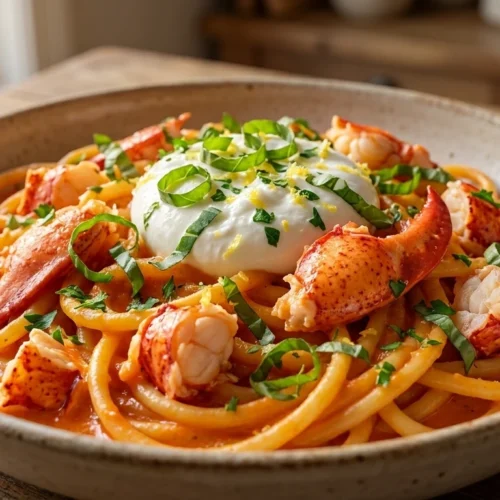
The Ultimate Lobster Bucatini

Equipment
- Kitchen shears
- Large pot
- Dutch oven or large skillet
- Fine mesh sieve
Ingredients
Pasta & Seafood
- 1 lb Bucatini pasta
- 2 whole Maine lobster tails 2-4 tails depending on size
Sauce & Aromatics
- 28 oz San Marzano tomatoes canned
- 0.5 cup Heavy cream
- 4 tbsp Unsalted butter
- 2 tbsp Olive oil extra virgin
- 0.5 cup Pinot Grigio or dry white wine
- 2 whole Shallots finely minced
- 4 cloves Garlic minced
- 0.5 tsp Red pepper flakes or Calabrian chiles
Garnishes & Seasoning
- 1 handful Fresh Basil chopped
- 1 handful Fresh Parsley chopped
- 1 whole Lemon zested
- 1 ball Burrata cheese optional topper
- 1 pinch Salt and black pepper to taste
Instructions
- Prepare the lobster by using kitchen shears to carefully cut down the back of the shell. Remove the intestinal vein running down the tail and discard the gritty stomach sack. Extract the meat, chop into bite-sized pieces, and reserve the shells.
- In a saucepan, simmer the reserved lobster shells in the heavy cream for 15-20 minutes to infuse the sauce with deep seafood flavor. Strain through a fine-mesh sieve and discard the shells.
- Cook the bucatini in a large pot of salted boiling water until al dente. Reserve 1 cup of pasta water before draining.
- In a large Dutch oven or skillet, melt the butter with the olive oil over medium heat. Sauté the minced shallots and garlic until translucent and fragrant.
- Add the red pepper flakes and deglaze the pan with the white wine, simmering until the liquid is reduced by half.
- Stir in the San Marzano tomatoes and the shell-infused cream. Simmer the sauce for 10 minutes until it thickens and emulsifies.
- Gently add the chopped lobster meat to the simmering sauce and poach for 3-5 minutes until just opaque and tender, being careful not to overcook.
- Toss the cooked bucatini into the sauce. Add the reserved pasta water a tablespoon at a time as needed to help the sauce perfectly coat the pasta.
- Finish the dish by folding in the lemon zest, fresh basil, and parsley. Serve immediately, optionally topped with torn burrata cheese.