
Fresh fettuccine is a staple of Italian cuisine, and making it from scratch can be a fun and rewarding experience. In this article, we will explore the world of fresh fettuccine, including its history, ingredients, and cooking methods. We will also provide a simple recipe for making fresh fettuccine at home.
Table of Contents
Why You’ll Love This Recipe
- Fresh fettuccine is a delicious and versatile pasta dish that can be served with a variety of sauces.
- Making fresh fettuccine from scratch allows you to control the ingredients and the texture of the pasta.
- This recipe is easy to follow and requires minimal special equipment.
Key Ingredients & Substitutions
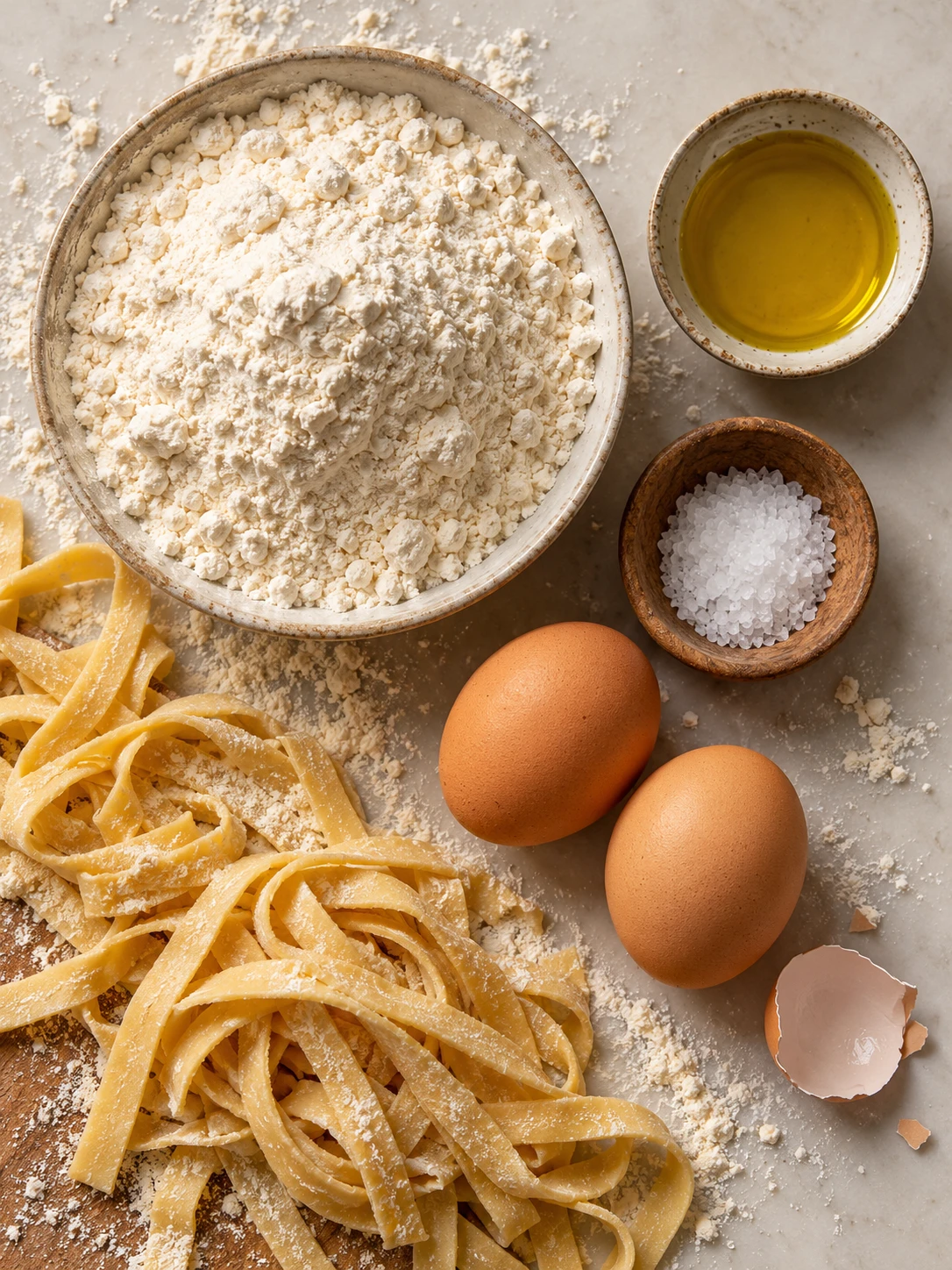
To make fresh fettuccine, you will need the following ingredients:
- 2 cups all-purpose flour
- 2 large eggs
- 1 teaspoon salt
- 1 tablespoon olive oil
You can substitute the all-purpose flour with ’00’ flour or a combination of both for a smoother texture. For a gluten-free version, you can use gluten-free flour, but keep in mind that the texture and taste may be slightly different.
The all-purpose flour provides structure and texture to the pasta, while the eggs add moisture, richness, and help to bind the ingredients together. The salt enhances the flavor of the pasta, and the olive oil helps to prevent the dough from becoming too sticky.
Step-by-Step Instructions
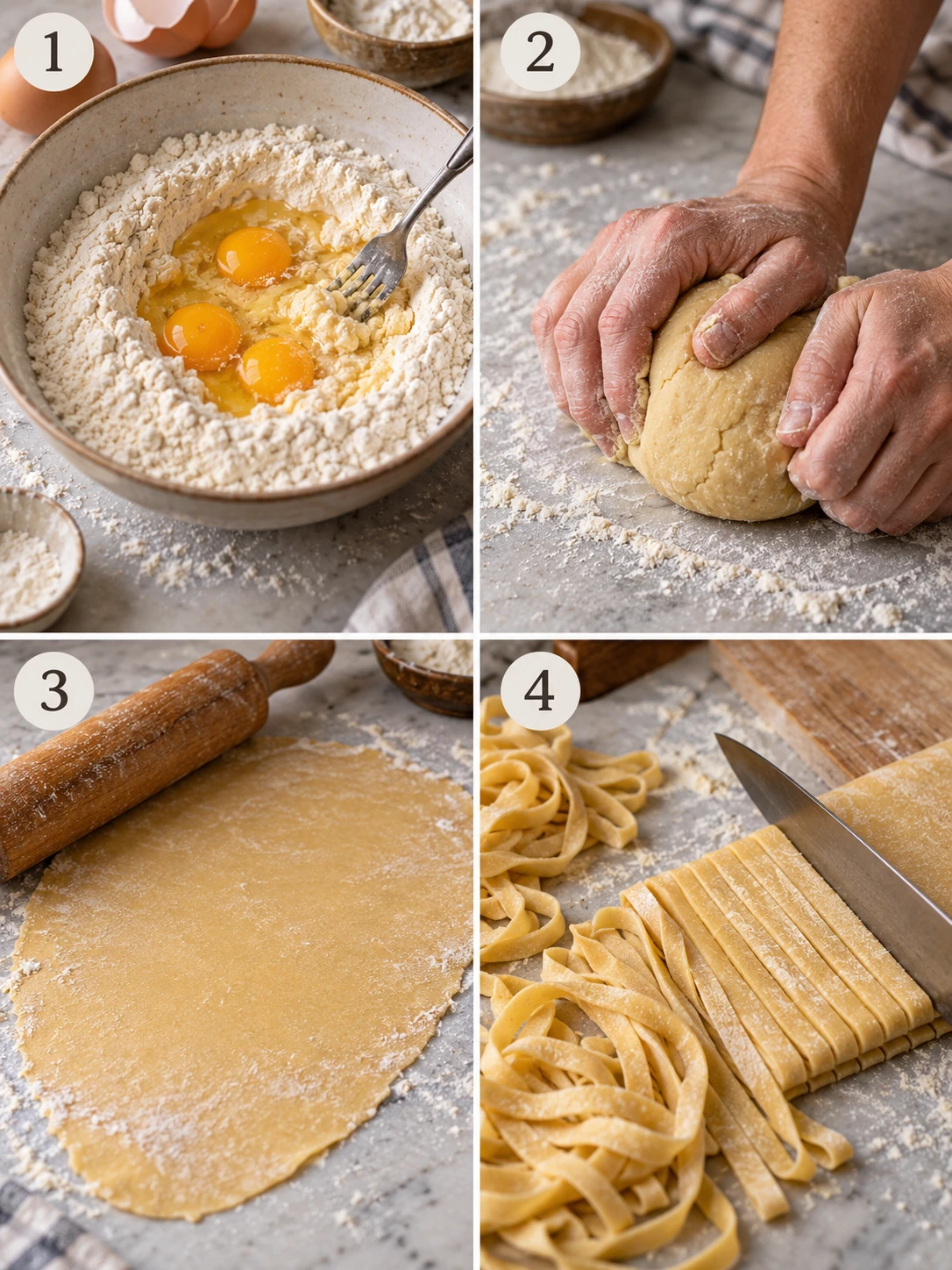
1. In a large mixing bowl, combine 2 cups of all-purpose flour and 1 teaspoon of salt.
2. Make a well in the center of the flour mixture and add 2 large eggs.
3. Using a fork, gradually incorporate the flour into the eggs, starting from the inner rim of the well.
4. As the dough starts to form, switch to using your hands to knead the mixture for about 10 minutes until it becomes smooth and elastic.
5. Wrap the dough in plastic wrap and let it rest for at least 30 minutes to allow the gluten to relax.
6. Divide the dough into 4 equal pieces and work with one piece at a time.
7. Use a pasta machine or roll out the dough by hand to achieve the desired thinness.
8. Cut the rolled-out dough into fettuccine strips using a pasta cutter or a sharp knife.
9. Bring a large pot of salted water to a boil and cook the fettuccine for 2-4 minutes until al dente.
10. Drain the fettuccine and serve with your favorite sauce.
For more protein-packed pasta dishes, you can also try our High Protein Pasta Salad or High Protein Egg Salad recipes.
Expert Chef Tips & Troubleshooting
- To achieve the perfect texture, make sure to knead the dough for at least 10 minutes and let it rest for at least 30 minutes.
- If you find that your fettuccine is too thick or too thin, you can adjust the rolling time or the thickness of the dough.
- For a more flavorful fettuccine, you can add herbs or spices to the dough before kneading.
- Be gentle when handling the dough to avoid developing the gluten too much, which can lead to a tough or chewy texture.
- Use a light touch when rolling out the dough to maintain an even thickness and prevent the pasta from becoming too dense.
When cooking your fresh fettuccine, it’s essential to follow safe minimum internal temperatures to ensure food safety. Additionally, be sure to follow food safety guidelines for leftovers when storing and reheating your cooked fettuccine.
Texture and Doneness Cues
To determine if your fettuccine is cooked to perfection, look for the following texture and doneness cues:
- Al dente texture: The fettuccine should still have a bit of bite or chew to it, but not be too hard or crunchy.
- Visual indicators: The fettuccine should be slightly firm to the touch and have a subtle sheen to it.
- Cooking time: Cook the fettuccine for 2-4 minutes, or until it reaches the desired level of doneness.
Heat Management and Visual Indicators
When cooking your fettuccine, it’s essential to manage the heat to prevent overcooking or undercooking. Here are some tips:
- Use a large pot of salted water and bring it to a boil before adding the fettuccine.
- Reduce the heat to a simmer once the fettuccine is added to the pot.
- Stir the fettuccine occasionally to prevent it from sticking to the bottom of the pot.
- Check the fettuccine frequently for doneness, as overcooking can result in a mushy or unappetizing texture.
Common Mistakes to Avoid and Troubleshooting Tips
Here are some common mistakes to avoid when making fresh fettuccine:
- Overworking the dough: This can lead to a tough or chewy texture.
- Not letting the dough rest: This can result in a dense or heavy texture.
- Not cooking the fettuccine long enough: This can result in an undercooked or raw texture.
- Overcooking the fettuccine: This can result in a mushy or unappetizing texture.
To troubleshoot common issues, try the following:
- If the dough is too sticky, add a small amount of flour.
- If the dough is too dry, add a small amount of water.
- If the fettuccine is too thick or too thin, adjust the rolling time or the thickness of the dough.
Ingredient Notes and Practical Substitutions
Here are some notes on the ingredients used in this recipe:
- All-purpose flour: This provides structure and texture to the pasta.
- Eggs: These add moisture, richness, and help to bind the ingredients together.
- Salt: This enhances the flavor of the pasta.
- Olive oil: This helps to prevent the dough from becoming too sticky.
If you don’t have all-purpose flour, you can substitute it with ’00’ flour or a combination of both. For a gluten-free version, you can use gluten-free flour, but keep in mind that the texture and taste may be slightly different.
Serving Suggestions
Fresh fettuccine pairs well with a variety of sauces, such as:
- Classic tomato sauce
- Creamy Alfredo sauce
- Light and tangy pesto sauce
- Rich and savory Bolognese sauce
- Simple yet flavorful olive oil and garlic sauce
You can also serve your fresh fettuccine with a variety of protein sources, such as:
- Grilled chicken
- Pan-seared salmon
- Sautéed shrimp
- Roasted vegetables
Storage, Make-Ahead & Reheating
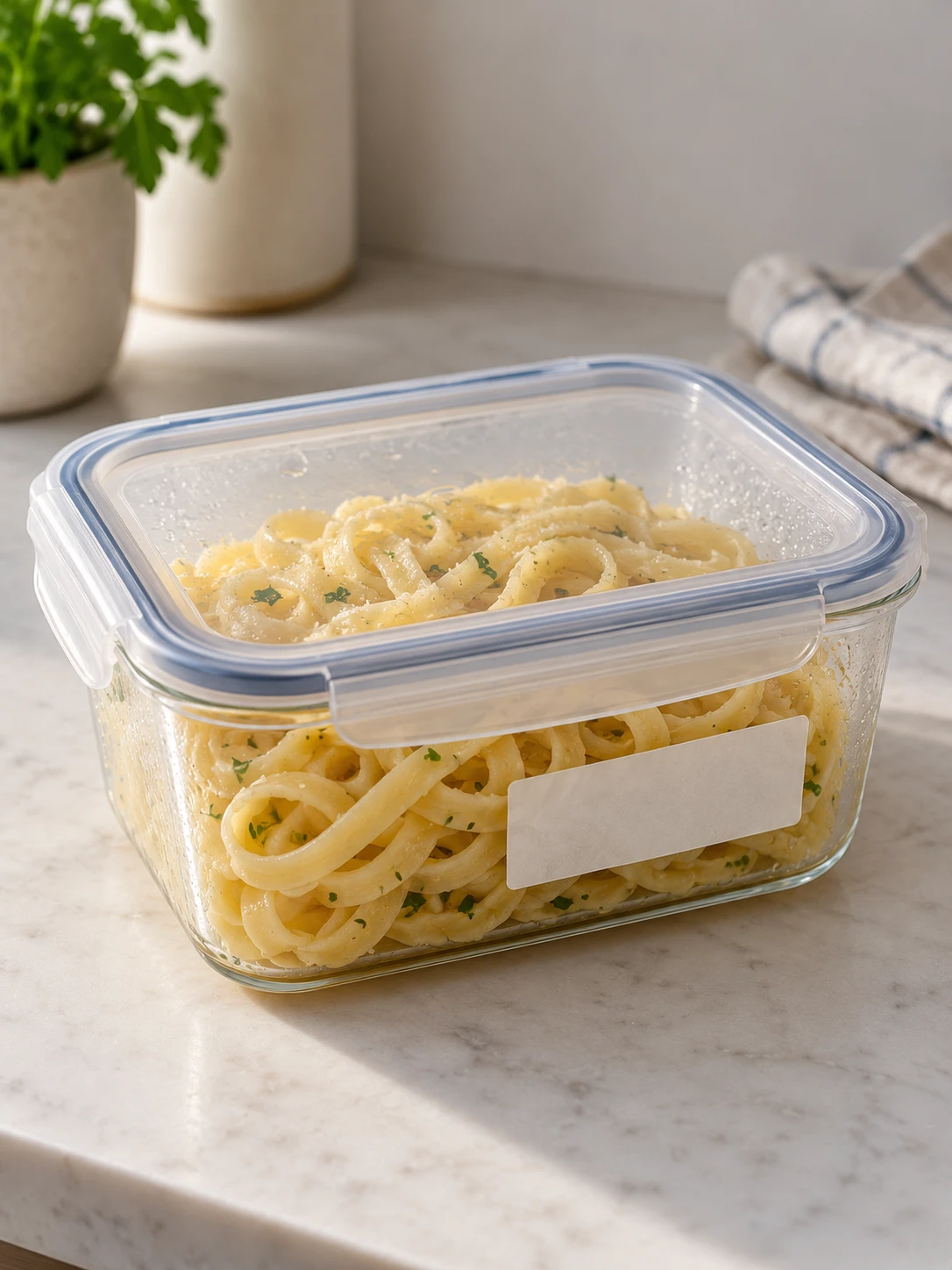
Fresh fettuccine can be stored in an airtight container in the refrigerator for up to 2 days or frozen for up to 2 months. To reheat, simply cook the fettuccine in boiling water for 2-4 minutes until al dente.
To make ahead, you can prepare the dough up to a day in advance and store it in the refrigerator. Allow the dough to come to room temperature before rolling it out.
If you’re looking for a quick and easy snack or light meal, you can also try our Easy Egg Salad Sandwich Recipe.
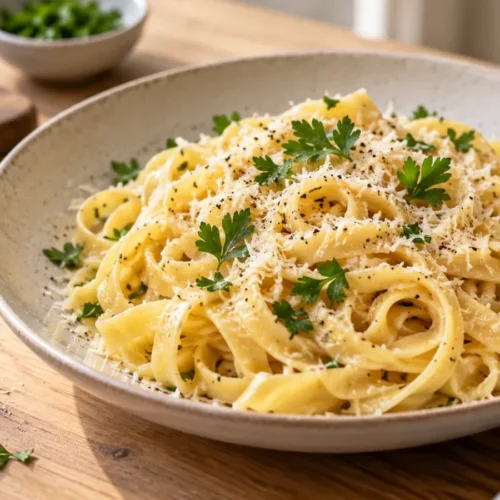
Fresh Fettuccine Recipe

Equipment
- Large mixing bowl
- Pasta machine
- Sharp Knife
- Large pot
Ingredients
Flour
- 2 cups all-purpose flour
- 2 large eggs
- 1 teaspoon salt
- 1 tablespoon olive oil
Instructions
- In a large mixing bowl, combine 2 cups of all-purpose flour and 1 teaspoon of salt.
- Make a well in the center of the flour mixture and add 2 large eggs.
- Using a fork, gradually incorporate the flour into the eggs, starting from the inner rim of the well.
- As the dough starts to form, switch to using your hands to knead the mixture for about 10 minutes until it becomes smooth and elastic.
- Wrap the dough in plastic wrap and let it rest for at least 30 minutes to allow the gluten to relax.
- Divide the dough into 4 equal pieces and work with one piece at a time.
- Use a pasta machine or roll out the dough by hand to achieve the desired thinness.
- Cut the rolled-out dough into fettuccine strips using a pasta cutter or a sharp knife.
- Bring a large pot of salted water to a boil and cook the fettuccine for 2-4 minutes until al dente.
- Drain the fettuccine and serve with your favorite sauce.
Notes
- Calories: 272
- Protein: 10g
- Carbohydrates: 45g
- Fat: 10g
- Saturated fat: 2g
- Cholesterol: 10mg
- Sodium: 200mg
- Potassium: 100mg
- Fiber: 2g
- Sugar: 2g
Frequently Asked Questions
What is the best type of flour to use for making fresh fettuccine?
The best type of flour to use for making fresh fettuccine is often debated, but many recipes recommend using ’00’ flour, all-purpose flour, or a combination of both.
Can I make fresh fettuccine without a pasta machine?
Yes, you can make fresh fettuccine without a pasta machine. While a pasta machine can help achieve a uniform thickness and texture, it is possible to roll out the dough by hand to the desired thinness.
How long should I cook my fresh fettuccine?
Fresh fettuccine should be cooked in plenty of salted, boiling water for 2-4 minutes, or until it reaches an al dente texture.
Can I store fresh fettuccine for later use?
Yes, you can store fresh fettuccine for later use. After cutting the fettuccine, you can dry it thoroughly and store it in an airtight container in the refrigerator for up to 2 days or freeze it for up to 2 months.