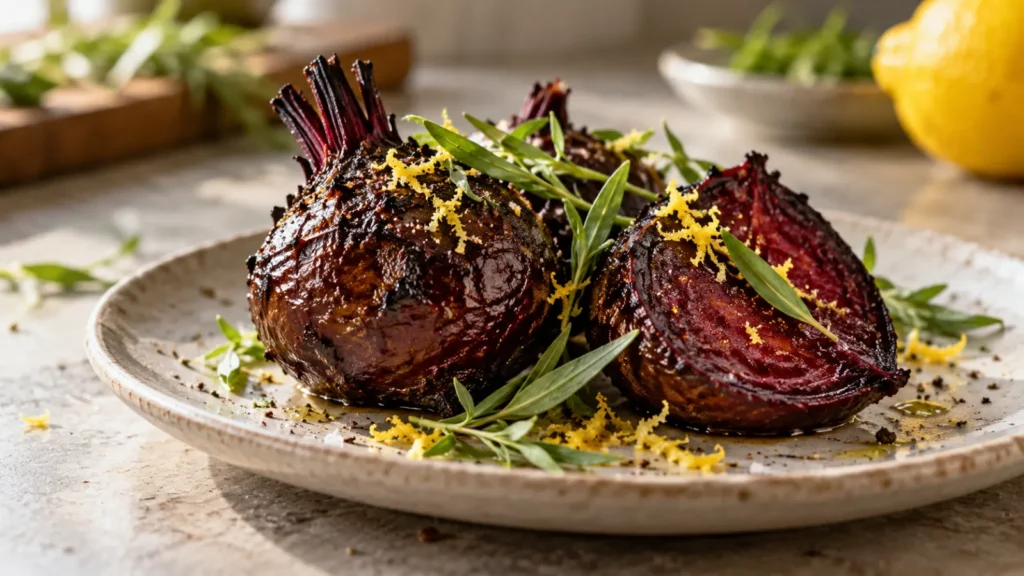
Roasting beets inside a sealed foil packet is one of the most reliable methods for achieving tender, evenly cooked root vegetables without drying them out. Wrapping the beets traps their natural moisture, creating an enclosed steam chamber that softens dense cell walls while concentrating their earthy sweetness. Tossing the warm beets with aromatic lemon zest, fragrant fresh tarragon, and a drizzle of honey right before a brief final roast produces a bright, glossy glaze that balances the vegetable’s natural depth.
This side dish transitions easily from a simple weeknight dinner component to an elegant centerpiece on a holiday spread. Whether you prepare them as part of your weekly meal preparation or serve them alongside roasted meats, these beets deliver clean flavor and vibrant color with minimal cleanup.
Table of Contents
Why You’ll Love This Recipe
- Foil steaming locks in natural juices, preventing the beets from drying out or shriveling in high heat.
- Peeling after roasting allows skins to slip off effortlessly using just a paper towel, keeping kitchen messes minimal.
- Honey and fresh lemon zest cut through earthy undertones to create a balanced, bright finish.
- Versatile preparation fits warm dinner plates, chilled grain bowls, and crisp seasonal salads equally well.
Key Ingredients & Substitutions
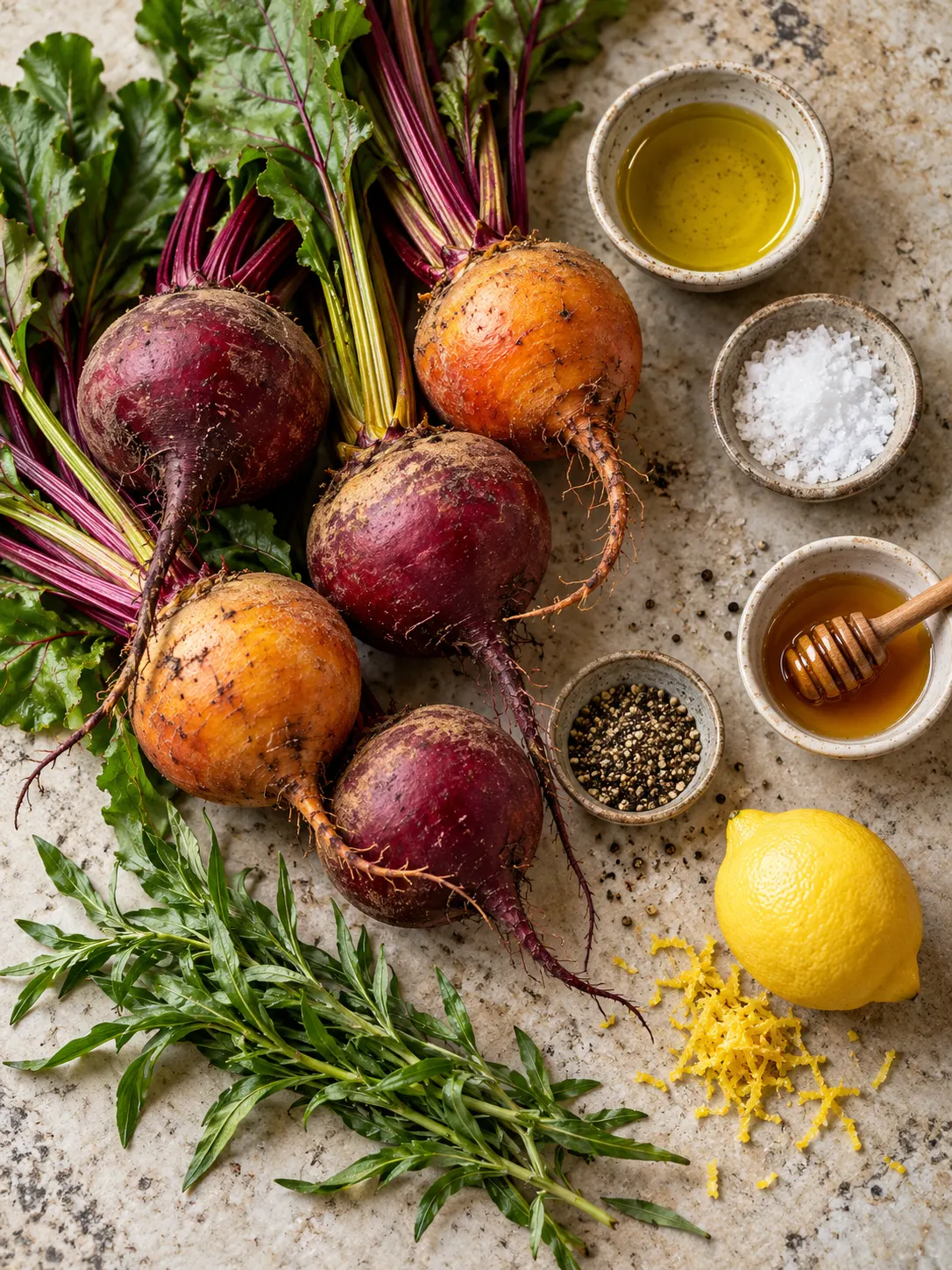
Every ingredient in this recipe serves a functional culinary purpose, balancing textures and counteracting intense earthiness with acidity and sweetness.
- Golden or Red Beets (2 lbs): Red beets offer classic deep garnet color and robust earthiness, whereas golden beets provide a milder, sweeter flavor profile and will not bleed juice onto cutting boards. Choose firm beets of uniform size with smooth, unwrinkled skins. For quick, even cooking within the foil packet, trim the stems to one inch and slice or wedge the beets uniformly before wrapping, or select small young beets. Chioggia (candy cane) beets make an excellent alternative, offering subtle sweetness and a striking visual pattern.
- Olive Oil (2 tablespoons): A good quality extra virgin olive oil coats the beets, conducting oven heat evenly across the foil surface while preventing sticking. The oil also carries fat-soluble flavor compounds throughout the packet.
- Kosher Salt (1/2 teaspoon): Coarse kosher salt draws out just enough moisture to generate steaming inside the packet while seasoning the beets from exterior to core.
- Fresh-Ground Black Pepper (1/2 teaspoon): Freshly cracked pepper adds sharp, woody heat that contrasts with the natural sugars in root vegetables.
- Honey (2 tablespoons): Honey creates a quick glaze during the final five minutes of roasting. Its sugars caramelize under high heat, softening any residual vegetal bitterness. Pure maple syrup or agave nectar can replace honey in equal measure if desired.
- Fresh Tarragon (2 tablespoons): Tarragon provides a delicate anise and sweet herbal note that pairs remarkably well with citrus and root crops. If tarragon is unavailable, fresh dill, minced chervil, or finely chopped flat-leaf parsley offer wonderful herbal alternatives.
- Lemon Zest (1 tablespoon): Citrus zest contains essential oils that cut through heavy starchiness with clean aroma. Use a microplane to remove only the yellow zest, avoiding the bitter white pith beneath.
Step-by-Step Instructions
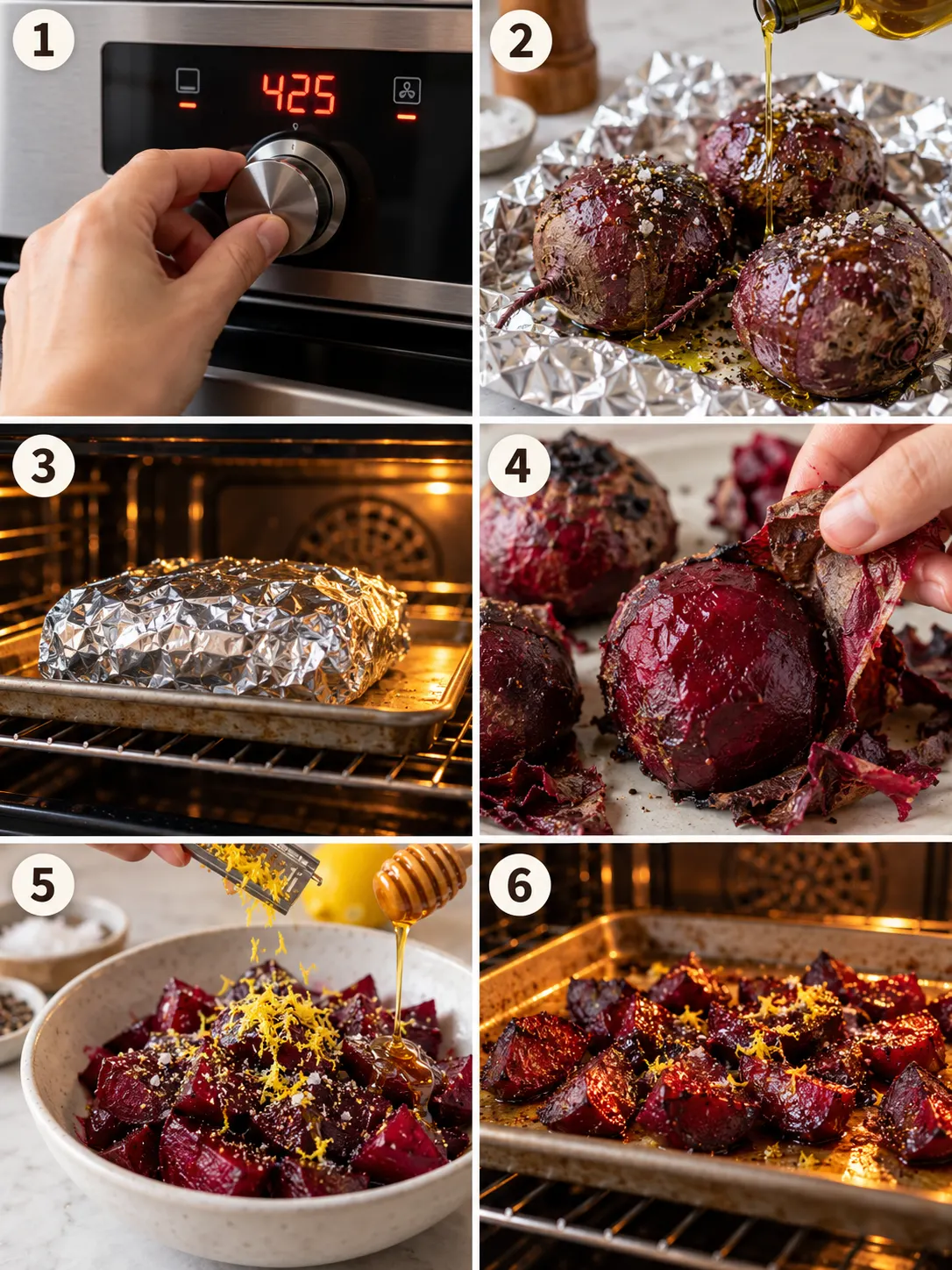
Follow these detailed steps to ensure even cooking, effortless peeling, and a rich herb glaze.
1. Prepare the Oven and Foil
Preheat your oven to 425°F (218°C) with the rack positioned in the center. Tear two large sheets of heavy-duty aluminum foil, roughly 14 to 16 inches in length, and lay them flat on your work surface. Heavy-duty foil resists tears from beet edges and holds steam effectively without leaking juices onto your baking sheet.
2. Season and Seal the Beets
Thoroughly scrub 2 pounds of beets under cool water using a vegetable brush to remove surface soil. Trim the taproots and stem ends. Cut the beets into uniform bite-sized wedges or halves to ensure they roast through evenly in the designated timeframe. Place the cut beets in the center of the foil sheets. Drizzle with 2 tablespoons of olive oil, then sprinkle evenly with 1/2 teaspoon of kosher salt and 1/2 teaspoon of fresh-ground black pepper. Bring the long sides of the foil together over the beets, fold them down tightly several times, and crimp the outer edges inward to create a secure, airtight packet.
3. Roast in the Steam Packet
Place the foil packet onto a sturdy baking sheet to catch any accidental drips. Roast at 425°F for 20 to 25 minutes. To test doneness, carefully insert a thin metal skewer or fork through the foil into the thickest beet piece. The fork should slide in with little resistance. If the centers feel dense or firm, reseal the foil and return them to the oven for an additional 5 minutes.
4. Slip Off the Skins
Carefully open the top of the foil packet away from your face to allow the hot steam to escape safely without burning your hands. Transfer the beets to a plate until they are just cool enough to handle comfortably. Using a clean paper towel or kitchen towel, gently rub the surface of each beet wedge. The skins will slide off smoothly without the need for a vegetable peeler.
5. Glaze and Caramelize
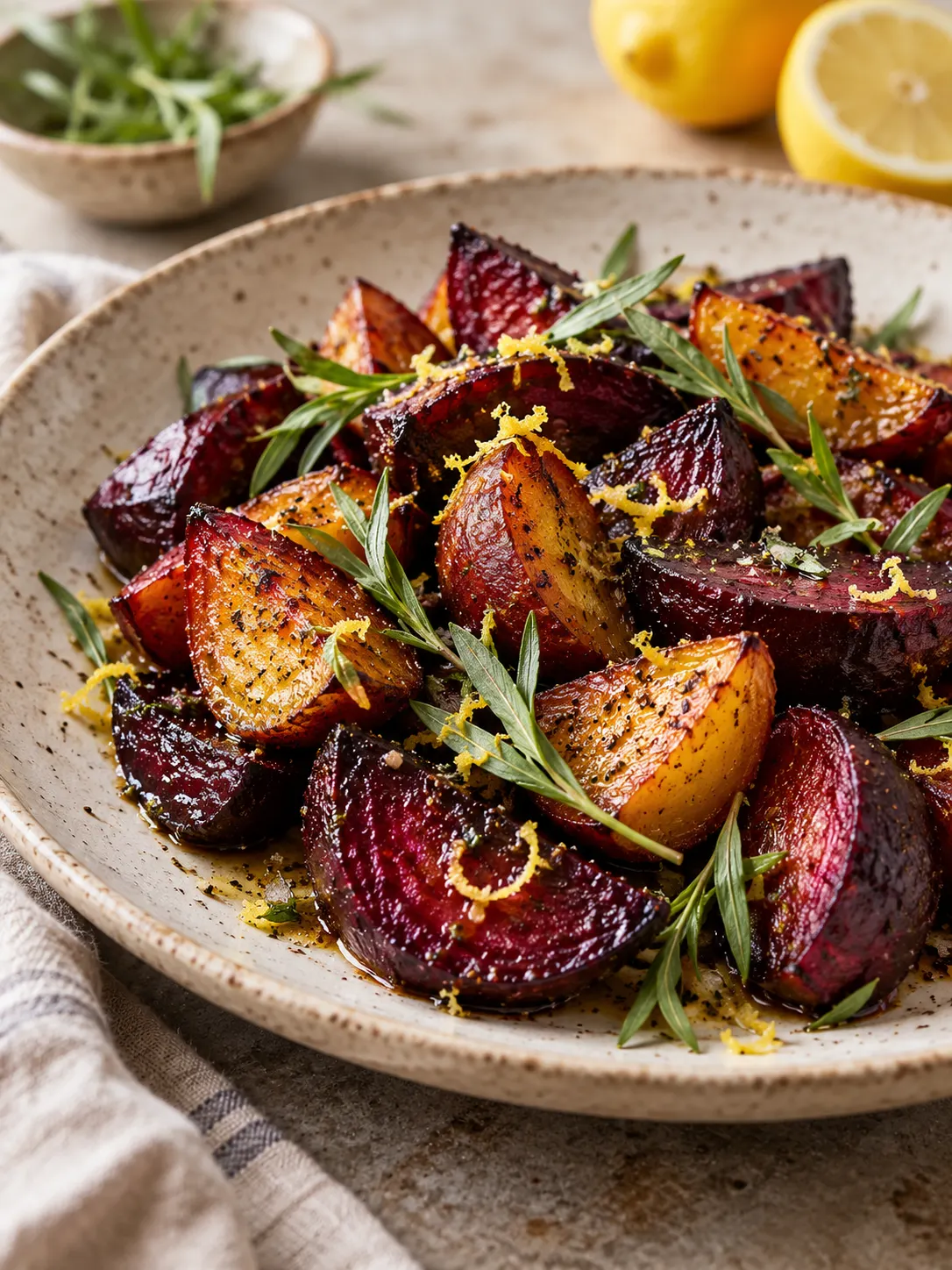
Place the peeled, tender beets onto the baking sheet or into a shallow roasting dish. Drizzle with 2 tablespoons of honey, then toss thoroughly with 1 tablespoon of freshly grated lemon zest and 2 tablespoons of chopped fresh tarragon. Spread the pieces into a single layer so the honey coats every side.
6. Final High-Heat Roast
Return the seasoned beets to the 425°F oven for an additional 5 minutes. Watch closely as the honey bubbles and forms a shiny, aromatic glaze that clings to the beets without scorching.
7. Rest and Serve
Remove the tray from the oven and allow the beets to rest at room temperature for 3 to 5 minutes before transferring them to a serving platter. This brief rest lets the warm honey glaze thicken slightly and cling to the beet surfaces. When serving alongside roasted poultry or meats, always verify your main dish meets established safe minimum internal temperatures before bringing dinner to the table.
Expert Chef Tips & Troubleshooting
- Uniform Sizing is Essential: Beets cook at different rates depending on density and water content. Slicing your beets into consistent 1-inch wedges guarantees that every piece reaches tender doneness at the exact same moment.
- Preventing Steam Burns: Foil packets build up pressurized steam during roasting. Always open the crimped seams with tongs or an oven mitt, directing the opening away from your body and face.
- Managing Red Beet Staining: Red beet juice contains betanin pigments that readily stain wooden cutting boards and light countertops. Consider using a plastic cutting board and wearing culinary gloves during the peeling step, or opt for golden beets to keep clean surfaces spotless.
- Verifying Vegetable Freshness: Freshly harvested beets have firm skins that feel heavy for their size. Soft spots, hollow centers, or rubbery flesh indicate age and moisture loss, which will result in dry roasted vegetables. Reviewing standard produce data on the USDA nutritional profile page highlights how moisture retention in fresh root crops directly supports balanced kitchen results.
- Pairing with Other Dishes: These bright, herbal beets complement a variety of dinner menus. For a refreshing beverage alongside rich savory courses, consider serving Dragon Fruit Lemonade, or introduce cold grain elements by preparing a chilled Tortellini Salad for casual gatherings.
Serving Suggestions & Pairings
These honey-glazed beets work wonderfully across multiple dining formats:
- Warm Side Dish: Arrange the warm glazed beets on a wide serving platter garnished with extra sprigs of fresh tarragon and coarse sea salt. They pair exceptionally well with roasted chicken breasts, seared steaks, or pan-roasted white fish.
- Seasonal Grain Bowls: Layer cooled beet wedges over warm quinoa, farro, or brown rice. Add massaged kale, toasted walnut halves, and crumbled goat cheese or feta for a satisfying lunch bowl.
- Green Salads: Chill the roasted beets completely and scatter them over mixed salad greens, baby arugula, or sliced endive dressed with a light lemon vinaigrette.
Storage, Make-Ahead & Reheating
- Refrigeration: Allow cooked beets to cool to room temperature before packing. Store them in an airtight glass or food-safe plastic container in the refrigerator for up to 5 days. Glass containers are particularly recommended for red beets because they will not absorb stubborn red pigments.
- Freezing: Cooked beets freeze well for up to 8 months. Arrange peeled, roasted wedges on a parchment-lined baking sheet in a single layer and freeze until solid (about 2 hours). Transfer the frozen pieces into a heavy-duty freezer bag, press out excess air, and label with the preparation date.
- Reheating: To reheat from the refrigerator, spread beets onto a baking sheet, cover loosely with foil, and warm at 350°F (175°C) for 8 to 10 minutes until heated through. Alternatively, warm them gently in a skillet over low heat with a few drops of water or olive oil. If reheating from frozen, thaw in the refrigerator overnight prior to warming to protect their tender texture.
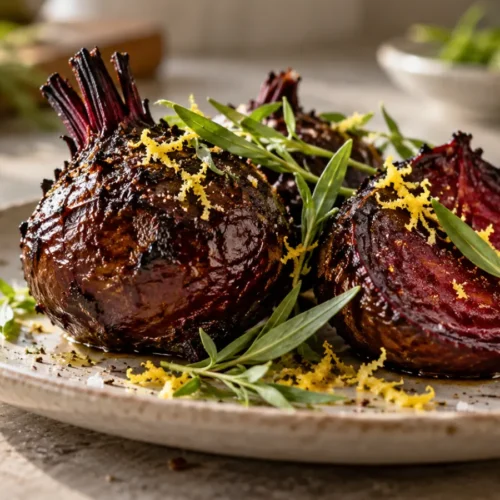
Roasted Beets in Foil with Herbs and Lemon

Equipment
- Oven
- Foil
- Cutting Board
- Knife
Ingredients
Beets
- 2 lbs golden or red beets
- 2 tablespoons olive oil
- 1/2 teaspoon kosher salt
- 1/2 teaspoon fresh-ground black pepper
- 2 tablespoons honey
- 2 tablespoons fresh tarragon
- 1 tablespoon lemon zest
Instructions
- Preheat the oven to 425°F.
- Wrap the beets in foil with olive oil, salt, and pepper.
- Roast the beets for 20-25 minutes or until they are tender when pierced with a fork.
- Remove the skins after roasting.
- Season with additional salt, pepper, and flavorings like lemon zest and honey.
- Return the beets to the oven for an additional 5 minutes to caramelize the honey and lemon zest.
- Let the beets cool before serving.
Notes
- Calories: 140
- Protein: 2g
- Carbohydrates: 20g
- Fat: 7g
- Saturated fat: 1g
- Cholesterol: 0mg
- Sodium: 200mg
- Potassium: 320mg
- Fiber: 4g
- Sugar: 14g
- Vitamin A: 10 IU
- Vitamin C: 20mg
- Calcium: 4mg
- Iron: 10mg
Frequently Asked Questions
What is the best way to store roasted beets to maintain their flavor and texture?
Cool the beets thoroughly to room temperature before sealing them in an airtight glass container to prevent moisture condensation, which can make them mushy. Keep the container in the coldest part of your refrigerator for up to 5 days. For long-term storage, freeze the roasted pieces in a single layer before packing into airtight freezer bags for up to 8 months.
Can I use different types of beets for roasting, and will it affect the flavor?
You can use red, golden, or striped Chioggia beets in this recipe with consistent success. Golden beets provide a milder, sweeter flavor profile with less earthy depth, whereas classic red beets offer deep mineral richness and vibrant color. If combining varieties in one batch, roast them in separate foil packets so red pigments do not discolor lighter golden beets.
How do I remove the skins from roasted beets, and is it necessary?
Removing beet skins after roasting is quick because trapped steam separates the outer skin from the tender flesh beneath. Simply hold each warm beet in a dry paper towel and press gently with your thumbs; the skin will slide off cleanly. While thin skins on young spring beets are technically edible after scrubbing, removing them delivers a far silkier texture and better glaze adhesion.
Can I add other ingredients to the roasted beets to enhance their flavor?
This versatile base accepts many complementary flavors, including a light splash of fresh lemon juice, crushed coriander seeds, or a pinch of garlic powder added during the honey glaze step. You can also finish the plated beets with toasted crushed walnuts, pumpkin seeds, or fresh mint leaves right before serving. Adjust seasonings to match the primary proteins on your dinner menu.