
Bread has been a staple of human existence for millennia, but few loaves carry the historical significance and nutritional profile of Ezekiel bread. Inspired by the Holy Scripture verse Ezekiel 4:9, this unique bread is crafted not from processed flour, but from a specific combination of ancient grains and legumes. The result is a complete protein source that is hearty, earthy, and deeply satisfying.
Table of Contents
If you have been searching for a healthy bread recipe that transcends the empty calories of white sandwich loaves, you have found it. Unlike standard store-bought varieties, this homemade version allows you to control the quality of the grains, ensuring no preservatives or hidden sugars make their way onto your plate.
The Cost Breakdown: Why Bake It?
One of the biggest complaints regarding the cost of ezekiel bread is the price tag in the freezer aisle. Below is a breakdown of why baking the best Ezekiel bread recipe at home is a financial win.
| Item | Store-Bought (Food for Life) | Homemade (Bulk Buying) |
|---|---|---|
| Price Per Loaf | $7.49 – $8.99 | ~$2.10 |
| Ingredients | Standard Organic | Customizable / Premium |
| Freshness | Frozen for transport | Freshly Baked |
By buying ingredients in bulk, you save nearly $5.00 per loaf. For a family that consumes two loaves a week, that is an annual saving of over $500.
Sourcing Ingredients: The Ultimate Guide
A major hurdle for home bakers is sourcing ezekiel ingredients. You likely won’t find spelt berries or millet in the average baking aisle. When people ask Ezekiel bread flour where to buy, the answer is: you make it yourself. Here is exactly where to find the grains for this recipe:
- Hard Red Wheat & Spelt: Available at Whole Foods (Bulk Bins), Sprouts, or online via Bob’s Red Mill.
- Millet & Barley: often found in the soup or cereal aisle of health food stores.
- Dry Beans (Lentils, Kidney, Pinto, Northern): Standard grocery store dry bean aisle.
- Bulk Online Options: For the best price, order 5lb+ bags from Azure Standard, Pleasant Hill Grain, or Palouse Brand on Amazon.
Ingredients
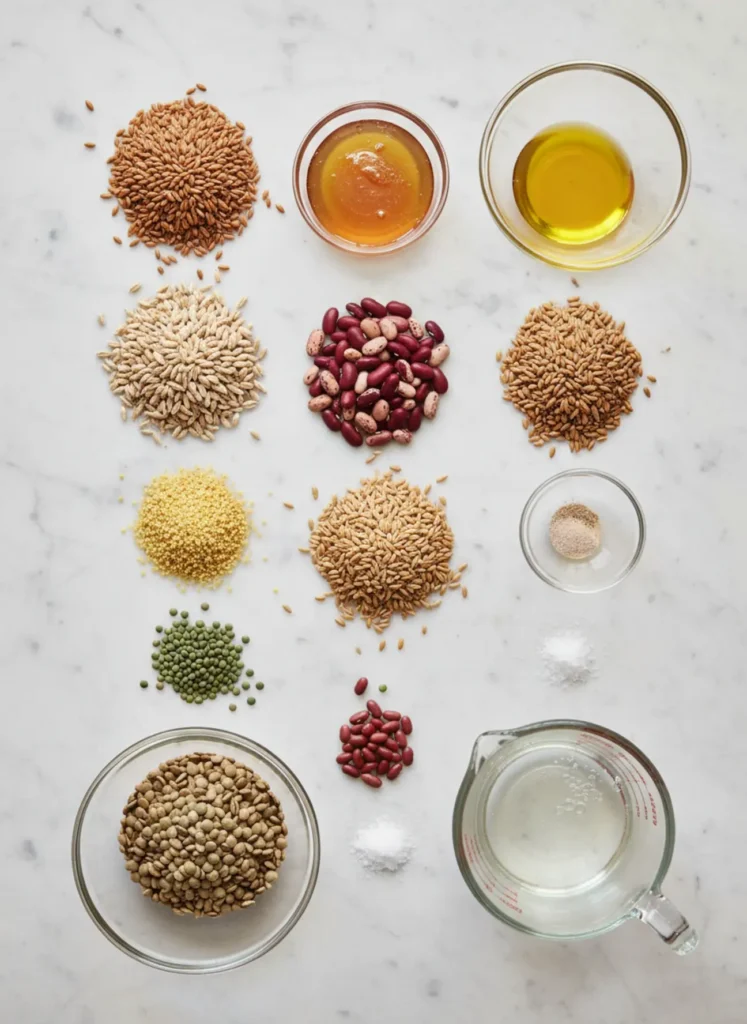
- 2 1/2 cups Hard Red Wheat berries
- 1 1/2 cups Spelt berries
- 1/2 cup Barley (hulled)
- 1/2 cup Millet
- 1/4 cup Green Lentils (dry)
- 2 tbsp Great Northern Beans (dry)
- 2 tbsp Red Kidney Beans (dry)
- 2 tbsp Pinto Beans (dry)
- 4 cups Warm Water (110°F)
- 1 cup Honey
- 1/2 cup Olive Oil
- 2 tbsp Active Dry Yeast
- 2 tsp Salt
- Optional: Vital Wheat Gluten or Sunflower Lecithin (for structure)
Instructions
- Combine all dry grains and beans (Wheat, Spelt, Barley, Millet, Lentils, Northern, Kidney, and Pinto beans) in a large bowl.
- Using a grain mill or high-powered blender, grind the dry mixture into a fine fresh flour.
- In a large mixer bowl, combine warm water, honey, olive oil, and yeast. Let sit for 5 minutes until the yeast is bubbly.
- Add the freshly milled flour, salt, and optional gluten/lecithin to the wet ingredients.
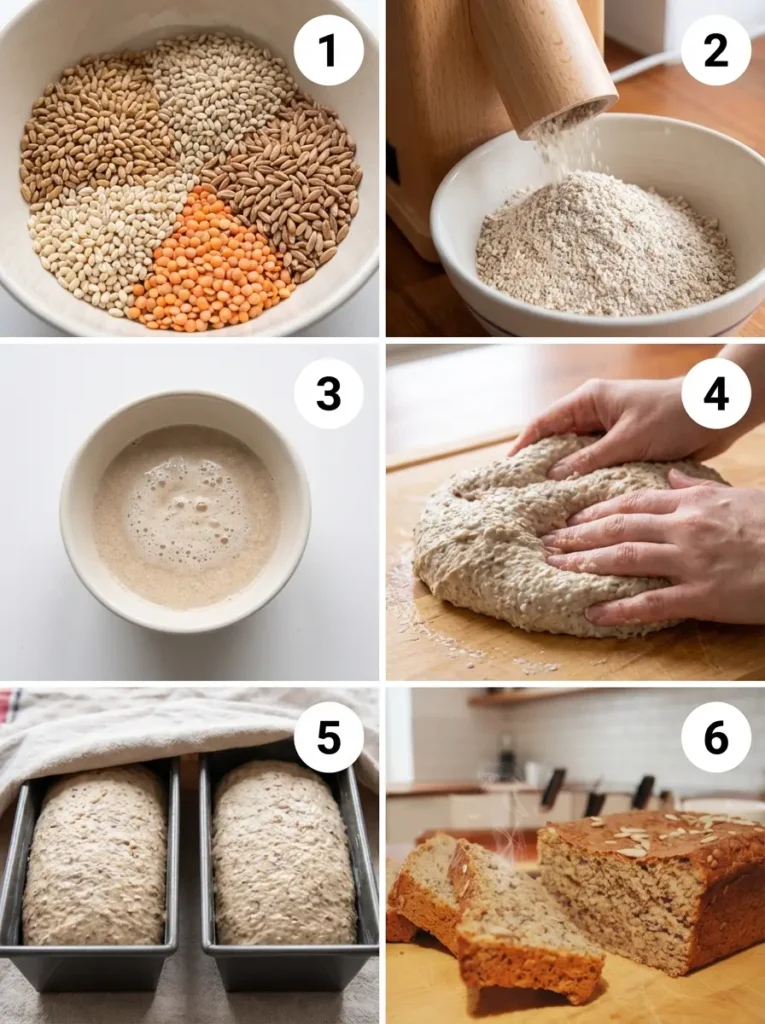
- Mix on low speed until combined, then knead on medium speed for about 10 minutes. Note: The dough will remain sticky and wet (batter-like); do not add extra flour to make it stiff.
- Divide the dough evenly between two greased loaf pans.
- Cover and let rise in a warm place for about 60 minutes, or until the dough reaches the top of the pans.
- Preheat oven to 350°F (175°C).
- Bake for 45-50 minutes, or until the loaves are golden brown and sound hollow when tapped.
- Remove from pans and cool completely on a wire rack before slicing. Store in the freezer or consume within 3-5 days to prevent spoilage.
Milling vs. Sprouting: Understanding the Method
The primary difference between Ezekiel bread and regular bread lies in the ingredients. Standard bread is typically made from wheat flour. In contrast, the Ezekiel bread ingredients list is a powerhouse diversity of wheat, spelt, barley, millet, lentils, and various beans.
When these ingredients are combined, they create a protein profile that mimics the amino acid balance found in milk or eggs. This makes it an exceptional choice for vegetarians. Furthermore, because you are milling the grains yourself, you retain the bran and germ, maximizing the benefits of incorporating whole grains into your diet.
Note on Sprouting: Many commercial versions use sprouted grains. While you can explore the potential benefits of sprouted grains, the process takes days. This recipe uses the dry milling method, which is significantly faster and easier for beginners while still retaining massive nutritional value.
Flavor Profile Management
A common concern with bean-based breads is the “earthy” aftertaste. If you are sensitive to this, here are two pro-tips to manage the flavor profile:
- Acid Balance: Add 1 tablespoon of lemon juice to the wet ingredients. The acidity helps neutralize the bean flavor without making the bread sour.
- Sweeteners: While our recipe uses honey, swapping half the honey for molasses can mask the bitterness of the lentils and provide a richer, darker color.
Dietary Considerations: Gluten and Vegan Options
A common misconception leads to searches for a Gluten free Ezekiel bread recipe. It is vital to understand that this recipe contains wheat, spelt, and barley, all of which contain gluten. It is strictly unsafe for those with celiac disease. For a deeper dive, read about understanding gluten and celiac disease before baking for friends with sensitivities.
However, if you are looking for a Vegan Ezekiel bread recipe, this recipe is easily adaptable. Simply substitute the honey with agave nectar or maple syrup.
Troubleshooting: Avoiding the “Brick Loaf”
Baking with legumes presents unique challenges. Here is how to ensure a fluffy rise:
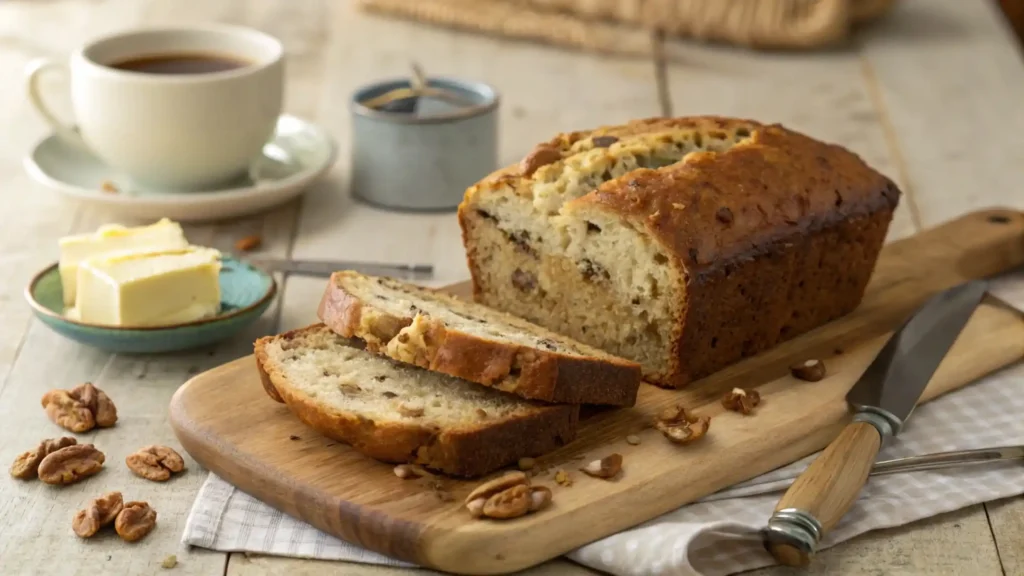
- The Dough Consistency: Unlike a standard banana nut bread recipe, Ezekiel dough is sticky. It resembles a thick batter more than pizza dough. Do not add extra flour. If you dry out the dough, you will bake a brick.
- Vital Wheat Gluten: Legumes do not develop gluten. To counteract the heaviness of the bean flour, we highly recommend adding Vital Wheat Gluten (1-2 tablespoons per loaf). This acts as a scaffolding, helping the bread rise higher and holding the structure, similar to the texture in a zucchini bread.
Equipment & Variations
To make this recipe, you need a grain mill or a high-powered blender (like a Vitamix) to grind the berries and beans. You might see variations like Ezekiel bread recipe Thermomix or Bread machine ezekiel adaptations online. While our method focuses on a stand mixer and oven bake, the ingredients remain the foundation.
If you enjoy hearty, nutrient-packed baked goods, you might also enjoy trying our vegan cheddar cheese bread for a savory twist, or perhaps this ingredient banana bread recipe for something sweeter.
Sourdough vs. Yeast
There is often debate regarding Sourdough Ezekiel bread recipe methods versus commercial yeast. Sourdough utilizes wild yeast and fermentation to break down anti-nutrients. However, because of the bean flour content, sourdough fermentation can produce strong, sour flavors. This recipe uses active dry yeast for a consistent, lighter rise.
Ezekiel bread is dense, meaning a single slice is incredibly filling. This is largely due to the legumes which boost the fiber content. We know the health benefits of dietary fiber include better digestion and sustained energy levels. If you are in the mood for something seasonal after mastering this loaf, check out our pumpkin chocolate chip bread.
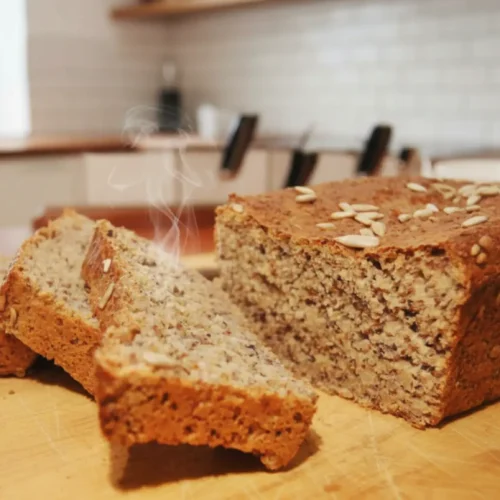
Ezekiel Bread Recipe

Ingredients
- 2 1/2 cups Hard Red Wheat berries
- 1 1/2 cups Spelt berries
- 1/2 cup Barley hulled
- 1/2 cup Millet
- 1/4 cup Green Lentils dry
- 2 tbsp Great Northern Beans dry
- 2 tbsp Red Kidney Beans dry
- 2 tbsp Pinto Beans dry
- 4 cups Warm Water 110°F
- 1 cup Honey
- 1/2 cup Olive Oil
- 2 tbsp Active Dry Yeast
- 2 tsp Salt
- Optional: Vital Wheat Gluten or Sunflower Lecithin for structure
Instructions
- Combine all dry grains and beans (Wheat, Spelt, Barley, Millet, Lentils, Northern, Kidney, and Pinto beans) in a large bowl.
- Using a grain mill or high-powered blender, grind the dry mixture into a fine fresh flour.
- In a large mixer bowl, combine warm water, honey, olive oil, and yeast. Let sit for 5 minutes until the yeast is bubbly.
- Add the freshly milled flour, salt, and optional gluten/lecithin to the wet ingredients.
- Mix on low speed until combined, then knead on medium speed for about 10 minutes. Note: The dough will remain sticky and wet (batter-like); do not add extra flour to make it stiff.
- Divide the dough evenly between two greased loaf pans.
- Cover and let rise in a warm place for about 60 minutes, or until the dough reaches the top of the pans.
- Preheat oven to 350°F (175°C).
- Bake for 45-50 minutes, or until the loaves are golden brown and sound hollow when tapped.
- Remove from pans and cool completely on a wire rack before slicing. Store in the freezer or consume within 3-5 days to prevent spoilage.
Notes
Frequently Asked Questions
Is Ezekiel bread actually healthy?
Yes, it is widely considered one of the healthiest breads available. It is rich in protein, fiber, and essential nutrients, and lacks the refined sugars and additives found in white bread.
What are the ingredients of Ezekiel bread?
The core ingredients are Wheat, Spelt, Barley, Millet, Lentils, Great Northern Beans, Kidney Beans, and Pinto Beans.
My bread turned out heavy and dense. Why?
This is usually because too much flour was added during kneading. The dough must be sticky. Alternatively, omitting Vital Wheat Gluten can result in a denser loaf because the heavy bean flour inhibits the rise.
What is better for you, sourdough bread or Ezekiel bread?
Both are excellent choices compared to white bread. Ezekiel bread generally has higher protein content due to the legumes, while sourdough may be easier to digest due to fermentation. The choice depends on your nutritional goals.
How is Ezekiel bread different from regular bread?
Regular bread is usually made from refined wheat flour. Ezekiel bread utilizes a variety of whole grains and legumes, providing a complete protein profile and a lower glycemic index.