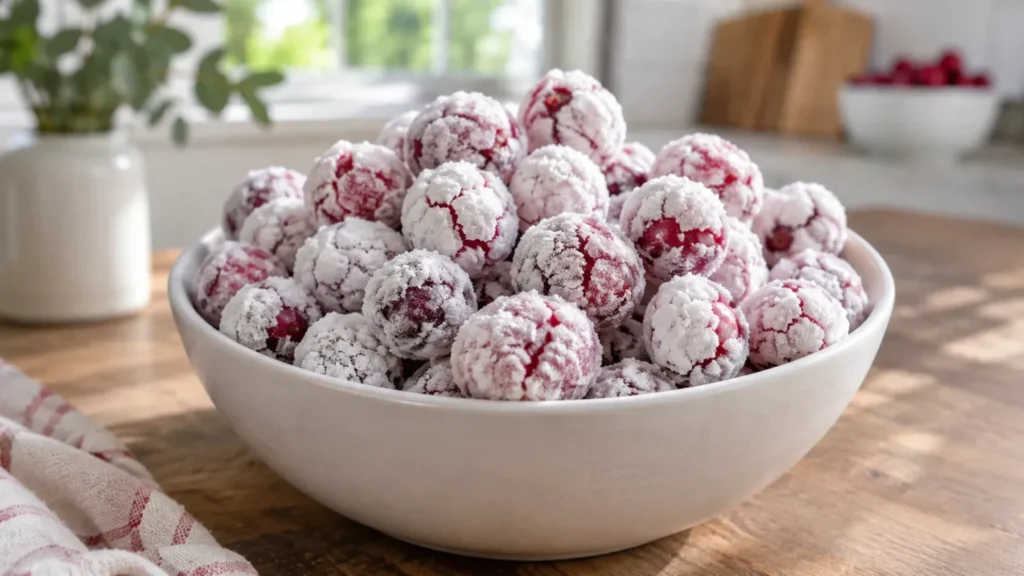
Biting into a fresh cranberry usually delivers an intense, jaw-clenching shock of sourness. This viral popping cranberries recipe transforms that sharp fruit into an irresistible holiday finger food that delivers an audible snap before bursting into a flood of sweet, fragrant juice. By pairing a simple overnight citrus soak with a rapid low-temperature oven setting technique, you create a microscopic crystalline crust that shatters on contact.
Whether you need an eye-catching garnish for festive holiday platters, a vibrant dessert table accent, or a fun conversation piece for family gatherings, this method turns raw cranberries into sweet-and-sour gems. The beauty of this treat lies in its clean simplicity: four everyday ingredients, hands-off resting time, and zero complicated candy thermometers.
Table of Contents
Why You’ll Love This Recipe
- Delivers an audibly crisp, paper-thin sugar shell that shatters before releasing sweet and tart juice.
- Relies on an effortless overnight soak that naturally tenderizes raw cranberries without breaking their skins.
- Requires only five minutes in a low-heat oven to dry and set the delicate confectioners’ glaze.
- Keeps cleanup minimal by using a simple plastic bag tossing technique for mess-free sugar coating.
Key Ingredients & Substitutions
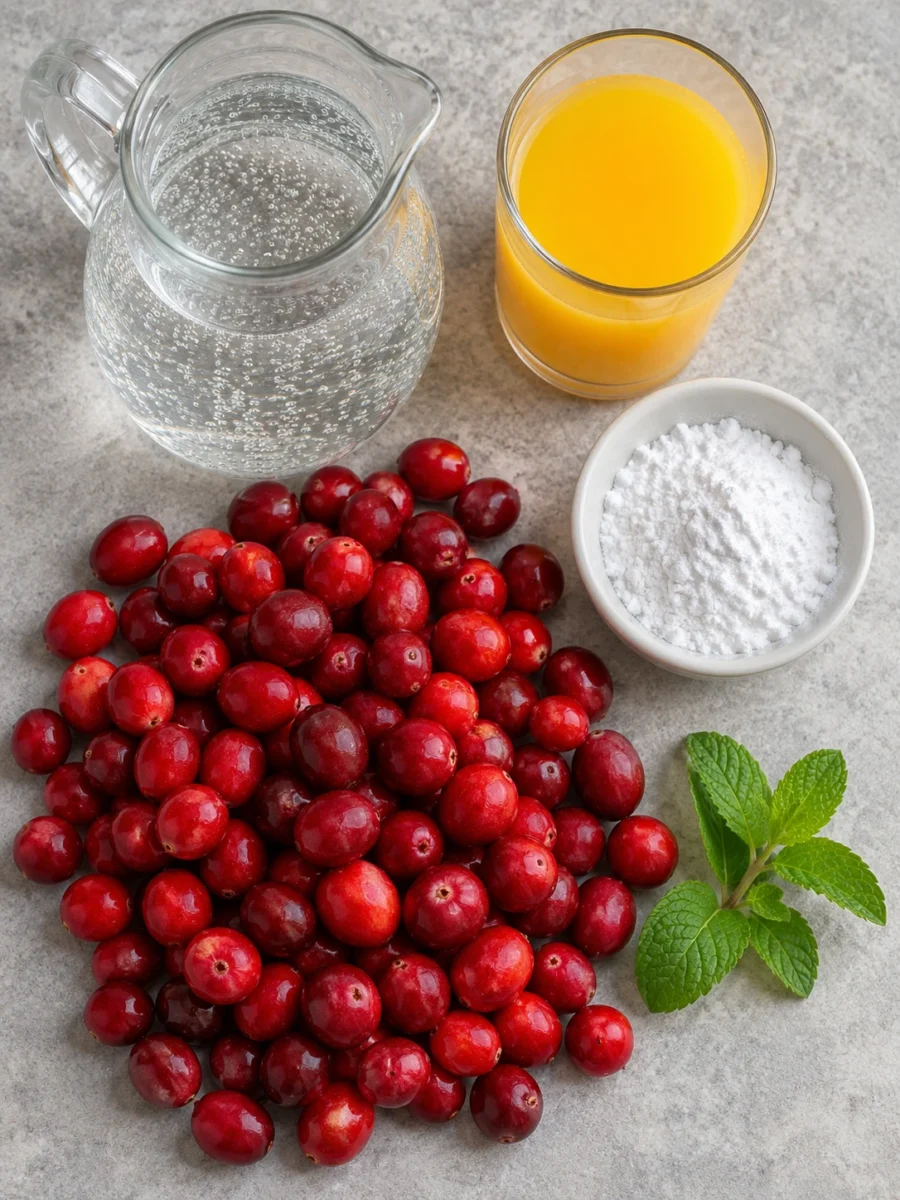
Every component in this recipe serves a functional culinary purpose to balance sugar absorption, moisture retention, and shell formation.
- Fresh Cranberries (12 ounces): Choose firm, glossy, deep-red berries. Sort through the bag carefully and discard any fruit with soft spots, pale blemishes, or wrinkled skin. Firmness is essential; soft berries will collapse during the bake rather than holding the internal tension that creates the distinctive pop.
- Lemon-Lime Soda (1.5 cups): The mild effervescence and citric acid work together to gently soften the fibrous waxy skin of the cranberry. At the same time, the dissolved sugars penetrate the surface, mellowing the fruit’s natural astringency. If you prefer to avoid standard soda, sparkling apple cider or citrus-infused seltzer provides similar acidity and effervescence.
- Orange Juice (1 cup): Pure orange juice provides bright floral top notes that complement tart berries. Its natural fruit sugars help build an adhesive surface layer so the confectioners’ sugar clings evenly during coating. Freshly squeezed or pulp-free bottled juice both work well.
- Powdered Sugar (1 cup): Also sold as confectioners’ sugar, this finely pulverized sugar contains a tiny percentage of cornstarch. When briefly exposed to low heat, the fine particles dissolve slightly with the surface moisture of the fruit and quickly re-crystallize into a brittle, uniform crust. Avoid using granulated sugar here; granulated crystals are too heavy, will not create the thin cracking shell, and will turn grainy rather than crisp.
For anyone tracking ingredient specifications, raw cranberries contain naturally occurring pectin and minimal calories, as detailed in their official USDA nutritional profile.
Step-by-Step Instructions
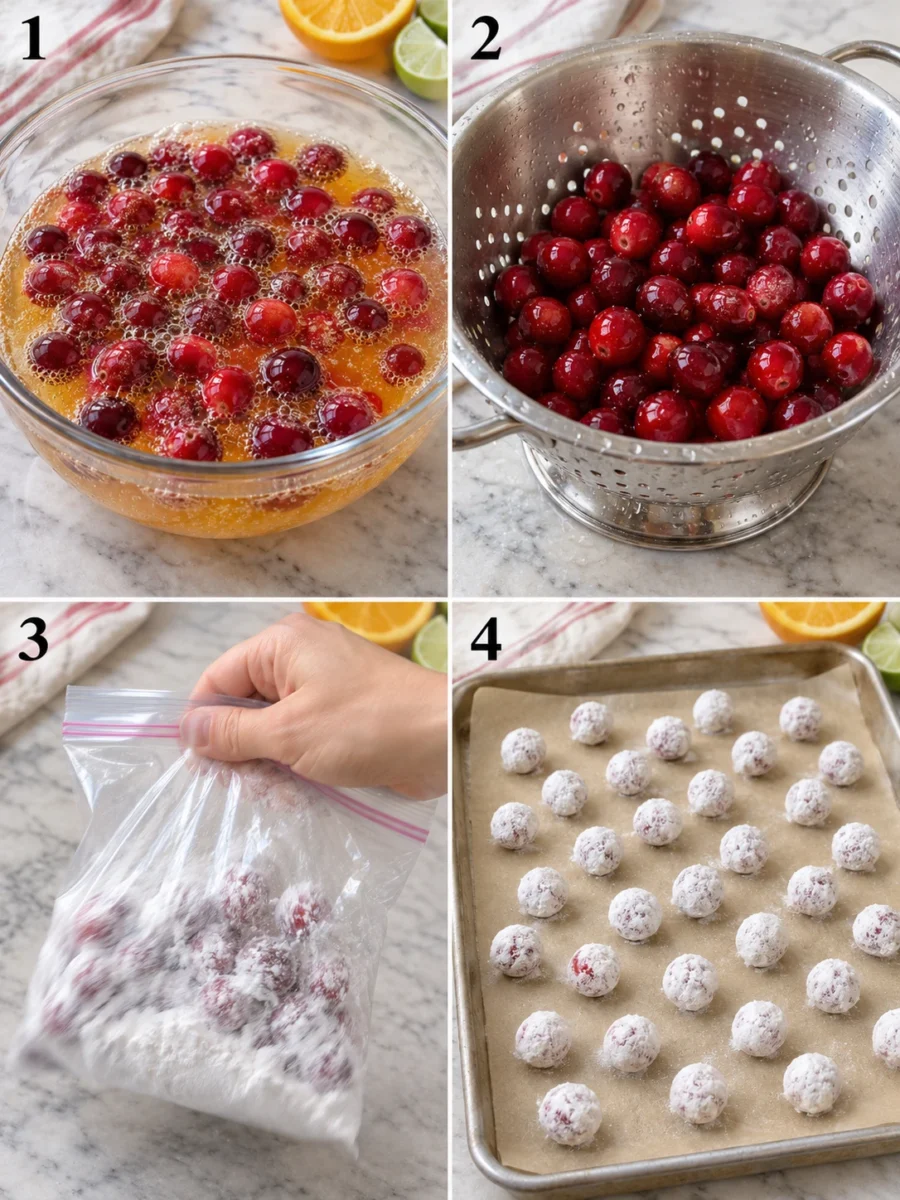
Follow these tested steps closely to ensure your berries achieve that signature crisp shell without bursting open on the baking sheet.
1. Rinse the cranberries in cold water and discard any soft, wrinkled, or bruised berries. Pat the colander gently to drain standing rinse water.
2. In a large glass or ceramic bowl, whisk together the lemon-lime soda and orange juice until completely blended.
3. Add the sorted cranberries to the liquid, pressing gently to make sure they are fully submerged. Cover the bowl tightly with plastic wrap and transfer it to the refrigerator to chill for 12 to 24 hours.
4. When the soak is complete, preheat your oven to 200°F (93°C). Line a large rimmed baking sheet with parchment paper to prevent sticking.
5. Pour the cranberries into a colander to drain the liquid thoroughly. Do not rinse the berries, and do not pat them dry. The residual, tacky citrus film is what allows the powdered sugar to cling to each berry.
6. Measure the powdered sugar into a clean, gallon-sized resealable plastic bag.
7. Add the damp cranberries into the bag in two or three smaller batches. Seal the bag securely, leaving a pocket of air inside, and shake gently for 30 to 45 seconds until every berry is coated in a thick, matte layer of white sugar.
8. Transfer the coated cranberries onto the prepared baking sheet. Spread them into a single, uniform layer, leaving a small gap between each berry so they do not touch.
9. Bake at 200°F for exactly 5 minutes. Watch the timer carefully; this brief flash-bake sets the sugar into a delicate crust without heating the berries enough to expand the internal juices and rupture the skin.
10. Remove the pan immediately from the oven. Let the cranberries cool undisturbed on the baking sheet at room temperature for at least 30 minutes. As they cool, the sugar layer will fully harden into a crisp, cracking shell.
Expert Chef Tips & Troubleshooting
Achieving the ideal texture with this popping cranberries recipe depends on managing surface moisture and thermal expansion. Here is how to avoid common pitfalls:
- Do Not Overbake: The most frequent error is leaving the sheet in the oven for even two or three minutes too long. If the berries get hot, the water inside will turn to steam, causing the fruit to burst into a pool of red syrup. Keep your oven strictly at 200°F and set an accurate timer for 5 minutes.
- Work in Batches During the Shake: Dumping the entire bag of wet fruit into the sugar at once will result in gummy clusters. Working in batches keeps the berries separate and ensures an even, snowy coating.
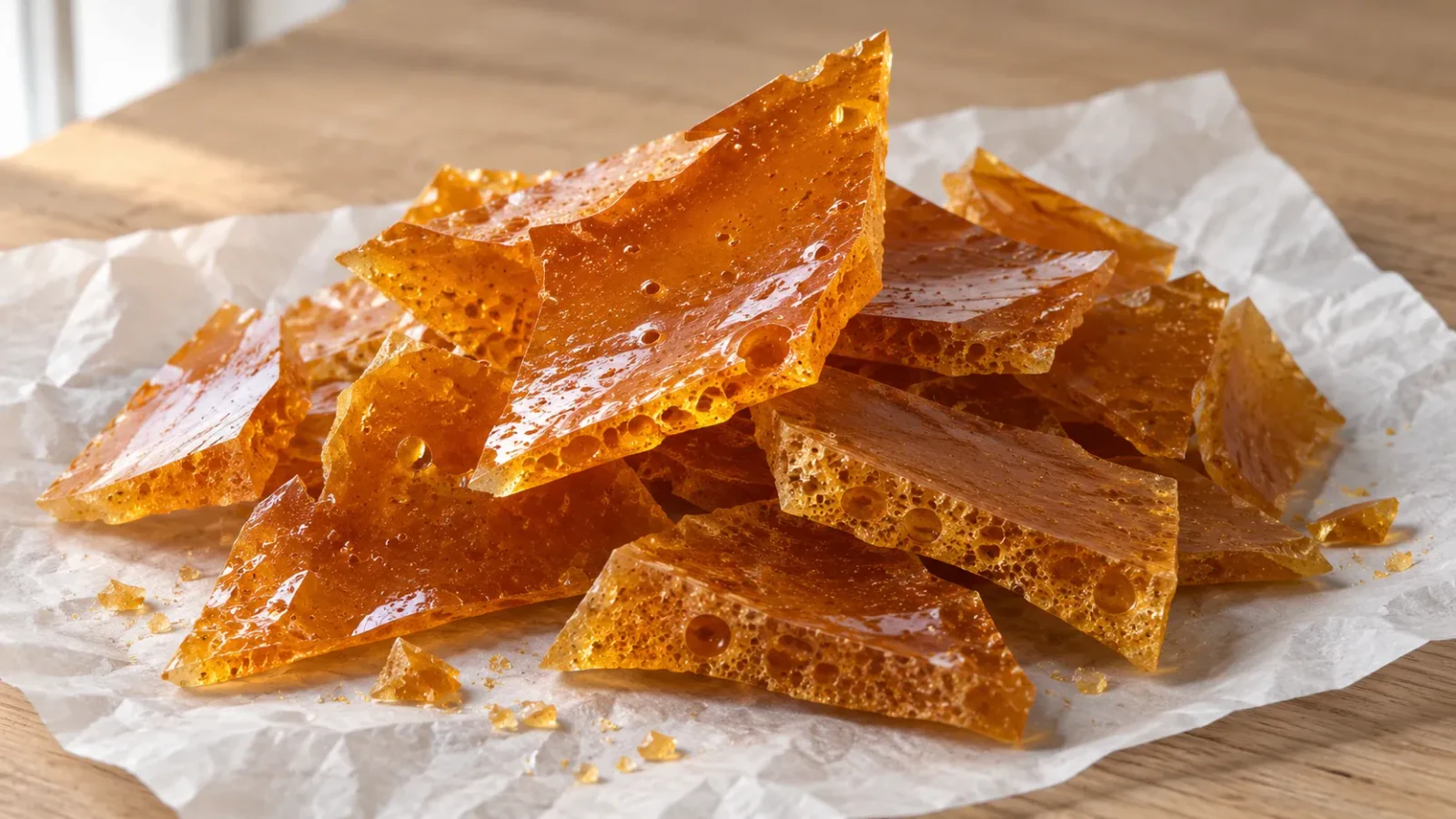
- Pairing on Holiday Platters: These jewel-toned snacks make a wonderful companion to rich, buttery holiday sweets. If you are curating a dessert board, they balance heavier confections like traditional chocolate-toffee Christmas Crack or a salted-caramel-style Christmas Crack Recipe, offering a clean, mouth-cleansing burst between rich chocolate bites.
- If the Sugar Looks Tacky After Cooling: If your kitchen is warm or humid, the crust may take up to 45 minutes to finish setting. Allow ample air circulation and avoid covering the baking sheet while they rest.
Storage, Make-Ahead & Reheating
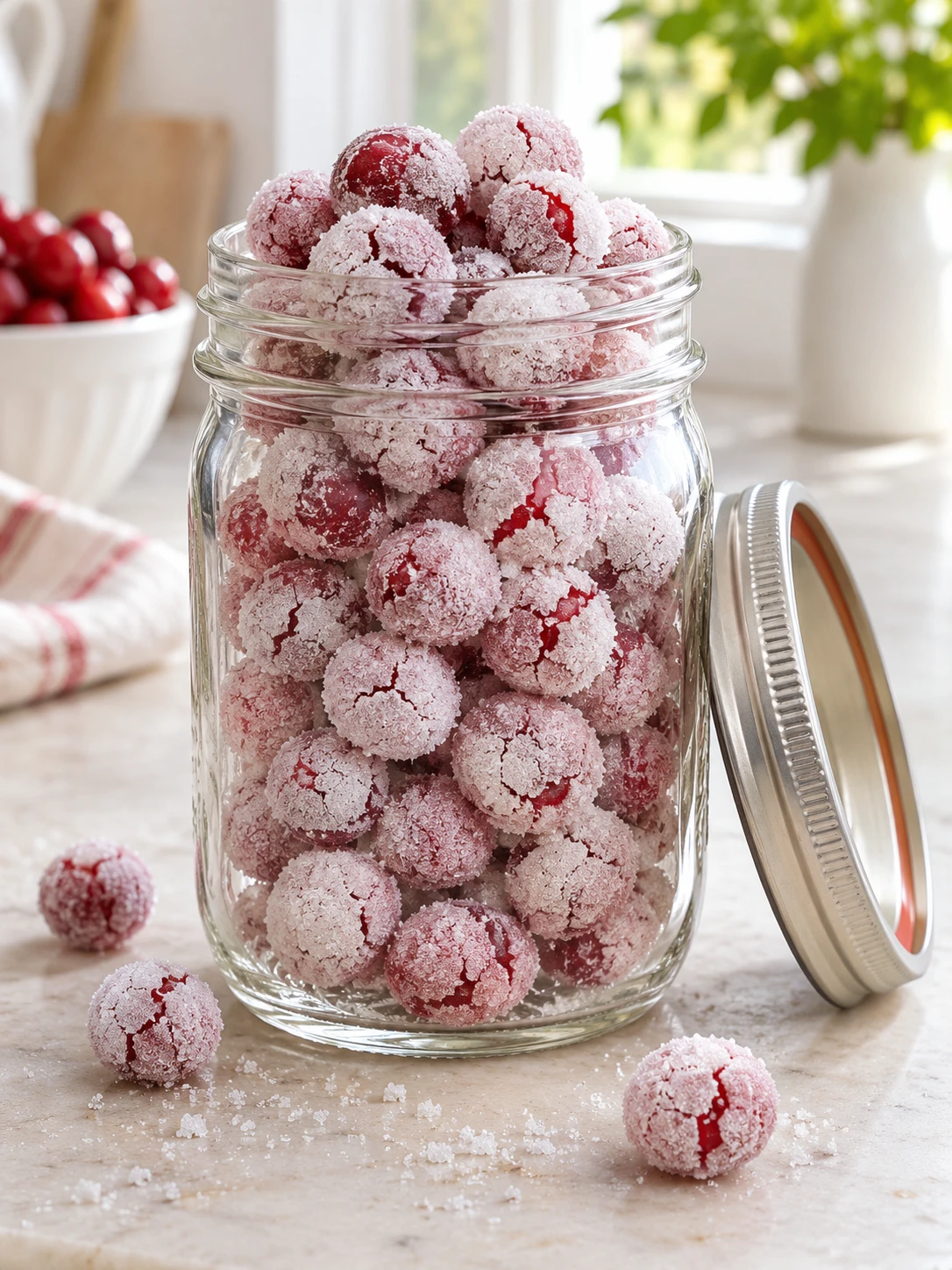
Because powdered sugar is naturally hygroscopic (it readily pulls moisture from the ambient air), proper storage is essential to preserving the crisp bite.
- Room Temperature Storage: Once the berries have cooled completely and their outer shells feel dry and hard to the touch, transfer them gently into a wide, shallow airtight container lined with a sheet of dry parchment paper. Arrange them in a single layer or at most two layers separated by parchment. Store at cool room temperature away from direct sunlight for up to 2 days.
- Why You Should Avoid the Refrigerator: Do not refrigerate the finished, baked berries. Standard household refrigerators are high-humidity environments. Moisture will dissolve the fine sugar shell within hours, leaving the fruit sticky and wet.
- Make-Ahead Strategy: The best way to prepare this dish ahead of time is to prolong the soaking phase. Berries can safely remain in the citrus-soda liquid inside the refrigerator for up to 36 hours without degradation. You can follow safe cold food storage guidelines to ensure your raw ingredients stay cold and fresh before baking. When you are ready to serve, simply drain, shake in sugar, and flash-bake shortly before guests arrive.
- Reheating: Do not reheat or re-bake these berries once cooled. Additional oven exposure will soften the fresh fruit and melt the fragile exterior coating.
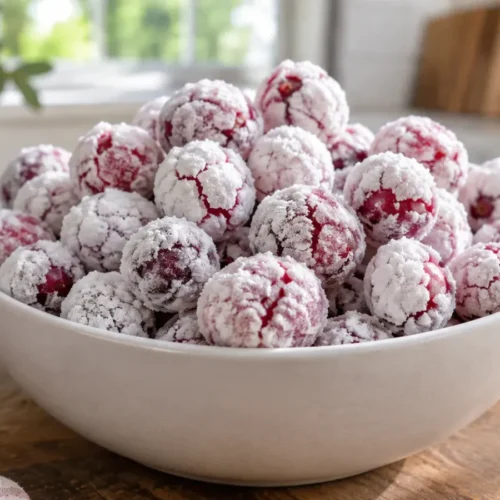
Popping Cranberries Recipe with Powdered Sugar

Equipment
- Large glass bowl
- Colander
- Baking Sheet
- Parchment paper
- Gallon-size resealable plastic bag
Ingredients
Cranberry Base
- 12 ounces fresh cranberries rinsed and sorted
- 1.5 cups lemon-lime soda chilled
- 1 cup orange juice pulp-free
Sugar Coating
- 1 cup powdered sugar confectioners’ sugar
Instructions
- Rinse the cranberries in cold water and discard any soft or bruised berries.
- In a large bowl, whisk together the lemon-lime soda and orange juice until combined.
- Add the cranberries to the liquid, ensure they are fully submerged, cover the bowl, and refrigerate for 12 to 24 hours.
- Preheat your oven to 200°F and line a large rimmed baking sheet with parchment paper.
- Drain the cranberries using a colander, but do not rinse or pat them dry; the residual stickiness from the soak is necessary for the coating.
- Place the powdered sugar into a large resealable plastic bag.
- Add the damp cranberries to the bag in batches and shake gently until each berry is evenly and heavily coated in sugar.
- Spread the coated cranberries in a single layer on the prepared baking sheet, ensuring they are not touching.
- Bake at 200°F for exactly 5 minutes to set the sugar crust without melting it or bursting the berries.
- Remove from the oven and let the cranberries cool completely on the baking sheet for at least 30 minutes until the shell is hard and ‘cracking’ to the touch.
Notes
- Calories: 78
- Protein: 0g
- Carbohydrates: 20g
- Fat: 0g
- Saturated fat: 0g
- Cholesterol: 0mg
- Sodium: 6mg
- Potassium: 45mg
- Fiber: 1g
- Sugar: 18g
- Vitamin A: 35 IU
- Vitamin C: 14mg
- Calcium: 6mg
- Iron: 0.1mg
Frequently Asked Questions
Why do these cranberries “pop” when you bite them?
The popping sensation comes from the combination of a long soak in a citrus-soda mixture and a quick “flash bake” at a low temperature. This process creates a thin, brittle sugar shell around the fresh berry that bursts when pressure is applied, releasing the tart juice inside.
Can I skip the 12–24 hour soaking period?
While it is tempting to rush, the long soak is essential for the powdered sugar to adhere correctly and for the flavors to penetrate the tart skin. Without this time, the sugar will likely slide off or become clumpy rather than forming the signature “cracking” crust.
How should I store popping cranberries to keep them from getting sticky?
To maintain the crunch, ensure the berries are completely cooled on the baking sheet before moving them. Store them in a single layer in an airtight container at room temperature for up to two days; avoid the refrigerator, as the moisture will cause the sugar coating to “weep” and become tacky.
What can I use instead of lemon-lime soda for the soaking liquid?
If you prefer a natural alternative or want to reduce processed sugar, you can replace the soda with sparkling apple cider or a flavored seltzer. These options provide the necessary carbonation and acidity to help soften the cranberry skins while maintaining the recipe’s halal-friendly profile.