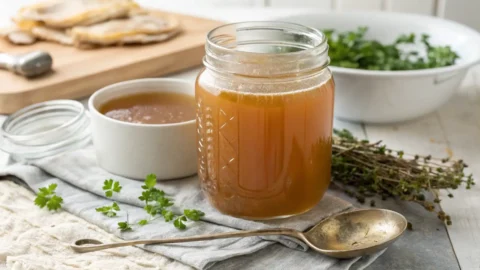
There is a moment in every home cook’s life when they realize that store-bought cartons of broth simply cannot compare to the real thing. Homemade stock is often called “liquid gold” for a reason. It possesses a depth of flavor, a gelatinous richness, and a nutritional profile that elevates soups, stews, and gravies from good to unforgettable.
While many wait until after Thanksgiving to boil down a picked-over carcass, the best turkey stock recipe actually starts with fresh, raw ingredients. By roasting turkey wings before simmering them, we unlock a savory complexity that a simple boil can never achieve. This method draws inspiration from professional kitchens and culinary icons. If you have ever admired a turkey stock recipe Ina Garten might prepare, you know that roasting is the secret weapon.
Table of Contents
Why This Recipe Works
The difference between a watery broth and a rich stock lies in the collagen and the Maillard reaction. By roasting the wings first, we caramelize the proteins and sugars, creating a deep brown color and intense flavor. This is a technique often seen in a Pioneer Woman turkey stock recipe or other rustic, flavor-forward styles. Furthermore, using wings ensures a high ratio of skin and bone to meat, which releases gelatin into the water, giving the stock a luxurious body that coats the spoon.
Ingredients for Liquid Gold
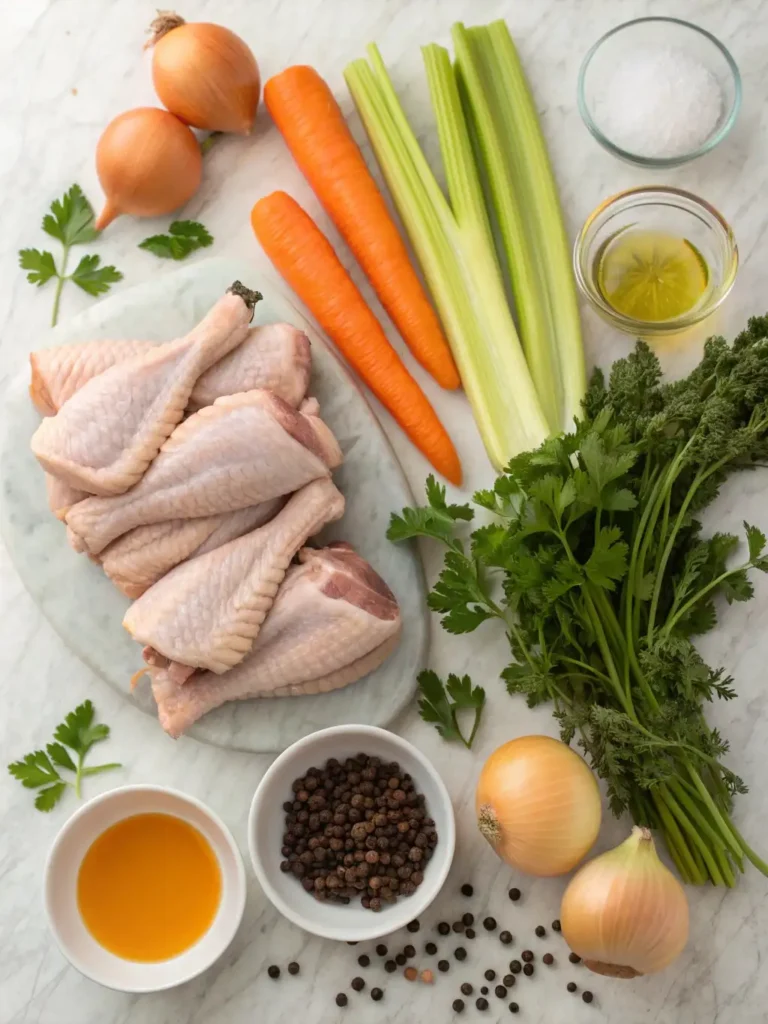
- Turkey Wings: These are the star of the show. They are packed with cartilage and skin, which break down into gelatin.
- Turkey Neck: This is a classic component of a turkey stock recipe from neck and giblets. It adds extra meatiness and collagen.
- Aromatics: We use onions (unpeeled for color), celery, and antioxidant-rich carrots to provide a sweet, vegetal base note.
- Herbs: Fresh thyme and flat-leaf parsley bring brightness that cuts through the rich poultry flavor.
- Water: Always start with cold water to ensure clear stock.
Step-by-Step Instructions
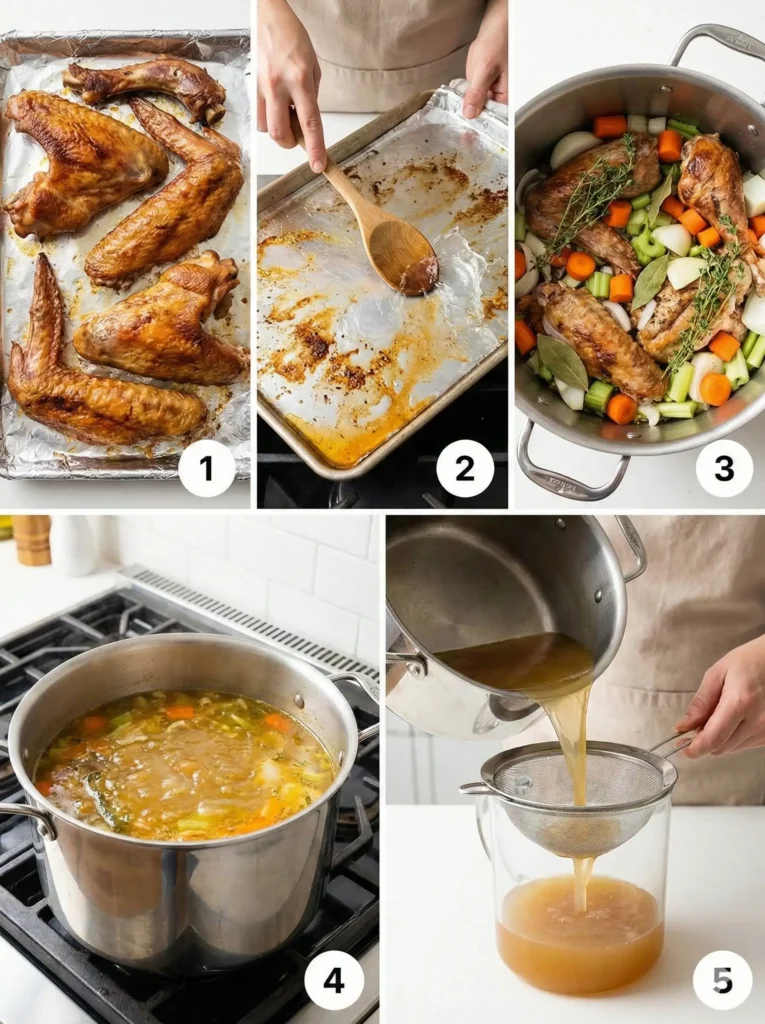
- Roast the Turkey: Preheat your oven to 400°F (200°C). Arrange the turkey wings and neck on a large rimmed baking sheet and drizzle with olive oil. Roast for 45 to 60 minutes, turning once, until the turkey is deeply golden brown. This step is crucial for rich flavor and color.
- Deglaze the Pan: Transfer the roasted turkey parts into a large stock pot or Dutch oven. Pour a cup of water onto the hot baking sheet and scrape up the browned bits (fond) using a wooden spoon. Pour this flavorful liquid into the pot. Do not skip this; that “fond” is pure flavor.
- Combine Ingredients: Add the onions, carrots, celery, thyme, parsley, peppercorns, and kosher salt to the pot.
- Add Water: Pour in enough cold water to cover the ingredients by about an inch.
- Simmer Gently: Bring the pot to a boil over high heat, then immediately reduce to a low simmer.
- Cook: Simmer uncovered for 2.5 to 3 hours. Occasionally skim off any foam or impurities that rise to the surface.
- Strain: Remove from heat. Carefully strain the liquid through a fine-mesh sieve (lined with cheesecloth if desired) into heat-proof containers. Discard the solids.
- Store: Allow the stock to cool completely before refrigerating. Use within 3-4 days or freeze for later use.
Utilizing Your Stock and Health Benefits
Once you have your stock, the culinary possibilities are endless. Because this stock is so rich, it serves as an excellent base for hearty meals. For example, you can use this flavorful liquid to poach meat for a refreshing Turkey Salad, adding a depth of flavor that water simply cannot provide.
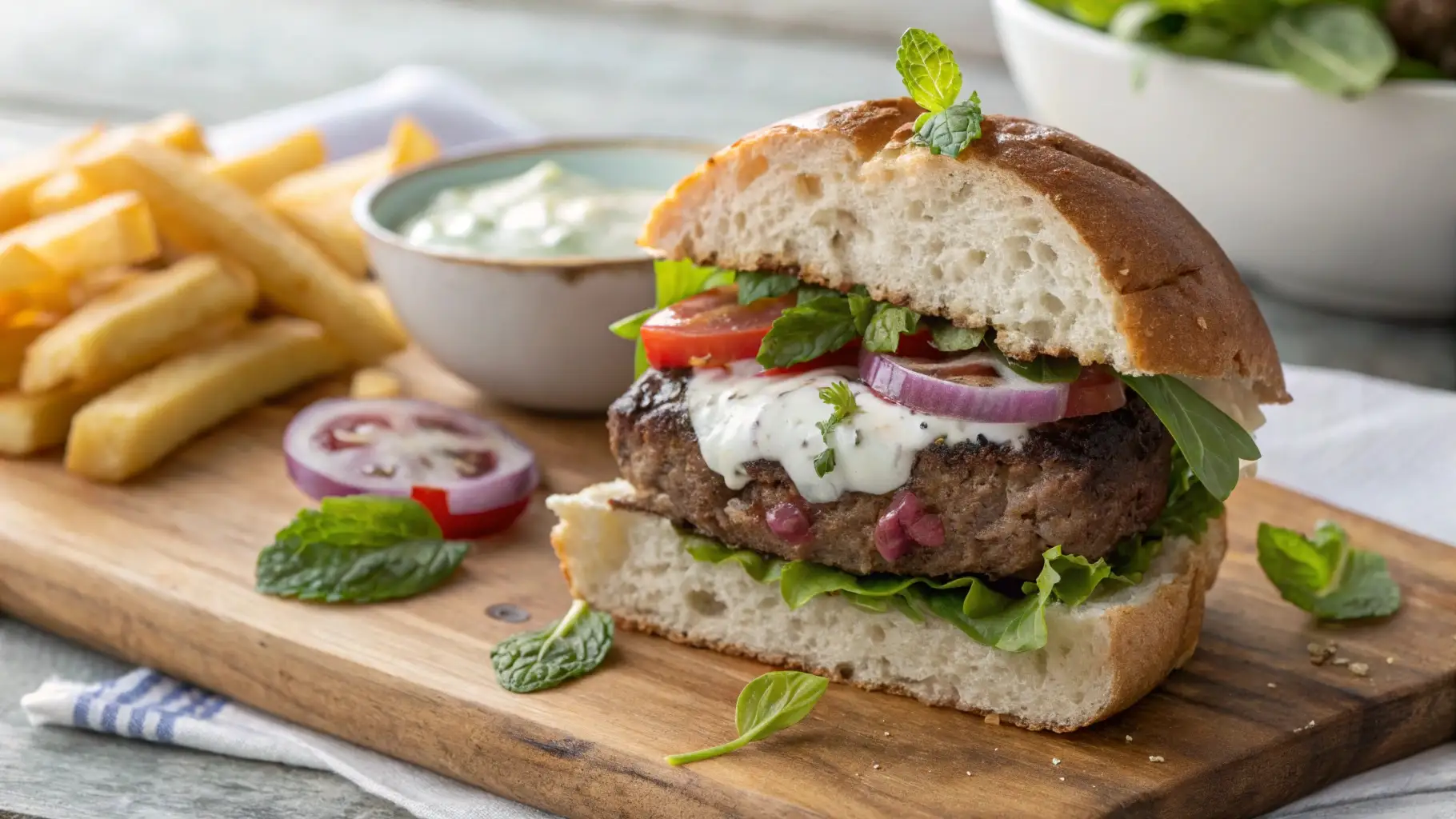
Additionally, if you are looking for a way to keep lean meats juicy, try mixing a few tablespoons of this stock into the mixture for Spinach and Feta Turkey Burgers. The gelatin in the stock helps retain moisture during grilling. You can even use it as the base for a savory enchilada sauce in a Turkey Enchilada Skillet, replacing chicken broth for a more robust turkey profile.
Beyond flavor, we choose wings because of the rich nutritional profile of turkey, which provides essential proteins and vitamins. While we skim the fat during the cooking process to keep the stock clear, understanding saturated fat and its impact on health is important. Homemade stock allows you to control the fat content much better than store-bought versions, as you can easily remove the solidified fat layer once the stock has chilled.
Variations: Slow Cooker and Instant Pot
While the stove-top method is classic, modern appliances can simplify the process.
- Turkey Stock Recipe Slow Cooker: To make this hands-off, roast the wings as directed, then place everything in a slow cooker. Cover with water and cook on low for 8-10 hours. This is similar to an overnight turkey stock method, allowing the flavors to meld while you sleep.
- Instant Pot: Roast the wings, then place ingredients in the pressure cooker. Fill with water (do not exceed the max fill line). Cook on high pressure for 60 minutes with a natural release.
- Leftovers: If you have just finished a holiday meal, you can easily adapt this into a turkey carcass stock recipe. simply substitute the raw wings for the leftover carcass bones. You may not need to roast the bones again if they are already browned, but a quick sear never hurts.
Frequently Asked Questions
Why is roasting the turkey wings so important for rich flavor?
Roasting facilitates the Maillard reaction, a chemical reaction between amino acids and reducing sugars that gives browned food its distinctive flavor. This step transforms a pale, one-dimensional broth into a dark, complex stock with savory depth.
Can I make turkey stock using an Instant Pot or slow cooker?
Absolutely. As mentioned in the variations above, a turkey stock recipe slow cooker method is excellent for extracting collagen over a long period, while an Instant Pot is perfect for saving time. Both methods still benefit greatly from roasting the wings first.
Can I use a leftover turkey carcass to make stock instead of raw wings?
Yes. A turkey carcass stock recipe is a traditional way to reduce waste after a holiday meal. However, raw wings generally produce a stock with more gelatin and a cleaner flavor than cooked bones. If using a carcass, ensure you still include plenty of fresh vegetables and herbs.
Is it normal for homemade turkey stock to be gelatinous?
Yes, and it is actually a sign of success! When cold, a good stock should wobble like jelly. This indicates that you have successfully extracted the collagen from the connective tissues in the wings and neck. When heated, it will return to a liquid state and provide a silky mouthfeel to your soups.
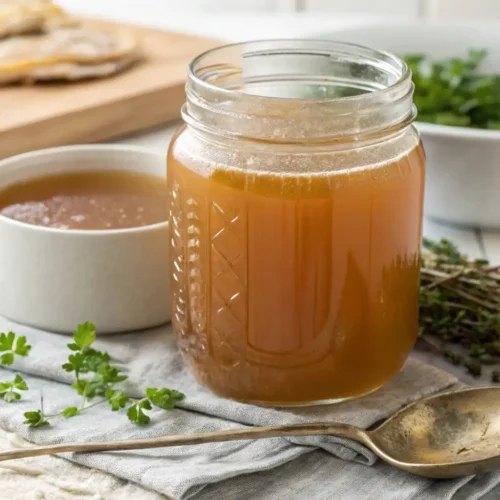
Roasted turkey stock recipe

Ingredients
- 4-5 lbs turkey wings chicken wings can be substituted
- 1 turkey neck optional
- 2 tablespoons olive oil
- 2 large onions unpeeled and quartered
- 3 large carrots roughly chopped
- 3 stalks celery roughly chopped
- 1 bunch fresh thyme
- 1 bunch fresh flat-leaf parsley
- 1 tablespoon whole black peppercorns
- 1 tablespoon kosher salt
- 4 to 6 quarts cold water
Instructions
- Preheat your oven to 400°F (200°C). Arrange the turkey wings and neck on a large rimmed baking sheet and drizzle with olive oil.
- Roast for 45 to 60 minutes, turning once, until the turkey is deeply golden brown. This step is crucial for rich flavor and color.
- Transfer the roasted turkey parts into a large stock pot or Dutch oven.
- Pour a cup of water onto the hot baking sheet and scrape up the browned bits (fond) using a wooden spoon. Pour this flavorful liquid into the pot.
- Add the onions, carrots, celery, thyme, parsley, peppercorns, and kosher salt to the pot.
- Pour in enough cold water to cover the ingredients by about an inch.
- Bring the pot to a boil over high heat, then immediately reduce to a low simmer.
- Simmer uncovered for 2.5 to 3 hours. Occasionally skim off any foam or impurities that rise to the surface.
- Remove from heat. Carefully strain the liquid through a fine-mesh sieve (lined with cheesecloth if desired) into heat-proof containers. Discard the solids.
- Allow the stock to cool completely before refrigerating. Use within 3-4 days or freeze for later use.