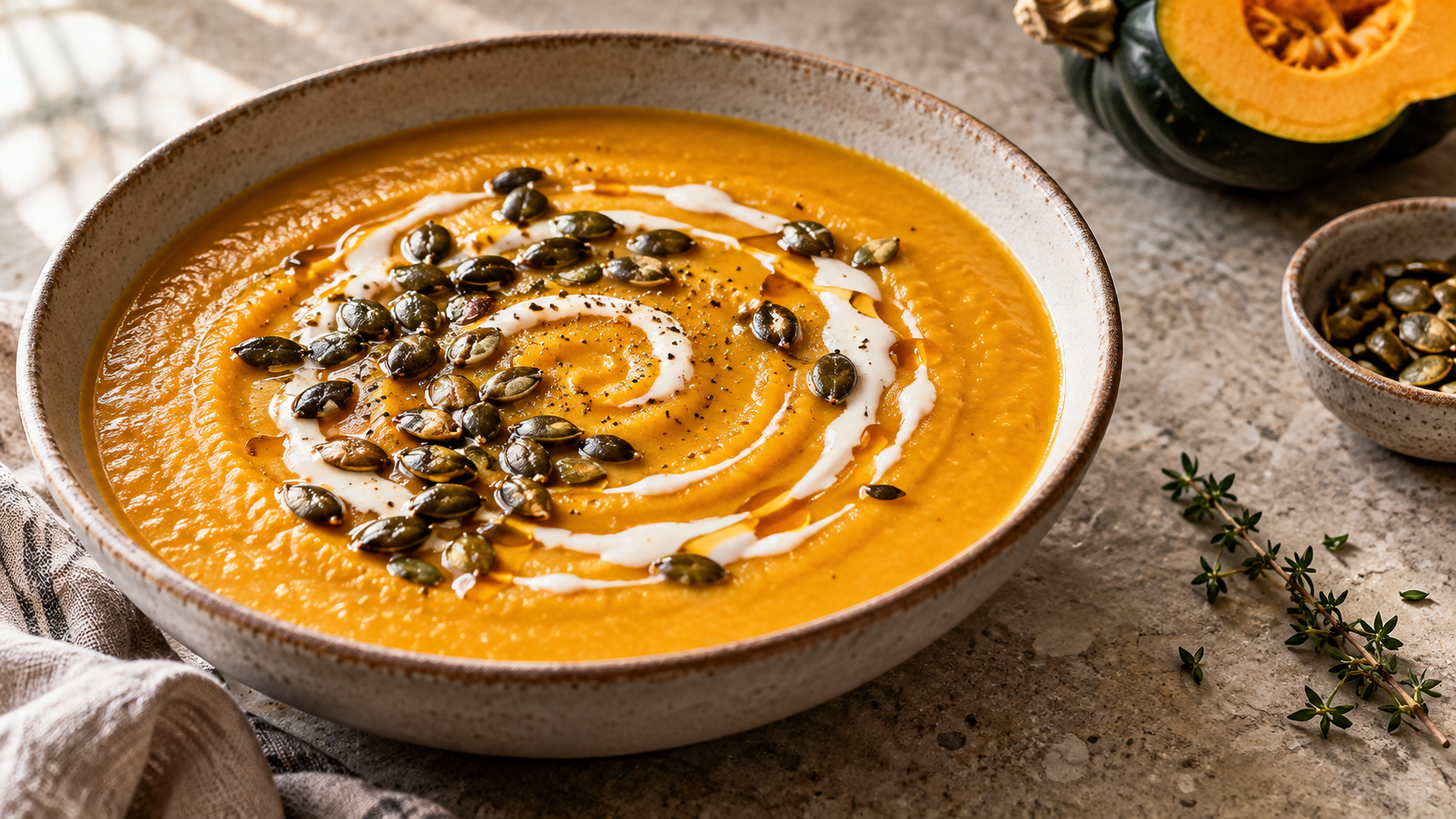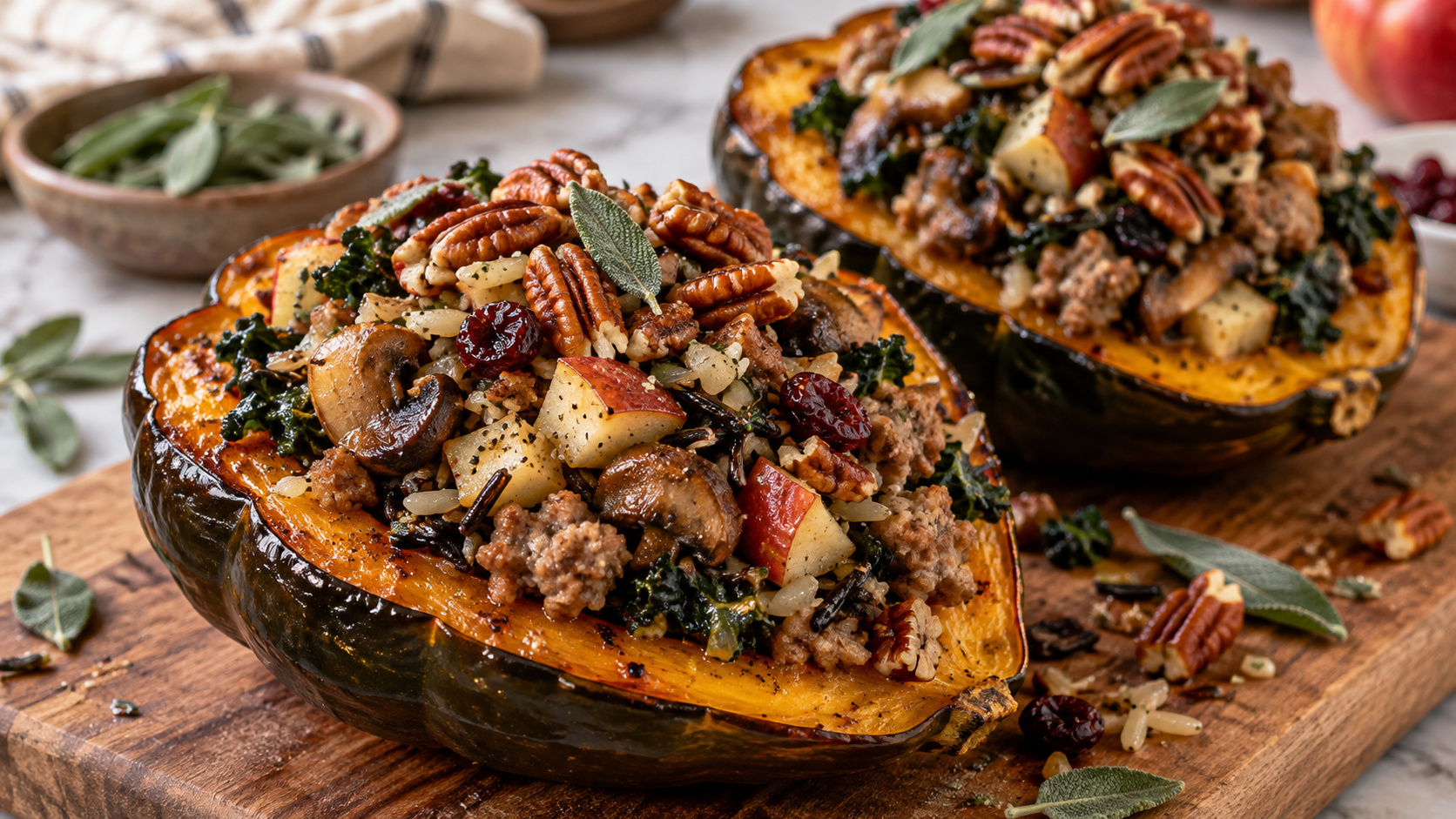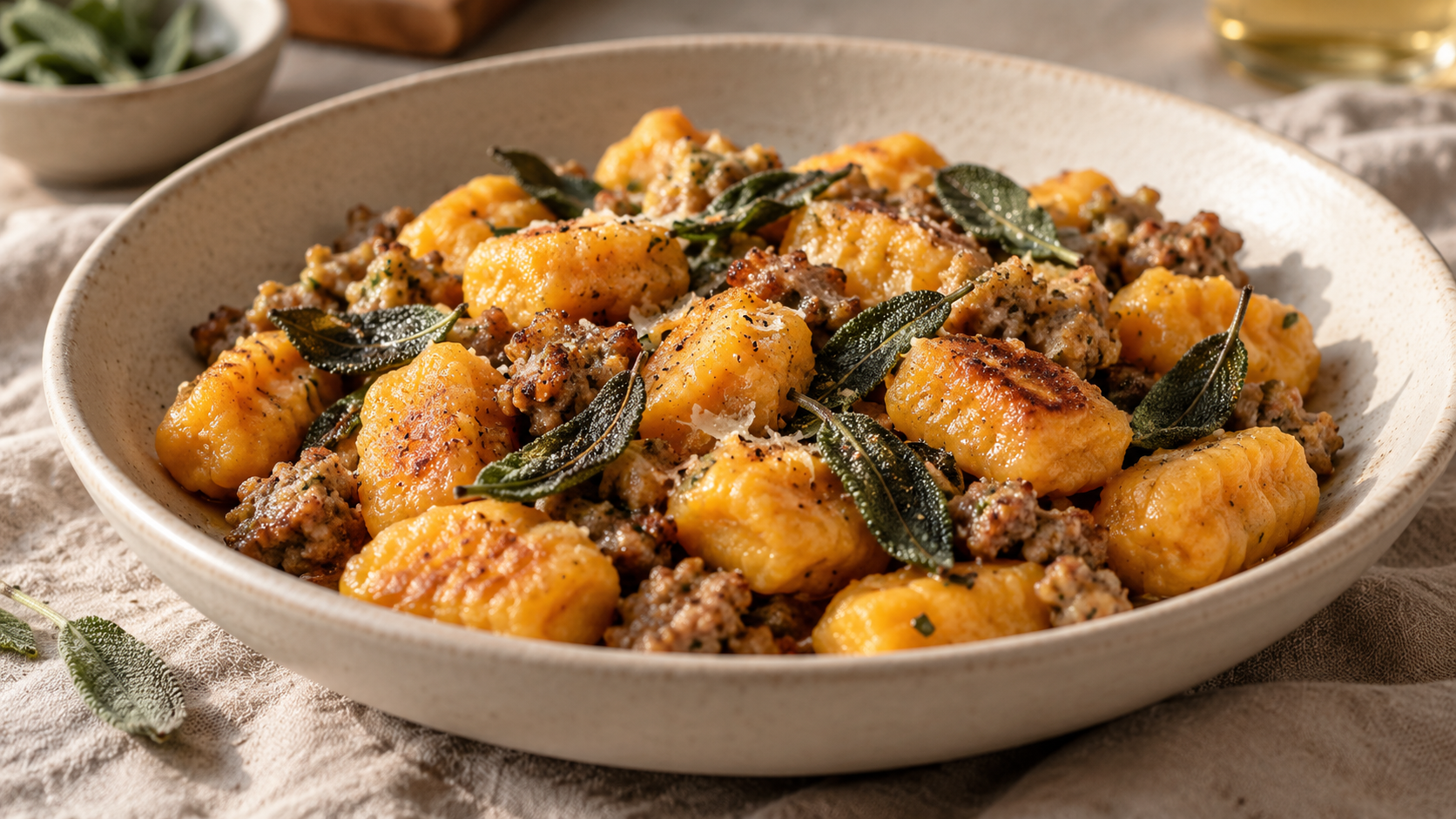
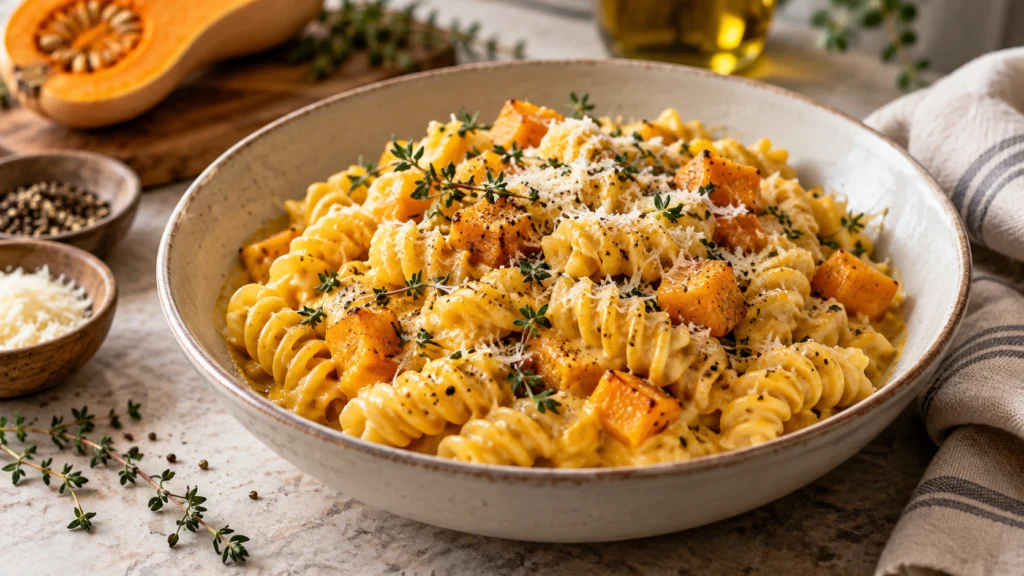
This butternut squash pasta delivers a rich, velvety texture without relying on heavy dairy cream. Roasting sweet winter squash brings out its deep natural caramelization, which blends effortlessly with soaked raw cashews, roasted garlic, and savory garden herbs to build an unctuous, silky sauce. The golden puree wraps around every ridge of tender rotini pasta, creating a satisfying, vibrant dinner that suits cool autumn evenings and busy weeknight rotations alike.
Whether you are seeking a hearty plant-forward meal or simply want a creative way to use seasonal produce, this recipe provides balanced flavors, uncomplicated steps, and restaurant-quality presentation right at home.
Table of Contents
Why You’ll Love This Recipe
- Naturally Rich and Creamy: Blended raw cashews and tender roasted squash create a luscious, velvety sauce without requiring heavy cream.
- Deep Caramelized Flavor: Roasting the squash and garlic concentrates their natural sweetness and softens pungent notes into mellow richness.
- Excellent Sauce Cling: Rotini spirals capture the thickened sauce in every groove, ensuring full flavor in every bite.
- Straightforward Preparation: Simple pantry herbs, wholesome produce, and standard cookware keep prep time and kitchen cleanup manageable.
Key Ingredients & Substitutions
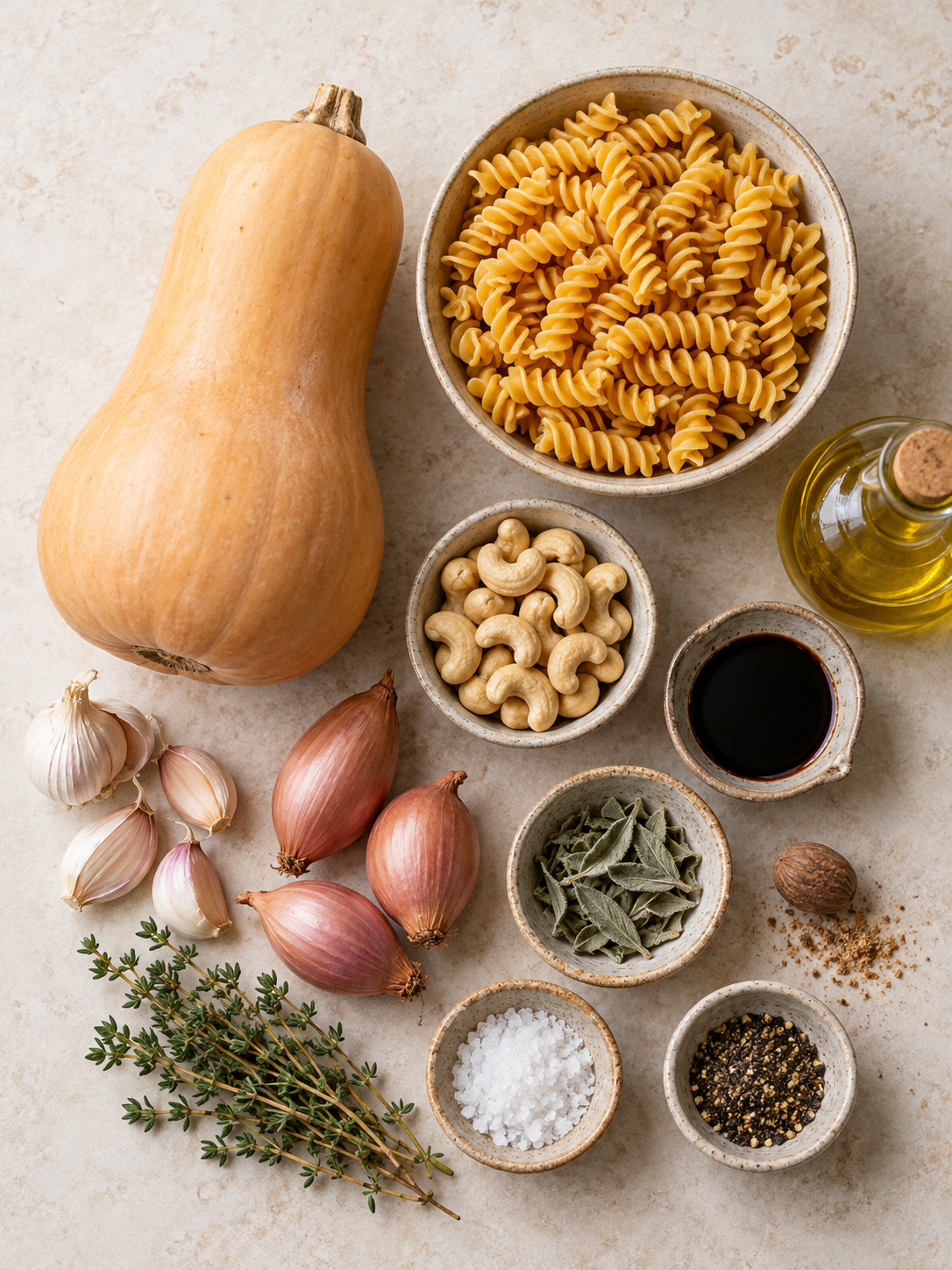
Selecting quality base ingredients ensures your butternut squash pasta recipe achieves the optimal balance of sweetness, body, and savory depth.
- Butternut Squash: Choose a medium squash weighing around 2 pounds. Look for a firm squash with a solid beige exterior, matte skin, and a thick neck, which yields denser flesh with fewer seeds to scoop out.
- Rotini Pasta: Spiral pasta shapes catch thick purees particularly well. Rigatoni, penne, or cavatappi serve as excellent alternatives if rotini is unavailable.
- Raw Cashews: When blended with water, unroasted, unsalted cashews form an emulsified cream that lends a rich body. If you have a nut sensitivity, you can replace them with raw sunflower seeds or full-fat coconut milk.
- Fresh Garlic & Shallots: Roasting whole garlic cloves in foil softens their sharpness into a mild, buttery paste. Finely minced shallots contribute a delicate onion sweetness.
- Dried Sage & Fresh Thyme: Classic culinary partners for squash. Sage introduces an earthy, warm note, while fresh thyme brightens the finished dish.
- Balsamic Vinegar: A single tablespoon cuts through the natural sweetness of winter squash and adds rounded acidity.
- Ground Nutmeg: Just a pinch adds subtle warmth, enhancing the natural flavors of the squash puree.
- Extra Virgin Olive Oil: Used to gently simmer and bind the blended sauce before coating the noodles.
If you enjoy diverse pasta styles across your weekly routine, lighter cold salads like our Cold Tortellini Pasta Salad or nutrient-packed options like the High Protein Pasta Salad provide great variety alongside warm, comforting purees.
Step-by-Step Instructions
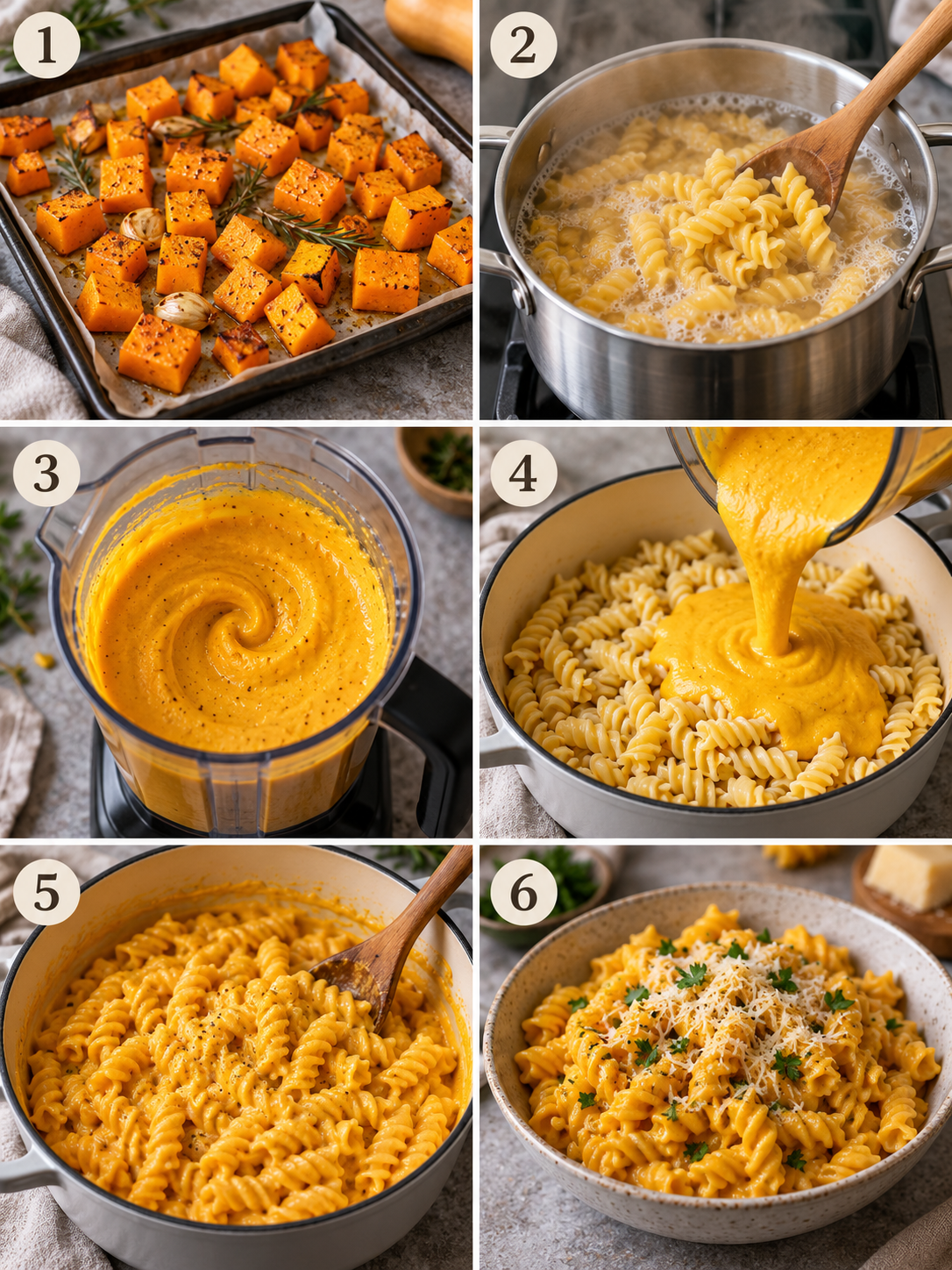
Follow these clear, sequential steps to bring this comforting pasta with butternut squash together seamlessly.
1. Roast the Squash and Garlic
Preheat your oven to 425°F (220°C). Cut the butternut squash in half lengthwise using a sturdy chef’s knife, then scoop out the fibrous strings and seeds with a metal spoon. Place the halves cut-side up on a rimmed baking sheet. Wrap the 3 unpeeled garlic cloves securely in aluminum foil and set the packet on the baking sheet alongside the squash. Roast for 25 to 30 minutes, removing the garlic around the 20 to 25-minute mark once soft to the touch. The squash is ready when a fork slides into the thickest part without resistance.
2. Boil the Pasta and Reserve Water
Bring a large pot of water to a rolling boil and season it generously with kosher salt. Add 12 ounces of rotini pasta and cook according to the package directions until firm to the bite (al dente). Before draining the pasta, carefully scoop out 1 cup of starchy pasta water using a heatproof measuring cup. Drain the cooked noodles in a colander and set them aside.
3. Blend the Creamy Sauce
Once the squash is cool enough to handle, scoop out the roasted flesh (or peel off the tender skin) and chop it into cubes. Squeeze the soft roasted garlic cloves from their skins. In a high-speed blender or food processor, combine the chopped squash, roasted garlic, 1/2 cup raw cashews, 3/4 cup water, 1 teaspoon dried sage, 1/4 teaspoon nutmeg, 1 tablespoon fresh thyme leaves, 1 tablespoon balsamic vinegar, 1 teaspoon salt, and 1/2 teaspoon black pepper. Blend on high until completely uniform and satiny.
4. Simmer and Emulsify
In a large, wide skillet, warm 2 tablespoons of extra virgin olive oil over medium heat. Pour in the blended squash puree. Cook for 2 to 3 minutes, stirring continuously to prevent sticking. Slowly pour in half of the reserved pasta water, stirring steadily as the mixture simmers. Allow the sauce to bubble gently for 2 to 3 minutes until slightly reduced and glossy. If the sauce seems too dense, add splashes of the remaining pasta water until it reaches your preferred consistency.
5. Coat the Pasta and Serve
Tumble the drained rotini pasta into the simmering sauce. Toss thoroughly over low heat for 1 to 2 minutes, allowing the starchy pasta water in the sauce to glaze each spiral. Taste and adjust seasoning with extra salt or pepper as needed. Dish into warm bowls and garnish with extra fresh thyme leaves before serving hot.
Expert Chef Tips & Troubleshooting
- Soak Your Cashews: If you do not own a high-speed blender, submerge the raw cashews in boiling water for 15 to 20 minutes before blending. This softens their cellular structure and guarantees a lump-free texture.
- Do Not Skip Starchy Pasta Water: The starches released during boiling help emulsify the blended vegetables and olive oil, ensuring the sauce clings securely to the pasta rather than sliding off to pool at the bottom of the bowl.
- Balanced Acidity: Because butternut squash varies in sugar content depending on ripeness, always taste your blended puree before combining it with the pasta. A few extra drops of balsamic vinegar or a squeeze of fresh lemon juice easily corrects an overly sweet batch.
- Add Hearty Proteins: This base sauce pairs well with seasoned proteins. If you wish to build an even heartier meal similar to our savory Bruschetta Chicken Pasta, top your bowl with seared chicken breast, crispy beef bacon bits, or sliced chicken sausage. When handling and preparing poultry additions, always check that meat reaches safe minimum internal temperatures using a reliable instant-read digital thermometer.
Storage, Make-Ahead & Reheating
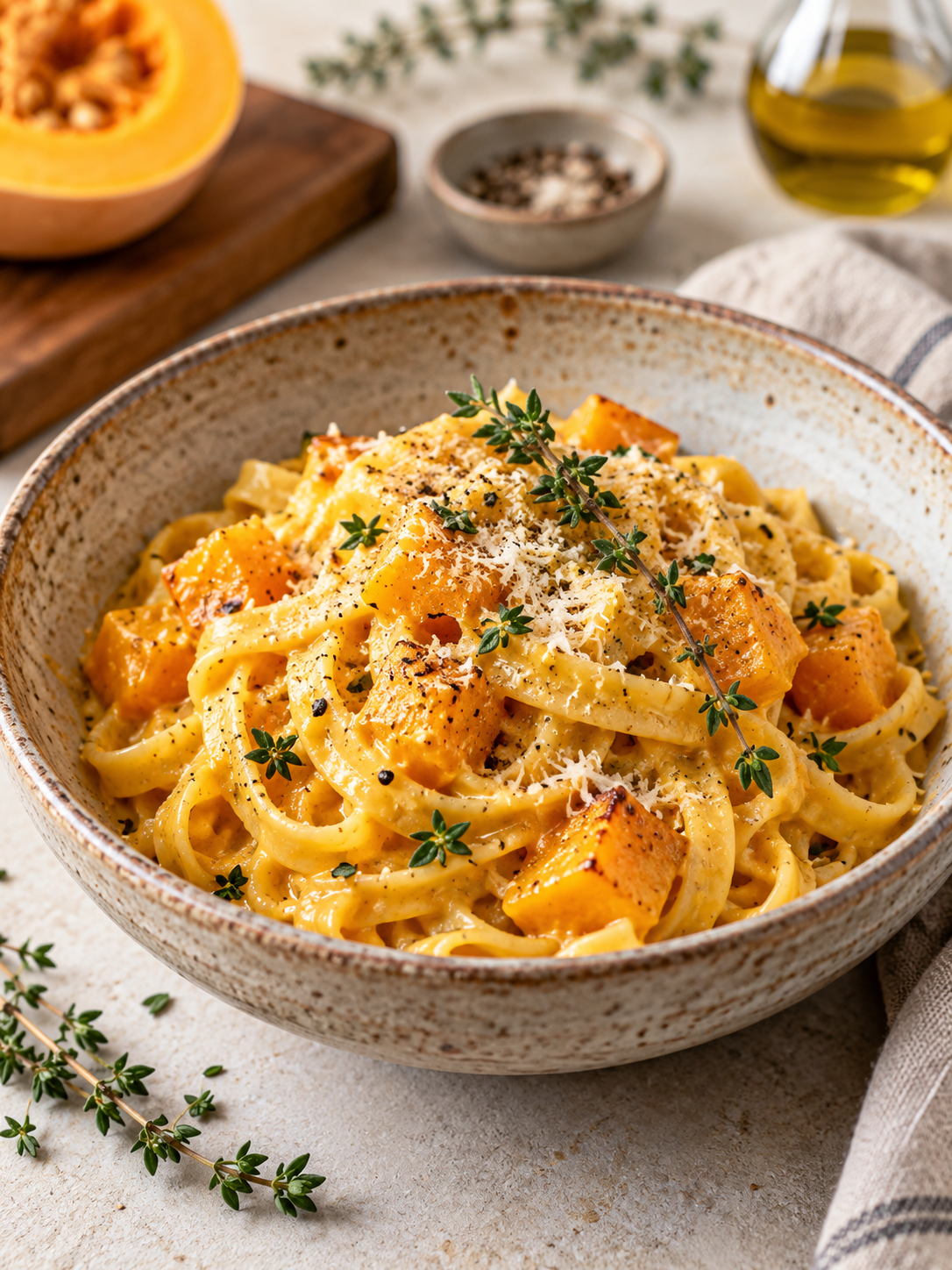
- Refrigeration: Store leftover butternut squash and pasta in an airtight glass or plastic container in the refrigerator for up to 4 days. Let the food cool down to room temperature before sealing to prevent excess moisture condensation. For best storage safety, review these official food safety guidelines for leftovers.
- Make-Ahead Preparation: You can roast the squash, prepare the blended puree, and store the sauce in an airtight container up to 3 days in advance. When ready to eat, simply boil fresh pasta, warm the sauce in a skillet, and toss everything together with freshly reserved cooking water.
- Reheating Instructions: The starches in the pureed squash will cause the sauce to tighten noticeably once chilled. Reheat gently in a saucepan over medium-low heat, stirring in 2 to 3 tablespoons of vegetable broth, water, or oat milk to restore its creamy texture. You can also reheat single portions in the microwave in 45-second intervals, stirring between bursts with a splash of liquid.
- Freezing: You can freeze the blended sauce independently in a freezer-safe container or zip-top bag for up to 3 months. Thaw overnight in the refrigerator before warming. Freezing the assembled pasta dish is not recommended, as the pasta texture tends to soften excessively upon defrosting.
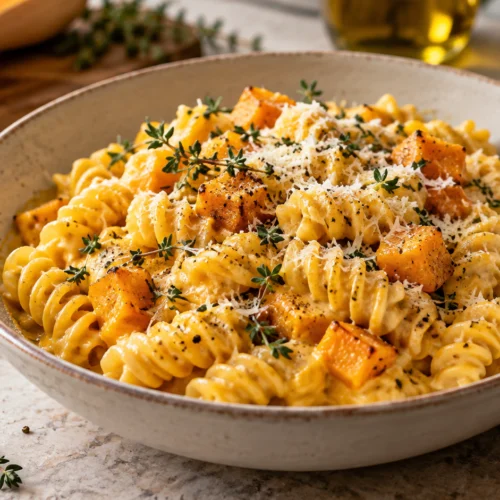
Creamy Butternut Squash Pasta

Equipment
- Rimmed baking sheet
- Aluminum Foil
- Large pasta pot
- Colander
- High-speed blender
- Large Skillet
Ingredients
Produce & Aromatics
- 1 medium butternut squash about 2 lbs, halved lengthwise and seeded
- 3 cloves garlic unpeeled for roasting
- 2 shallots peeled
- 1 tbsp fresh thyme plus extra for garnish
Pasta & Sauce Base
- 12 oz rotini pasta or chosen pasta shape
- 0.5 cup raw cashews unsalted
- 0.75 cup water for blending cashews
- 2 tbsp olive oil extra virgin
Seasonings
- 1 tsp dried sage
- 0.25 tsp nutmeg ground
- 1 tbsp balsamic vinegar
- 1 tsp salt divided
- 0.5 tsp black pepper freshly ground
Instructions
- Preheat the oven to 425°F (220°C).
- Cut the butternut squash in half lengthwise and scoop out the seeds. Place it on a baking sheet, cut side up, and roast for 25-30 minutes or until tender.
- Wrap the garlic cloves in foil and roast them in the oven for 20-25 minutes or until soft.
- Peel and chop the roasted squash into cubes.
- Cook the rotini pasta according to package instructions until al dente. Reserve 1 cup of starchy pasta water before draining.
- In a blender or food processor, combine the roasted squash, garlic, cashews, water, sage, nutmeg, thyme, balsamic vinegar, salt, and pepper. Blend until smooth.
- In a large skillet, heat the olive oil over medium heat. Add the blended squash mixture and cook for 2-3 minutes, stirring constantly.
- Add the reserved pasta water to the skillet and stir to combine. Bring the mixture to a simmer and let cook for 2-3 minutes or until the sauce has thickened slightly.
- Add the cooked rotini pasta to the skillet, tossing to coat with the squash sauce.
- Serve hot, garnished with additional thyme if desired.
Notes
- Calories: 420
- Protein: 12g
- Carbohydrates: 45g
- Fat: 22g
- Saturated fat: 3.5g
- Cholesterol: 0mg
- Sodium: 350mg
- Potassium: 480mg
- Fiber: 6g
- Sugar: 6g
- Vitamin A: 850 IU
- Vitamin C: 25mg
- Calcium: 60mg
- Iron: 3.2mg
Frequently Asked Questions
Can I make butternut squash pasta ahead of time and reheat it?
You can make butternut squash pasta ahead of time, but it’s best to prepare the components separately and assemble just before serving. Roast the squash and cook the pasta as instructed, then store them in the refrigerator for up to a day. When reheating, combine the squash, pasta, and sauce gently over low heat, adding some reserved pasta water if the sauce thickens too much. This helps maintain the dish’s creamy texture.
How do I achieve a creamy sauce without heavy cream?
To achieve a creamy sauce without heavy cream, you can use a combination of roasted butternut squash, cashews blended with water, or a non-dairy milk alternative. The key is to blend the mixture until it’s smooth and velvety. Adding a pinch of nutmeg and using the reserved starchy pasta water to emulsify the sauce also helps in achieving the desired creaminess.
What are some good protein additions to make butternut squash pasta more substantial?
For a more substantial meal, consider adding seared chicken breast, crispy beef bacon bits, or chicken sausage to your butternut squash pasta. These additions not only provide protein but also texture and flavor contrasts that complement the dish well. Ensure that any added proteins are halal-compliant, such as using turkey bacon or beef bacon instead of traditional bacon.
Can I use gluten-free pasta or zoodles as a low-carb alternative in butternut squash pasta?
Yes, you can use gluten-free pasta or zoodles (zucchini noodles) as a low-carb alternative in butternut squash pasta. For gluten-free pasta, follow the package instructions for cooking time. For zoodles, sauté them lightly in a pan with some olive oil before combining with the butternut squash sauce. This helps reduce excess moisture and prevents the zoodles from becoming too soggy. Adjust the amount of reserved pasta water accordingly to achieve the right sauce consistency.