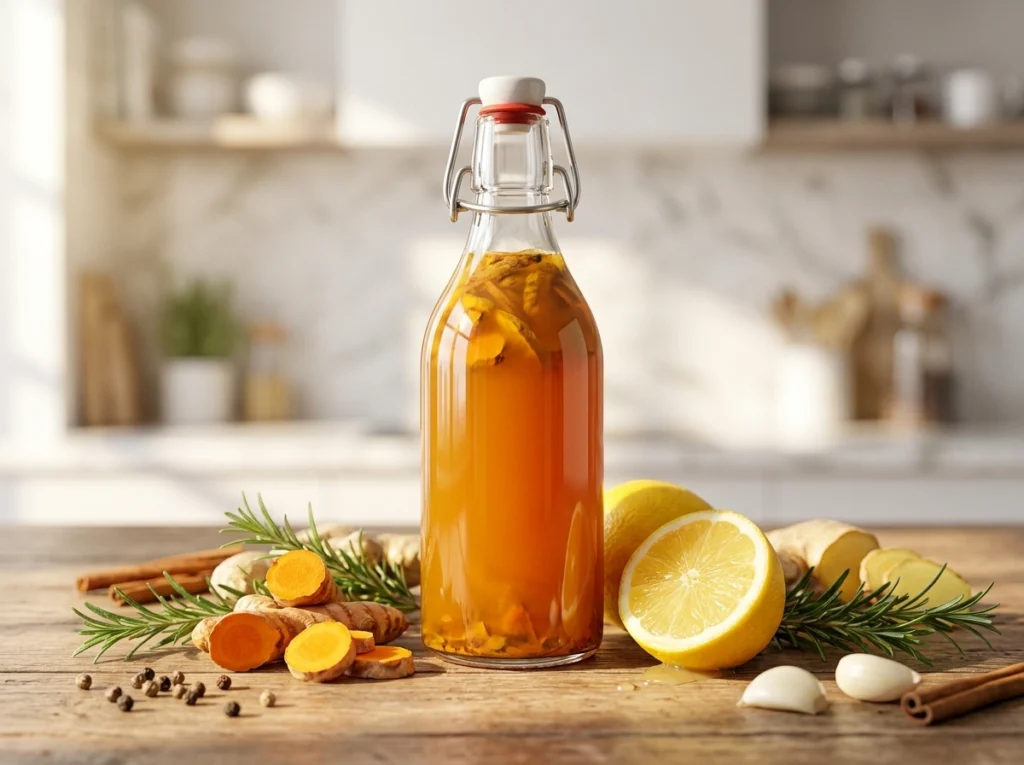
Welcome to the ultimate guide on crafting the perfect fire cider. If you are looking for a potent, natural way to support your well-being, especially during the colder months, this fire cider recipe is your definitive answer. This pungent, spicy, and slightly sweet herbal tonic has been a staple in natural wellness communities for decades, celebrated for its robust, warming qualities.
Table of Contents
Creating your own homemade tonic might sound intimidating, but it is incredibly straightforward. At its core, fire cider is simply a master tonic made by infusing powerful, aromatic roots, vegetables, and herbs in vinegar. By taking the time to steep these ingredients, you extract their potent qualities into a single, versatile liquid that can be taken as a daily shot, mixed into teas, or used as a zesty culinary ingredient.
Below, we will explore the roots of this incredible elixir, guide you on where to source the freshest ingredients, and provide you with a foolproof, step-by-step method to brew your own batch at home.
The History and Heritage of Herbal Tonics
The concept of a traditional fire cider recipe has deep roots in herbalism. The modern formulation we know and love today was largely popularized in the late 1970s. The original fire cider recipe Rosemary Gladstar created was designed to be an accessible, easy-to-make remedy using common kitchen ingredients. Gladstar, a renowned herbalist, encouraged people to take health into their own hands, freely sharing her formulation with the world.
Because of its deep roots in folk healing, many practitioners refer to this blend as a fire cider recipe matriarch medicine, honoring the generations of women and herbalists who passed down similar vinegar infusions. In recent years, variations have exploded in popularity across the internet, with unique regional twists like the fire cider recipe Appalachian Forager style, which often incorporates locally foraged wild greens and roots. Regardless of the specific variation, the core philosophy remains the same: combining spicy, warming ingredients to stimulate the body.
The “Free Fire Cider” Movement
In recent years, the herbalist community rallied together during the “Free Fire Cider” movement. When a commercial company attempted to trademark the generic term “fire cider,” herbalists, led by Rosemary Gladstar, fought back in court to ensure the name remained free for all to use. This legal victory solidified fire cider as a community-owned traditional remedy, emphasizing that wellness formulas should be accessible to everyone, not monopolized by corporations.
Why You Need the Best Fire Cider Recipe in Your Pantry
When the seasons change, having the best fire cider recipe on hand is a game-changer. Many people specifically seek out a fire cider recipe for colds, relying on the pungent aromatics to help clear the sinuses and provide a warming sensation. Others utilize a fire cider recipe for weight loss, as the spicy ingredients and vinegar base are often praised for stimulating digestion and metabolism.
The secret to this tonic lies in its powerful components. The liquid base is essential; understanding the Health benefits of apple cider vinegar reveals why it is the perfect medium for extracting and preserving the plant compounds. To this base, we add zesty roots, tapping into the Medicinal properties of ginger to soothe the stomach and provide a warming kick.
We also cannot ignore the intense, sinus-clearing Health benefits of horseradish, which gives the cider its signature bite. Finally, a touch of heat from hot peppers offers the Benefits of cayenne pepper for circulation, helping to deliver the tonic’s warmth throughout the body.
Where to Find Ingredients & Sourcing Tips
One of the biggest hurdles for beginners is finding fresh, high-quality roots. While apple cider vinegar and onions are easy to find, sourcing fresh horseradish and turmeric can be tricky.
- Local Asian Markets: These are often goldmines for large, affordable hands of fresh ginger and plump turmeric roots.
- Health Food Stores: Stores like Whole Foods or local co-ops regularly stock fresh horseradish root in their produce sections, especially in the fall and winter.
- Farmers’ Markets: Connect with local farmers who often grow specialty radishes, hot peppers, and fresh herbs ideal for this tonic.
A Simple Fire Cider Recipe for Beginners
If you have never made herbal infusions before, do not worry. This is a remarkably simple fire cider recipe that requires no special equipment—just a jar, a knife, and a little bit of patience. Our recipe provides exact measurements to ensure the perfect balance of heat, tang, and sweetness.

Ingredients
- 4 cups raw apple cider vinegar
- 1/2 cup fresh horseradish root, grated
- 1/2 cup ginger root, grated
- 1/4 cup turmeric root, grated
- 1 whole head garlic, peeled and crushed
- 1 large onion, chopped
- 2 habanero or cayenne peppers, sliced
- 1 whole citrus (lemon, lime, or orange), sliced
- 2 sprigs fresh herbs (thyme, rosemary)
- 1/4 cup raw honey or maple syrup

Instructions
- Wash, peel, and finely chop or grate the horseradish, ginger, turmeric, garlic, onion, peppers, citrus, and herbs.
- Place all the chopped solid ingredients into a clean, sterilized 32-ounce glass mason jar.
- Pour the raw apple cider vinegar into the jar until all solid ingredients are completely submerged, leaving a little room at the top.
- Seal the jar tightly with a non-metal lid and store it in a cool, dark place to steep for 3 to 4 weeks, shaking it daily.
- Strain the liquid through a fine mesh sieve or cheesecloth into a clean jar, squeezing out all the juice and repurposing the solid scraps if desired.
- Stir the raw honey or maple syrup into the strained liquid to taste, then store the finished fire cider in the refrigerator for up to six months.
Mild/Kid-Friendly Variation
If you are sensitive to spice or want to introduce this tonic to older children (always consult a pediatrician first), you can easily modify the heat. Reduce the horseradish to 2 tablespoons, completely omit the habanero/cayenne peppers, add an extra sliced orange for sweetness, and slightly increase the raw honey. This creates a gentler, vitamin C-packed infusion without the fiery kick.
Creative Ways to Use Fire Cider
Taking a straight shot of this intense liquid can be quite a sensory experience! To incorporate it seamlessly into your diet, consider using it as a culinary flavor enhancer. You can add a splash of your homemade tonic to elevate a warm, comforting bowl of healthy lentil soup. It also makes a fantastic base for salad dressings or marinades. If you find the spice level a bit too intense on your palate afterward, you can easily balance the heat and soothe your stomach with a sweet, cooling strawberry banana milkshake.
Frequently Asked Questions (FAQs)
How can I tell if my homemade fire cider has gone bad or developed mold during the steeping process?
Because you are using highly acidic raw apple cider vinegar, the risk of mold is quite low. However, if solid ingredients float above the vinegar line and are exposed to air, they can develop mold. Mold will appear as fuzzy, colorful (often green, white, or black) spots on the surface. If you see actual fuzz, discard the batch. A cloudy appearance or a gelatinous blob (the “mother” of vinegar) is completely normal and safe.
What is the recommended daily dosage of fire cider for immune support, and can it be given to children?
For general immune support, adults typically take 1 to 2 tablespoons daily. At the first sign of a cold, some adults choose to take 1 tablespoon every few hours. For children, it is highly recommended to consult a pediatrician first due to the intense heat and raw honey (never give raw honey to children under 1 year old). If approved, a much smaller, heavily diluted dose (such as a teaspoon mixed into juice or warm water) is usually preferred.
Are there any side effects or specific health conditions, such as acid reflux or ulcers, that should avoid fire cider?
Yes. Because fire cider is highly acidic and extremely spicy, individuals with acid reflux, GERD, stomach ulcers, or general gastrointestinal sensitivity should exercise extreme caution or avoid it altogether, as it can exacerbate these conditions. Always consult with a healthcare provider if you have underlying health concerns before adding potent herbal tonics to your routine.
What are some creative ways to use the leftover vegetable and herb pulp after straining the cider?
Do not throw away that flavorful pulp! You can blend the leftover scraps into a spicy paste to use as a marinade for roasted meats or tofu. You can also dehydrate the pulp at a low temperature and grind it into a zesty, savory seasoning powder for popcorn, roasted vegetables, or homemade soups.
Fire Cider Recipe

Ingredients
- Raw apple cider vinegar
- Fresh horseradish root
- Ginger root
- Turmeric root
- Garlic
- Onions
- Habanero or cayenne peppers
- Citrus lemon, lime, or orange
- Fresh herbs thyme, rosemary
- Raw honey or maple syrup
Instructions
- Wash and finely chop the horseradish, ginger, turmeric, garlic, onions, peppers, citrus, and herbs.
- Place all the chopped solid ingredients into a clean glass jar.
- Pour raw apple cider vinegar into the jar until all ingredients are completely submerged.
- Seal the jar tightly and store it in a cool, dark place to steep for 3 to 4 weeks, shaking occasionally.
- Strain the liquid through a fine mesh sieve or cheesecloth, repurposing the solid scraps if desired.
- Stir raw honey or maple syrup into the strained liquid to taste, then store the finished fire cider in the refrigerator.
Notes
Nutritional Information
- Serving Size: 1 Tablespoon
- Calories: 15
- Total Fat: 0g
- Sodium: 0mg
- Total Carbohydrates: 4g
- Sugars: 3g
- Protein: 0g