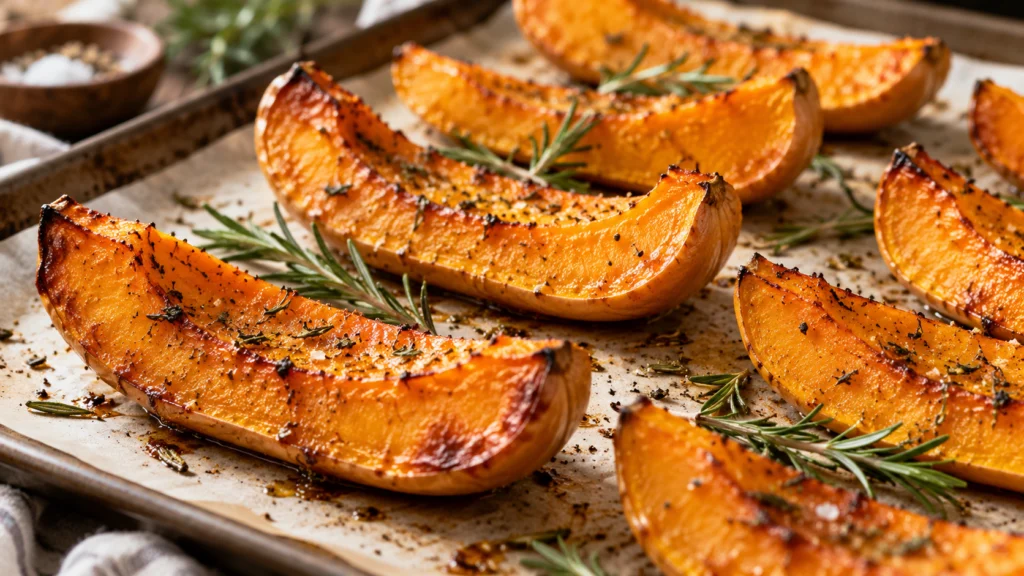
Tender on the inside with deep caramelization along the borders, roasted butternut squash is one of the most rewarding side dishes you can pull from your oven. The natural sweetness of winter squash intensifies under dry, direct heat, creating concentrated flavor and buttery textures without requiring complicated culinary techniques.
This roasted butternut squash recipe pairs pure maple syrup with fresh rosemary, garlic, and a hint of warm cinnamon. It transforms an everyday fall vegetable into an elegant addition to weeknight dinners, holiday feasts, or weekly meal prep rotation. Whether you are serving a crowd or building wholesome lunch bowls, mastering this method guarantees rich, deeply flavorful results every single time.
Table of Contents
Why You’ll Love This Recipe
- Balanced flavor profile: Earthy rosemary, savory garlic, and mild cinnamon cut through the natural sweetness of the squash to prevent it from tasting like dessert.
- Reliable golden caramelization: Roasting at 400°F (204°C) across two wide pans prevents moisture buildup so each edge develops crisp, savory browning.
- Hands-off sheet pan cooking: Once the squash is diced and tossed in the simple oil-and-spice glaze, the oven does all the heavy lifting.
- Make-ahead versatility: These roasted cubes hold their shape well, making them ideal to reheat during the week or toss directly into cold grain salads.
Key Ingredients & Selection Tips
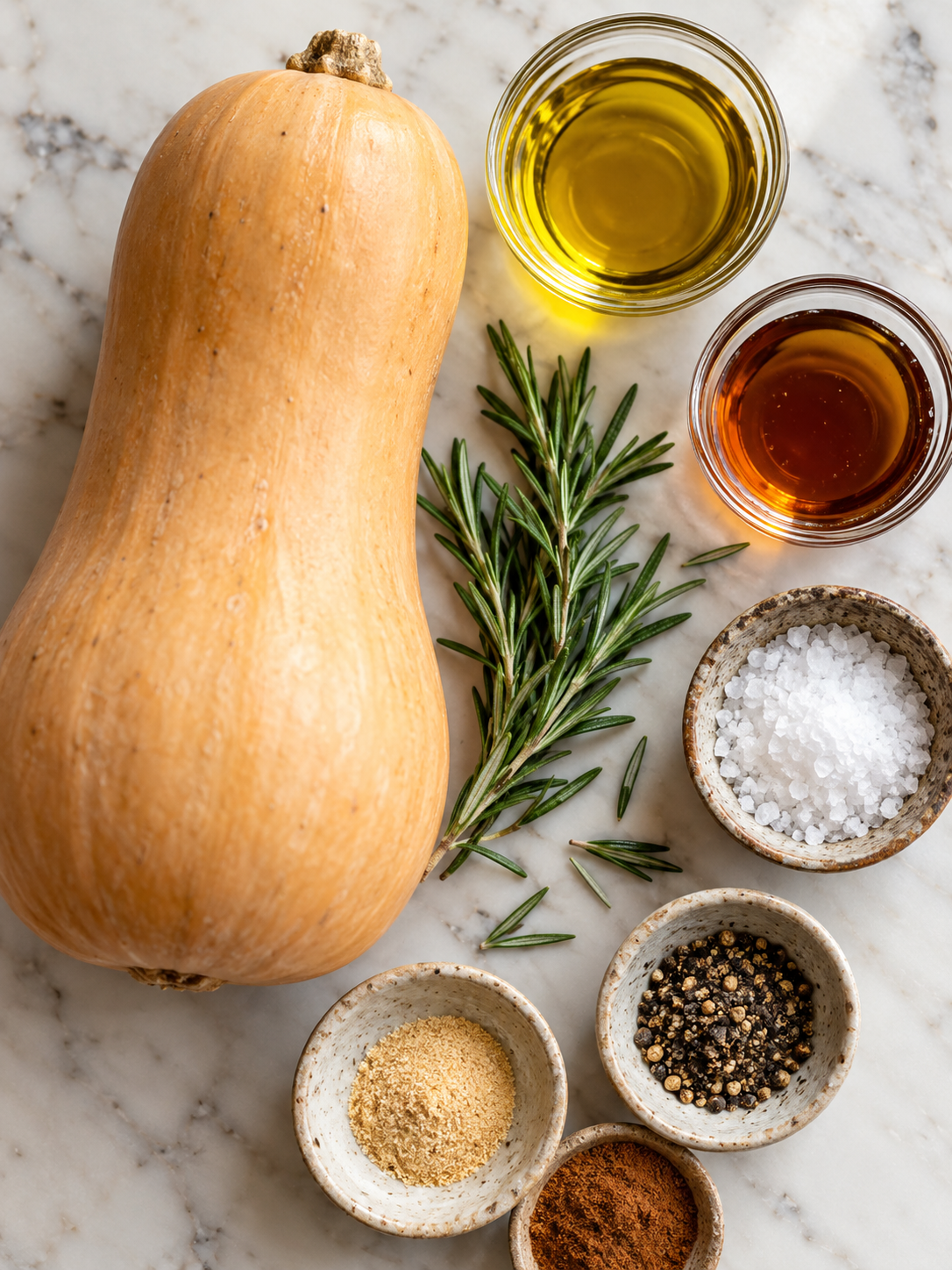
Selecting fresh, dense produce is the first step toward getting the best texture out of your squash.
1 large butternut squash (approximately 3 pounds), peeled and seeded
2 tablespoons extra-virgin olive oil
1 1/2 tablespoons pure maple syrup
1 tablespoon fresh rosemary, finely chopped
1 teaspoon kosher salt
1/2 teaspoon black pepper
1/2 teaspoon garlic powder
1/4 teaspoon ground cinnamon
- Butternut Squash: Look for a squash that feels heavy for its size with smooth, matte skin. A shiny exterior often indicates an underripe squash with higher moisture and less sugar, which makes caramelizing harder. The flesh should be a vibrant, uniform orange.
- Extra-Virgin Olive Oil: Provides the necessary fat barrier to conduct oven heat efficiently across the exterior surface, resulting in crisp borders rather than soft, dried edges.
- Pure Maple Syrup: Adds a delicate woodsy sweetness that assists in surface caramelization during roasting. Avoid pancake syrups made with corn syrup, which can burn too quickly.
- Fresh Rosemary: Fresh needles provide an herbaceous, piney aroma that anchors the vegetable’s natural sugars. Mince it finely so it adheres evenly across all cubes.
- Garlic Powder, Cinnamon, Salt, and Black Pepper: Garlic brings savory depth, ground cinnamon adds subtle warmth without overwhelming the dish, and kosher salt balances the sugars. The USDA nutritional profile highlights winter squash as a vegetable dense in fiber and key micronutrients, making it as practical as it is flavorful.
If you enjoy straightforward vegetable sides cooked on baking trays, exploring basic Sheet Pan Dinners offers great inspiration for building whole meals using the same easy roasting techniques.
Step-by-Step Instructions
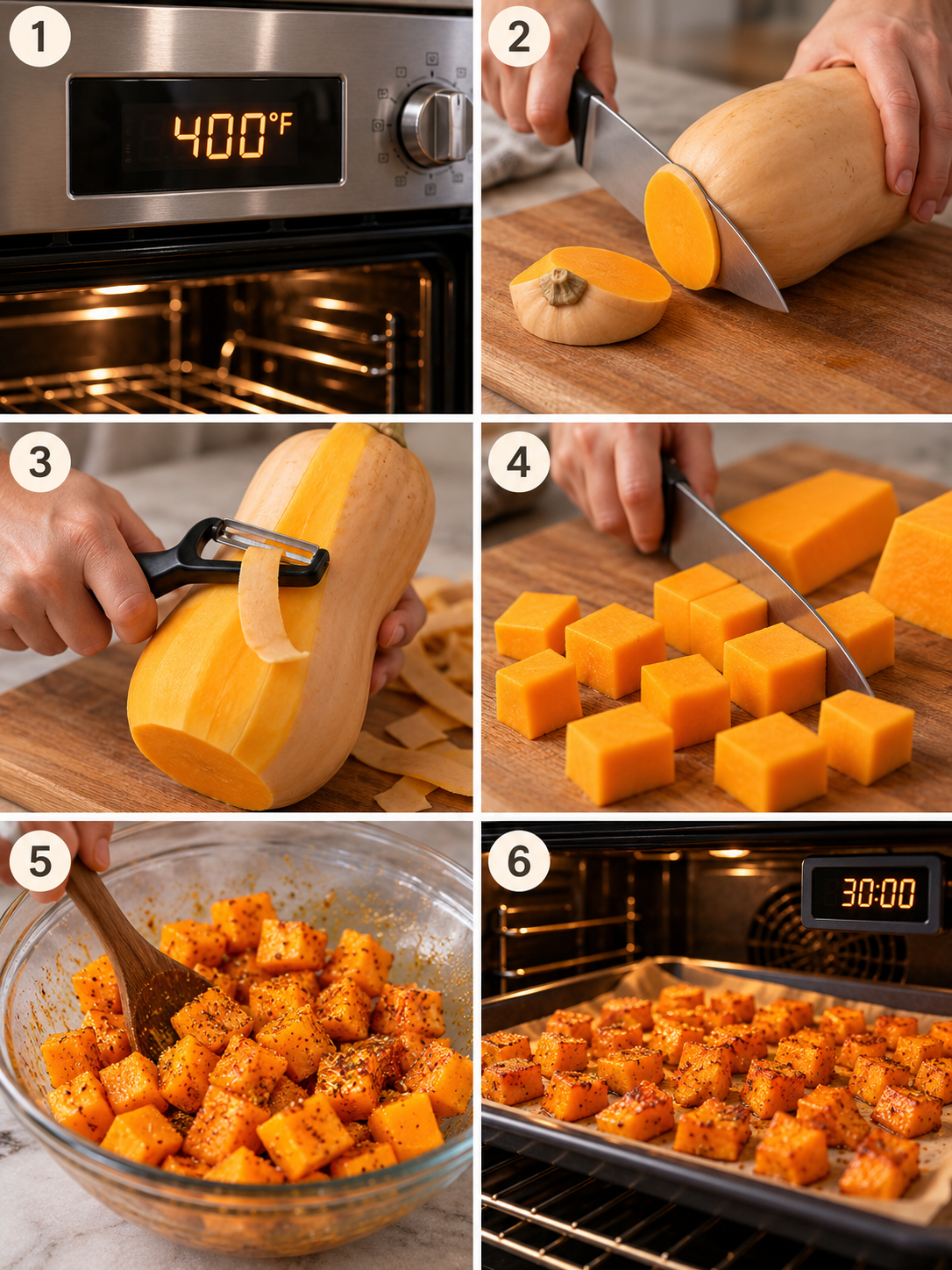
Follow these step-by-step directions to ensure your butternut squash roasted in the oven develops rich color without turning mushy.
1. Preheat your oven to 400°F (204°C). Line two large rimmed baking sheets with parchment paper to prevent sticking and ensure easy cleanup.
2. Trim and peel the vegetable. Using a sharp chef’s knife, trim the top and bottom off the butternut squash so you have flat, stable surfaces. Use a sturdy Y-peeler to strip away the tough outer skin until the bright orange flesh underneath is fully exposed.
3. Core and dice. Slice the squash in half lengthwise from stem to base. Use a metal spoon to firmly scrape out the seeds and stringy pulp. Cut the squash into uniform 1-inch cubes to ensure even cooking throughout the pan.
4. Mix the seasoned glaze. In a large mixing bowl, whisk together the olive oil, maple syrup, chopped rosemary, salt, black pepper, garlic powder, and cinnamon until well combined.
5. Coat the squash thoroughly. Add the squash cubes to the bowl and toss thoroughly until every piece is well-coated with the oil and spice mixture.
6. Arrange across two pans. Divide the squash between the two prepared baking sheets. Spread the cubes into a single layer, ensuring they are not crowding each other; this allows the air to circulate so they roast rather than steam.
7. Roast to golden perfection. Roast for 30 to 40 minutes, using a spatula to toss the cubes halfway through the cooking time. The squash is done when it is fork-tender and the edges have developed a deep, caramelized golden-brown color.
8. Rest and serve. Remove from the oven and serve immediately as a savory-sweet side dish.
For busy weeknight dinner planning, you can complement this vegetable side with quick mains such as Sheet Pan Gnocchi or alongside colorful Sheet Pan Chicken Fajitas for a satisfying family feast.
Expert Chef Tips & Troubleshooting
- How to Tackle Tough Skin: Butternut squash can have thick, dense skin. Piercing the flesh a few times with a fork and heating it in the microwave for 90 to 120 seconds softens the peel slightly, making your Y-peeler glide through effortlessly without compromising the raw interior.
- The Two-Sheet Secret: Crowding is the primary reason squash turns soft and soggy. When cubes touch or overlap, the moisture evaporating from the squash gets trapped, effectively steaming the pieces. Spreading 3 pounds of diced squash over two full baking sheets gives the dry heat room to brown each surface.
- Cut Size Matters: Aim for consistent 1-inch pieces. Smaller cubes can shrivel and turn overly soft before developing rich color, while larger chunks will take upward of 50 minutes to cook through to the center.
- Use Parchment, Not Foil: Parchment paper releases caramelized sugars cleanly without tearing. Foil can occasionally stick to the natural sugars in the maple glaze, tearing away the browned exterior when you flip the squash halfway through roasting.
Storage, Make-Ahead & Reheating
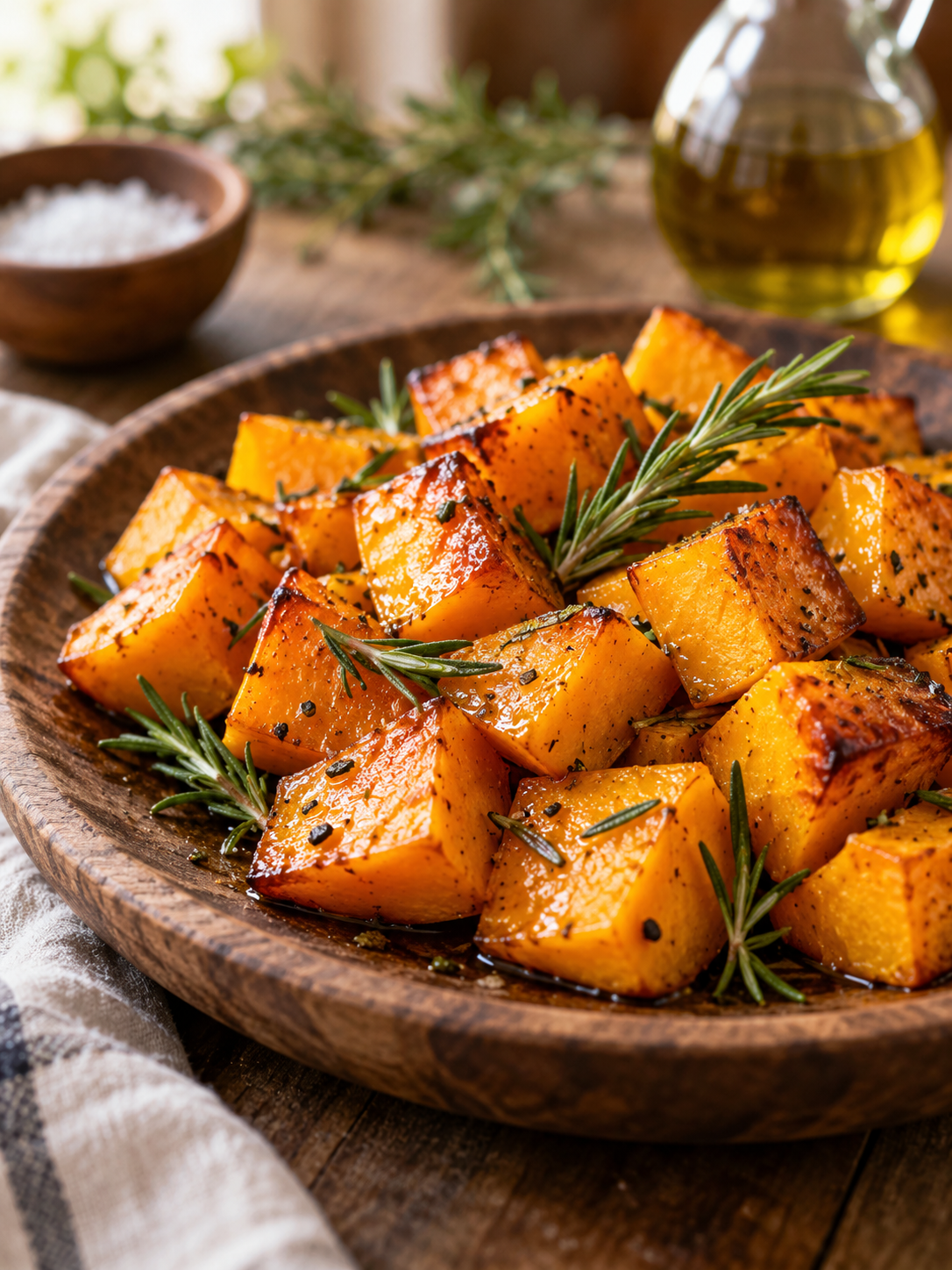
Cool leftover squash completely to room temperature before transferring it into an airtight storage container. Storing warm vegetables traps steam inside the container, degrading the roasted exterior.
- Refrigeration: Store cooked squash in the refrigerator for up to 4 days. When storing and handling prepared food, following safe food safety guidelines for leftovers ensures quality and safety throughout the week.
- Reheating in the Oven: To restore crispness, spread chilled cubes onto a parchment-lined baking sheet and warm them at 375°F (190°C) for 8 to 10 minutes until heated through.
- Air Fryer Reheating: Pop the roasted cubes into an air fryer basket at 360°F (182°C) for 3 to 4 minutes for a quick refresh that revives the edges.
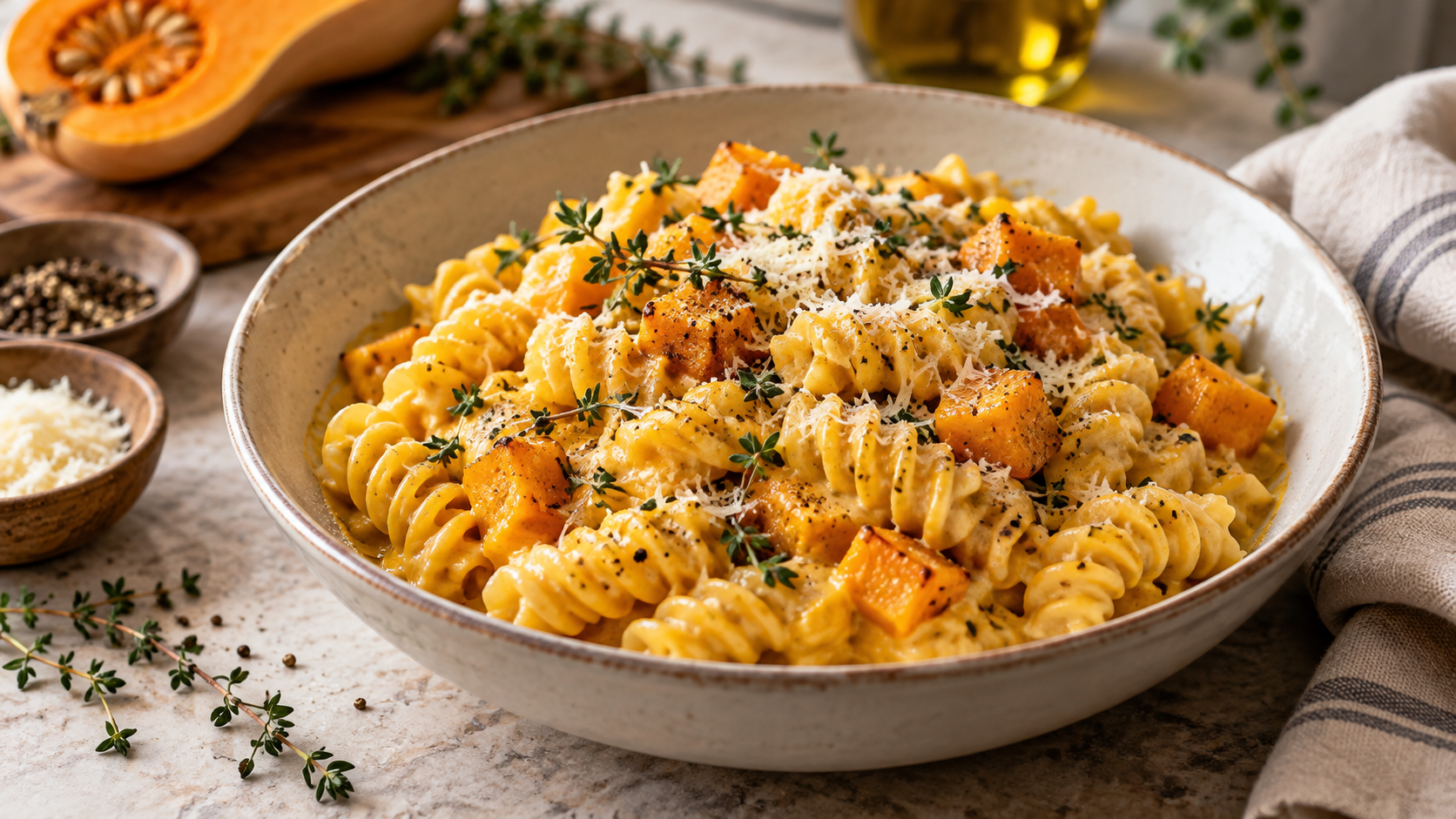
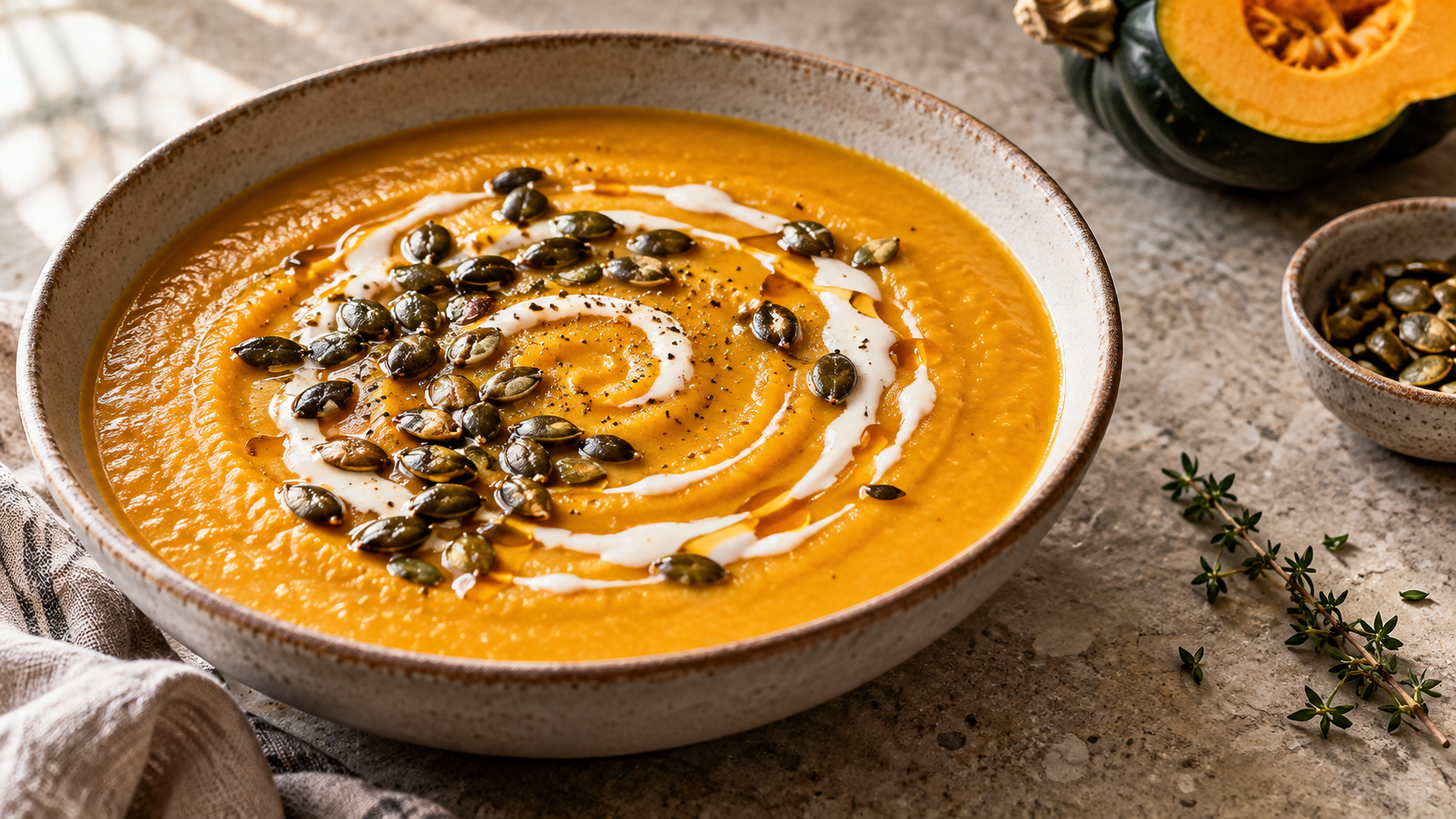
- Freezing: You can freeze cooked cubes spread out on a sheet pan until firm, then transfer them into a freezer-safe bag for up to 3 months. Thawed squash works best pureed into creamy soups, stirred into warm risotto, or blended into pasta sauces.
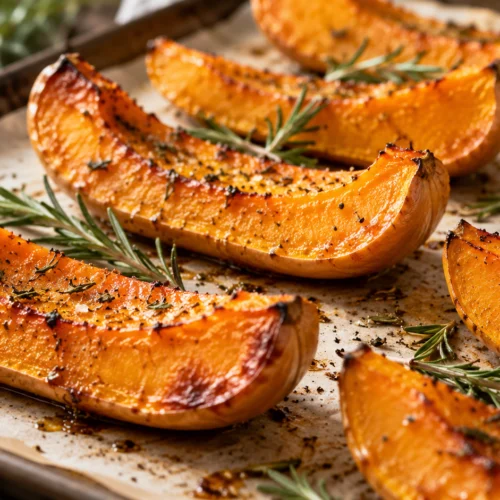
Roasted Butternut Squash with Golden Edges

Equipment
- Chef knife
- Y-peeler
- Large mixing bowl
- Two rimmed baking sheets
- Parchment paper
Ingredients
Main Ingredients
- 1 large butternut squash approximately 3 pounds, peeled and seeded
- 2 tablespoons extra-virgin olive oil
- 1.5 tablespoons pure maple syrup
- 1 tablespoon fresh rosemary finely chopped
- 1 teaspoon kosher salt
- 0.5 teaspoon black pepper
- 0.5 teaspoon garlic powder
- 0.25 teaspoon ground cinnamon
Instructions
- Preheat your oven to 400°F (204°C). Line two large rimmed baking sheets with parchment paper to prevent sticking and ensure easy cleanup.
- Using a sharp chef’s knife, trim the top and bottom off the butternut squash. Use a Y-peeler to remove the tough outer skin until the bright orange flesh is exposed.
- Slice the squash in half lengthwise and use a metal spoon to scrape out the seeds and stringy pulp. Cut the squash into uniform 1-inch cubes to ensure even cooking.
- In a large mixing bowl, whisk together the olive oil, maple syrup, chopped rosemary, salt, black pepper, garlic powder, and cinnamon.
- Add the squash cubes to the bowl and toss thoroughly until every piece is well-coated with the oil and spice mixture.
- Divide the squash between the two prepared baking sheets. Spread the cubes into a single layer, ensuring they are not crowding each other; this allows the air to circulate so they roast rather than steam.
- Roast for 30 to 40 minutes, using a spatula to toss the cubes halfway through the cooking time.
- The squash is done when it is fork-tender and the edges have developed a deep, caramelized golden-brown color.
- Remove from the oven and serve immediately as a savory-sweet side dish.
Notes
- Calories: 152
- Protein: 2g
- Carbohydrates: 28g
- Fat: 4.7g
- Saturated fat: 0.7g
- Cholesterol: 0mg
- Sodium: 398mg
- Potassium: 580mg
- Fiber: 5g
- Sugar: 9g
- Vitamin A: 1475 IU
- Vitamin C: 31mg
- Calcium: 84mg
- Iron: 1.2mg
Frequently Asked Questions
How do I prevent my roasted butternut squash from getting mushy?
To ensure a caramelized exterior rather than a steamed texture, avoid crowding the baking sheet. Use two pans if necessary to keep the cubes in a single layer with plenty of space between them, and roast at a high temperature like 400°F (204°C).
Is there an easy way to peel and cut a tough butternut squash?
To make the squash safer and easier to handle, pierce the skin a few times with a fork and microwave it for about 2 minutes to soften the exterior. Once cooled slightly, use a high-quality vegetable peeler to remove the skin before slicing the squash into uniform 1-inch cubes.
Can I roast the seeds found inside the butternut squash?
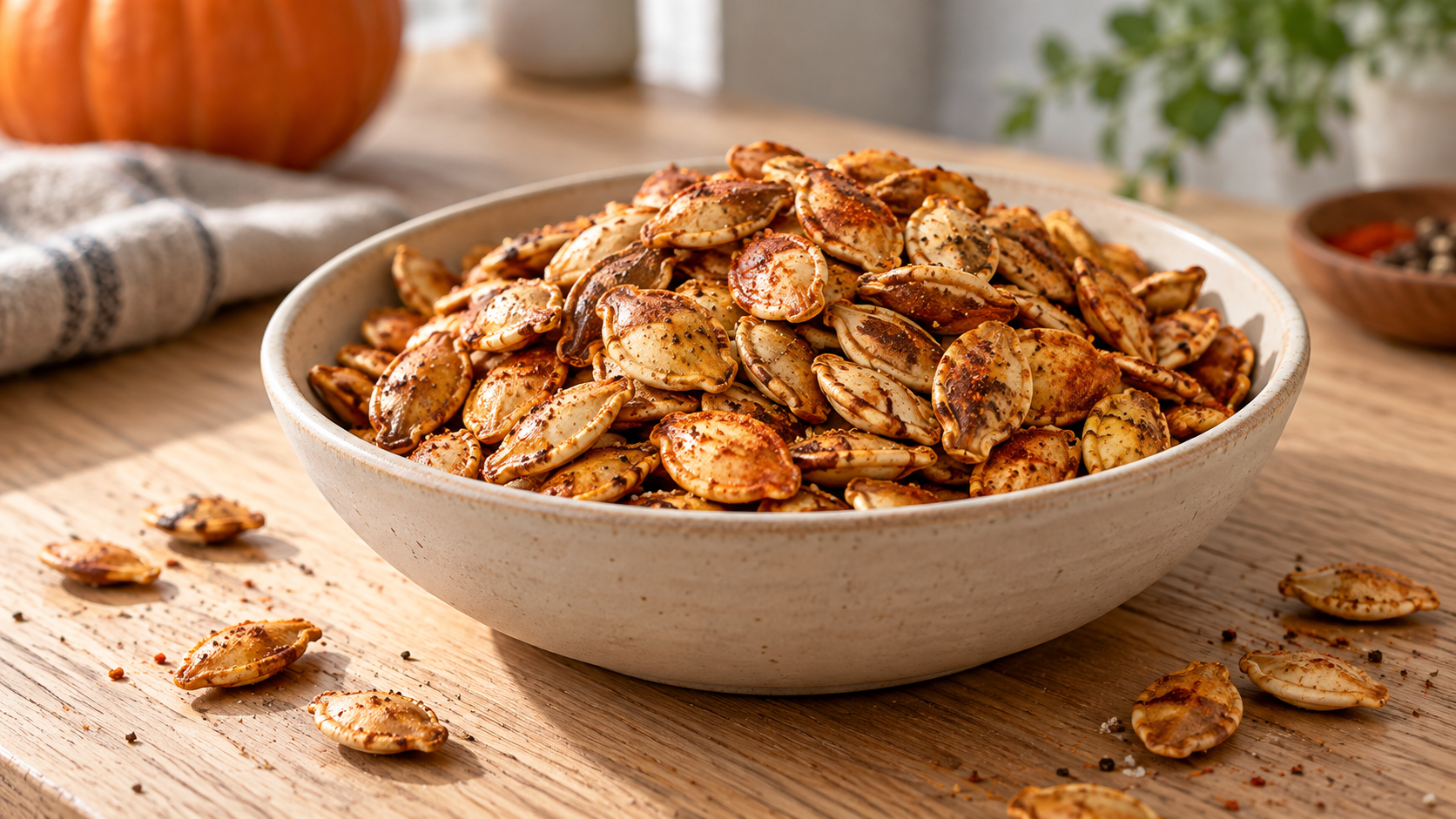
Yes, butternut squash seeds are completely edible and make a nutritious, zero-waste snack similar to pumpkin seeds. Simply rinse them to remove any pulp, pat them dry, and toss them with olive oil and salt before roasting at 325°F (163°C) until they are golden and crunchy.
What are the best main dishes to serve with roasted butternut squash?
This sweet and savory side dish pairs perfectly with hearty proteins like lemon-herb roasted chicken, garlic-crusted beef roast, or spiced turkey. For a vegetarian meal, try tossing the roasted cubes into a grain bowl with chickpeas, kale, and a creamy tahini dressing.