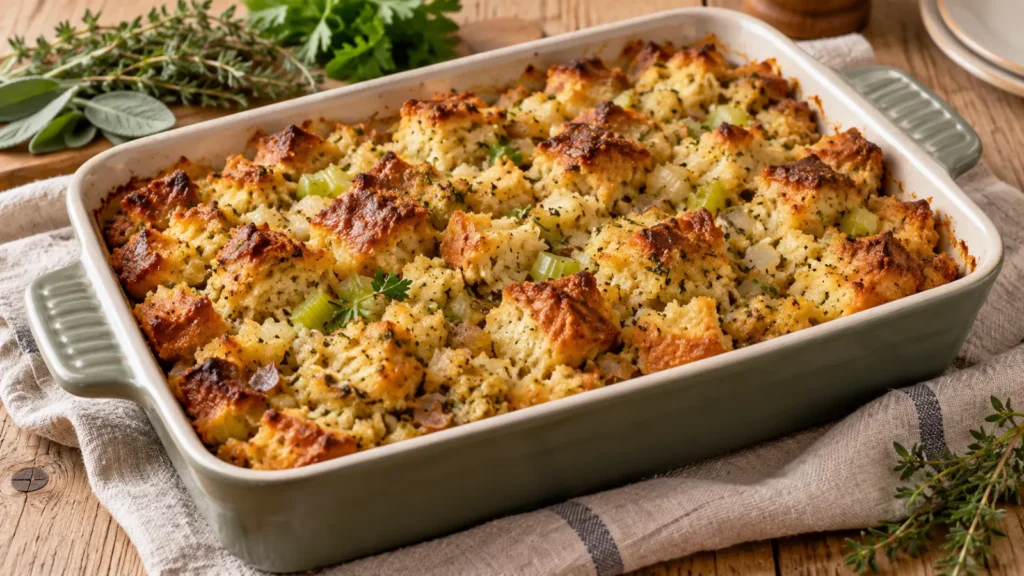
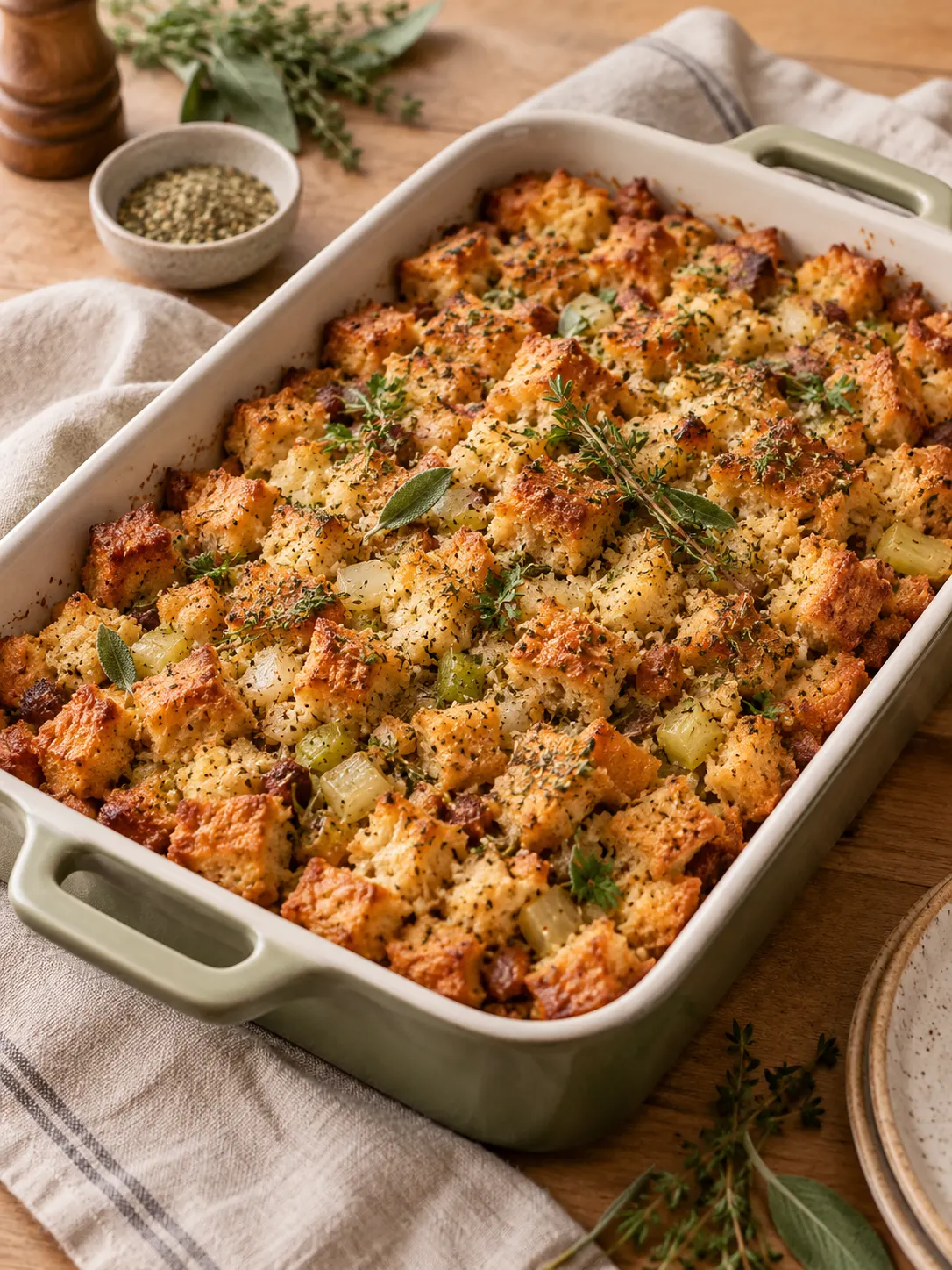
Traditional turkey stuffing remains the crowning side dish of the holiday dinner table and festive family meals. A well-crafted stuffing delivers an irresistible contrast of textures: a golden, crisp top crust that yields to a rich, fragrant, and custardy interior scented with butter, sweet onion, and aromatic herbs. While commercially prepared boxed mixes offer shortcuts, nothing compares to the deep, homestyle flavor of stuffing built from scratch with wholesome, real-food staples.
This reliable recipe uses simple pantry and produce staples to achieve bakery-worthy results. Whether you are assembling this dish alongside a holiday roast or serving it alongside casual weeknight poultry dishes, this guide walks you through every step to ensure your stuffing is deeply savory, moist throughout, and never soggy.
Table of Contents
Why You’ll Love This Recipe
- Balanced Texture: Bakes up with crunchy, browned edges across the surface while maintaining a tender, moist interior that holds its shape when scooped.
- Make-Ahead Friendly: Can be completely assembled up to 24 hours ahead, keeping your kitchen calm and organized on busy entertaining days.
- Pantry-Friendly Ingredients: Relies on straightforward aromatic vegetables, standard bread, and classic dried seasonings without requiring specialty shopping trips.
- Easy Moisture Control: Gives you a flexible broth ratio so you can customize the dish to your preferred density, whether you like your stuffing crumbly or custardy.
Key Ingredients & Substitutions
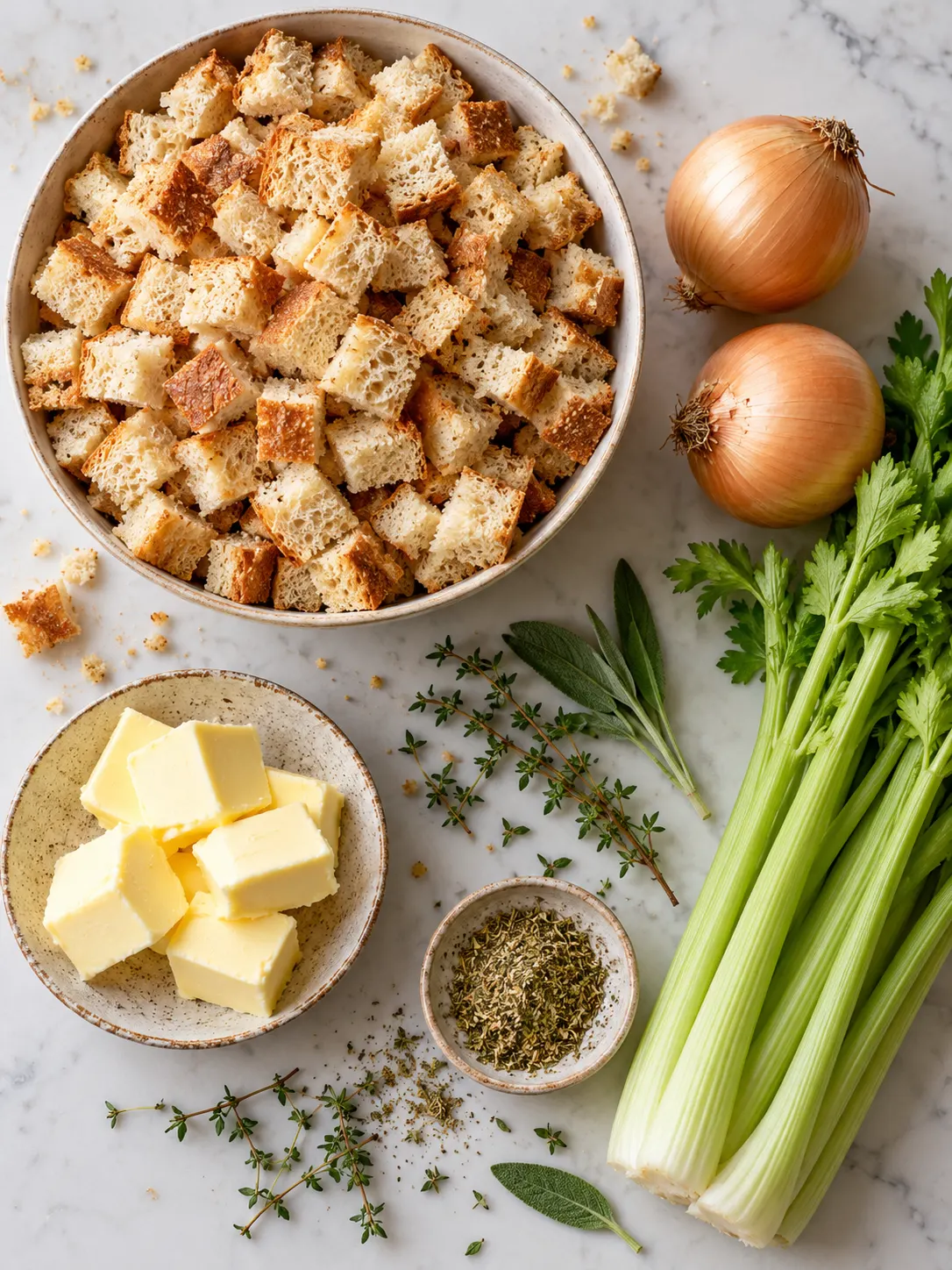
Every component in this recipe contributes directly to building structure and layered flavor: If you enjoy this recipe, be sure to also try our delicious Turkey Pinwheels.
- Dry Bread Cubes (12 cups): Sturdy white bread, potato bread, French loaf, or country sourdough cut into half-inch cubes form the architectural foundation of the dish. The bread must be thoroughly dried out so it can soak up rich melted butter and stock without turning mushy. You can use standard white sandwich bread or hearty whole-wheat bread. For gluten-free cooks, choose a dense gluten-free loaf that holds together when toasted.
- Yellow Onions (2 small): Diced finely, yellow onions provide foundational sweetness and moisture as they soften. Finely chopped white onions or sweet Vidalia onions work equally well.
- Celery Ribs (4 ribs): Chopped celery lends an essential earthy flavor and pleasant tender-crisp snap that cuts through the rich butter. Include the pale inner celery leaves for concentrated herbal aroma.
- Butter (⅔ cup): High-fat unsalted or salted butter is the flavor carrier of the entire dish. It coats the bread cubes, carries the fat-soluble compounds in the dried herbs, and produces that signature golden holiday aroma. If using salted butter, reduce any additional pinch of table salt you might add.
- Poultry Seasoning (1 ½ teaspoons): A classic blend dominated by dried sage, thyme, marjoram, rosemary, and black pepper. It imparts the unmistakable aroma associated with holiday dinners. If you do not have a pre-mixed poultry seasoning, combine equal parts rubbed sage, dried thyme, and a pinch of ground marjoram and rosemary.
- Chicken Broth (2 to 4 cups): High-quality low-sodium chicken broth hydrates the dried bread. Using low-sodium broth ensures you retain full control over the salt levels of the finished dish. If you prefer a richer profile, rich turkey stock is an exceptional direct substitute.
If you enjoy extra texture and savory depth, fold in cooked, browned turkey bacon or halal beef bacon, diced tart apples like Granny Smith, or sliced cremini mushrooms during the mixing stage.
Step-by-Step Instructions
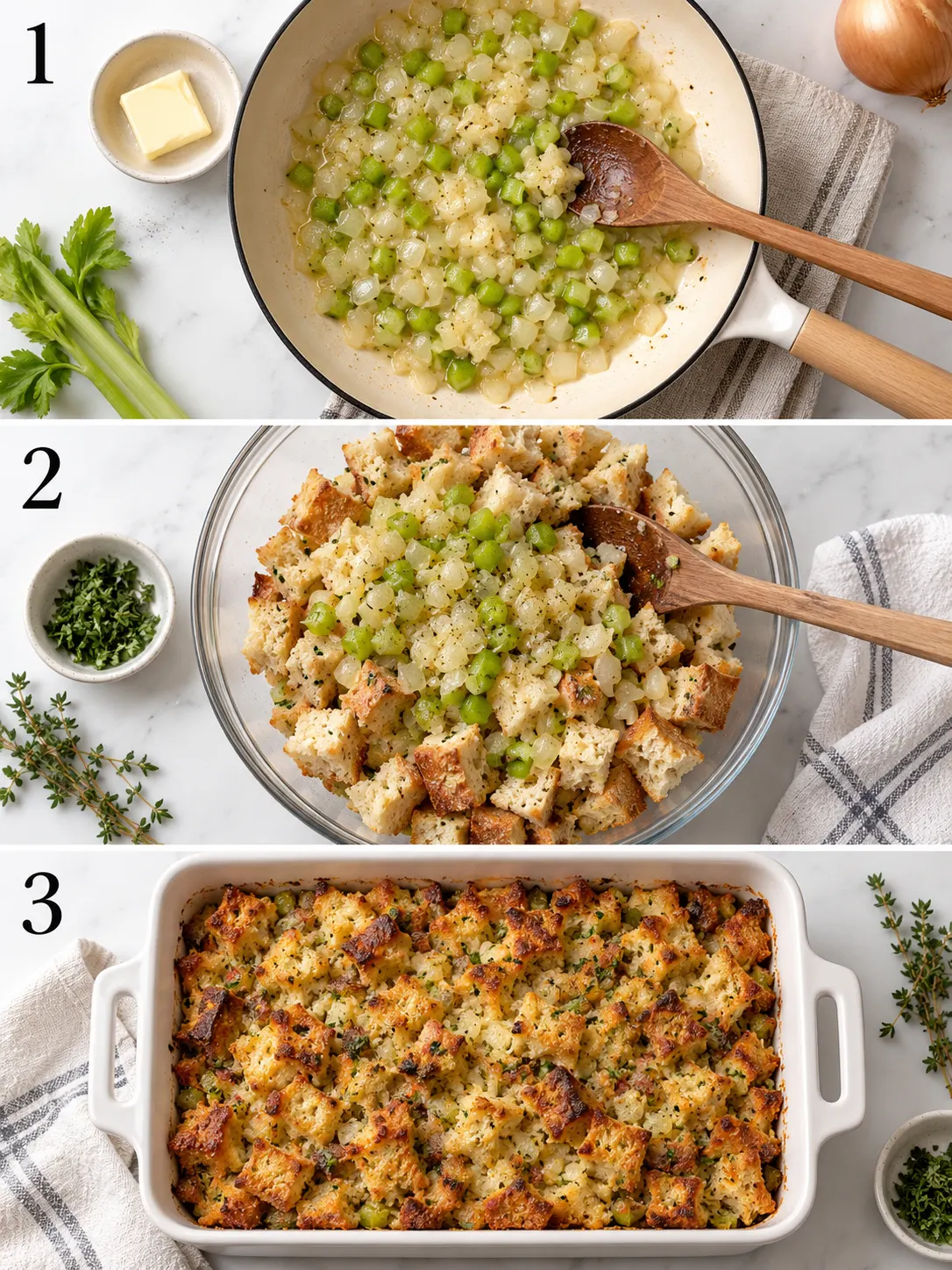
Follow these clear, step-by-step instructions to achieve an evenly baked, savory stuffing:
1. Prepare the Oven and Baking Dish
Preheat your oven to 350°F (175°C). Position an oven rack in the center position to ensure uniform heat distribution. Generously grease a 9×13-inch baking dish with butter or cooking spray to prevent the bottom layer from sticking and to encourage crisp edges.
2. Sauté the Aromatics
Melt the ⅔ cup of butter in a large skillet or Dutch oven over medium heat. Once the butter foams gently, add the finely diced yellow onions and sliced celery ribs. Cook the mixture for 8 to 10 minutes, stirring occasionally. The vegetables should become soft, translucent, and fragrant without taking on dark brown edges. Stir in the 1 ½ teaspoons of poultry seasoning during the final 60 seconds of cooking, allowing the dried herbs to bloom in the hot butterfat.
3. Combine the Base Ingredients
Place the 12 cups of dry bread cubes into an extra-large mixing bowl. Pour the warm butter, onion, and celery mixture directly over the bread cubes. Using a wide rubber spatula or clean hands, gently toss the ingredients together until the cubes are evenly coated in the herb-infused butter. Be gentle during this step to avoid crushing the bread cubes into small crumbs.
4. Hydrate with Broth
Begin by pouring 2 cups of chicken broth evenly over the seasoned bread mixture. Gently fold the bread to distribute the liquid. Check the consistency: the cubes should feel moist and soft to the touch, similar to a damp sponge, but there should be no puddle of liquid pooling at the bottom of the bowl. If the bread still feels brittle or dry in the center, gradually drizzle in an additional 1 to 2 cups of broth until the entire mixture is evenly hydrated.
5. Transfer to the Dish
Spoon the stuffing mixture into your prepared 9×13-inch baking dish. Spread it into an even layer, taking care not to pack or compress the bread down tightly. Keeping the mixture loose ensures the interior bakes into a light, tender texture rather than a heavy, dense loaf.
6. Cover and Bake
Cover the baking dish tightly with a sheet of heavy-duty aluminum foil to trap moisture. Place the dish on the center rack of your preheated oven and bake for 35 minutes. During this stage, the aromatics steam the bread cubes, allowing the flavors to fuse together thoroughly.
7. Uncover for a Crisp Finish
Carefully remove the aluminum foil. Return the dish to the oven uncovered and bake for an additional 10 minutes, or until the top layer turns deeply golden and crisp to the touch. Remove from the oven and let the stuffing rest for 5 to 10 minutes before serving.
If you are planning a full poultry feast, this stuffing pairs wonderfully with leftover turkey dishes. For creative meal ideas later in the week, take a look at our Turkey Sandwich Recipe and delicious Turkey Ham and Cheese Pinwheels.
Expert Chef Tips & Troubleshooting
- Dry the Bread Correctly: Fresh bread contains too much natural water and will quickly turn to paste when mixed with hot butter and stock. If using fresh bread, spread the cut cubes across two large rimmed baking sheets and bake them at 275°F (135°C) for 15 to 20 minutes until dry and firm to the touch, then let them cool completely.
- Perform the Squeeze Test: The exact quantity of broth you need depends heavily on the density of your bread. After adding the initial 2 cups of broth, pick up a cube and squeeze it lightly. It should hold together without releasing a stream of liquid. Add more broth only if dry, pale crumbs remain at the bottom of the bowl.
- Fixing Dry Stuffing: If your stuffing looks dry after uncovering, drizzle an extra ¼ cup of warm broth over the top surface before the final browning step.
- Fixing Pale Tops: If your oven heats unevenly and the top bread cubes have not browned after 10 minutes uncovered, switch your oven to the broil setting for 1 to 2 minutes. Watch the dish closely under the broiler, as dry bread edges can turn from golden to charred rapidly.
- Safe Internal Temperature: When serving stuffing cooked inside a bird or as a standalone casserole, always verify doneness with a digital food thermometer. Follow official recommendations for safe minimum internal temperatures to confirm the center of your dish registers at least 165°F (74°C) before taking it to the table. For general food handling guidance, refer to official food safety guidelines for leftovers.
Serving Suggestions & Pairings
This traditional stuffing is versatile enough to anchor festive menus or enhance weeknight comfort dinners:
- Holiday Accents: Spoon generous helpings beside roasted turkey breast, crisp-skinned roast chicken, or garlic-rubbed beef roasts. Top with smooth giblet gravy, classic poultry pan drippings, or tart homemade cranberry sauce.
- Vegetable Sides: Complement the savory starch with light, vibrant vegetable sides like steamed green beans tossed in lemon zest, roasted Brussels sprouts with balsamic reduction, or glazed Dutch carrots.
- Leftover Creations: Reheat leftover stuffing in a hot cast-iron skillet with a drop of butter to create crispy stuffing hash, or press a scoop of cold stuffing into a hot waffle iron for a crunchy sandwich base.
Storage, Make-Ahead & Reheating
- Make-Ahead Instructions: You can assemble the entire dish through Step 5 up to 24 hours in advance. Cover the baking dish tightly with aluminum foil and store it in the refrigerator. When ready to cook, let the cold dish sit at room temperature for 20 minutes while preheating the oven. Add an extra 5 to 10 minutes to the covered baking time to ensure the center warms through completely.
- Refrigeration: Store any cooled leftover stuffing in a shallow airtight container in the refrigerator within two hours of baking. Leftovers keep well for up to 3 to 4 days.
- Freezing: To freeze baked stuffing, divide it into meal-sized portions and place them in freezer-safe containers or airtight freezer bags with excess air pressed out. Freeze for up to 2 months. Thaw overnight in the refrigerator before reheating.
- Reheating for Best Texture: While microwaving works in a pinch, it tends to make bread cubes spongy. For the best texture, place leftovers in an oven-safe dish, sprinkle with a tablespoon of broth or dot with butter, cover with foil, and warm at 350°F (175°C) for 15 minutes. Uncover for the last 5 minutes to restore the crispy top crust.
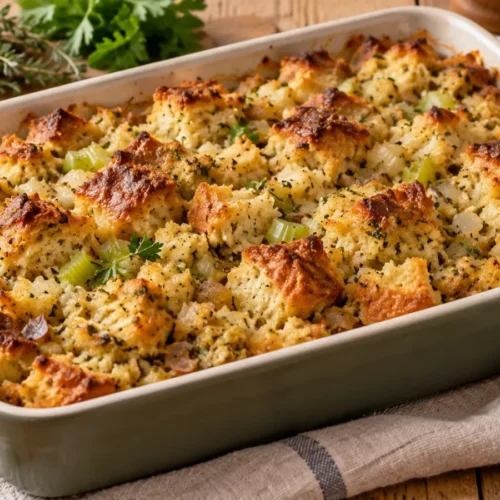
Turkey Stuffing Recipe with Bread, Celery, and Herbs

Equipment
- Large bowl
- 9×13-inch baking dish
- Oven
Ingredients
Bread
- 12 cups dry bread cubes
Aromatics
- 2 small yellow onions
- 4 ribs celery
Seasonings
- ⅔ cup butter
- 1 ½ teaspoons poultry seasoning
- 2 to 4 cups chicken broth
Instructions
- Preheat the oven to 350°F.
- Sauté the onions and celery in butter until they are softened.
- In a large bowl, combine the bread cubes, sautéed onion mixture, and poultry seasoning.
- Gradually add the chicken broth to the bread mixture, stirring until the bread is evenly moistened.
- Transfer the stuffing mixture to a greased 9×13-inch baking dish.
- Cover the dish with aluminum foil and bake for 35 minutes.
- Remove the foil and continue baking for an additional 10 minutes, or until the top is lightly browned.
Notes
- Calories: 320
- Protein: 10g
- Saturated fat: 8g
- Cholesterol: 20mg
- Sodium: 450mg
Frequently Asked Questions
What is the best type of bread to use for turkey stuffing?
Sturdy, dense breads with a tight crumb—such as day-old country white bread, French bread, challah, or potato bread—produce the best stuffing. Delicate commercial sandwich bread can break down too quickly, whereas dense, crusty loaves absorb liquid while maintaining a pleasant, distinct chew throughout the baking process.
Can I prepare the turkey stuffing ahead of time and refrigerate or freeze it?
Yes, you can assemble the stuffing in the baking dish, cover it securely with foil, and refrigerate it unbaked for up to 24 hours before baking. You can also freeze the completely baked and cooled dish in an airtight container for up to 2 months; simply thaw it overnight in the refrigerator before reheating it in a 350°F oven.
How do I ensure the turkey stuffing is cooked through and safe to eat?
Bake the stuffing covered at 350°F for 35 minutes, then uncover for 10 minutes so heat penetrates the middle while browning the surface. To ensure absolute food safety, insert a digital probe thermometer into the very center of the casserole; the temperature must reach a minimum of 165°F (74°C) before serving.
How can I make my stuffing richer without making it soggy?
To add rich flavor without adding excess water, sauté your onions and celery in good-quality butter until fully softened, and stir the dried herbs directly into the hot fat to release their aroma. When adding liquid, stick to the lower range of broth (around 2 cups) and increase liquid gradually, ensuring every bread cube is hydrated without liquid pooling in the bowl.