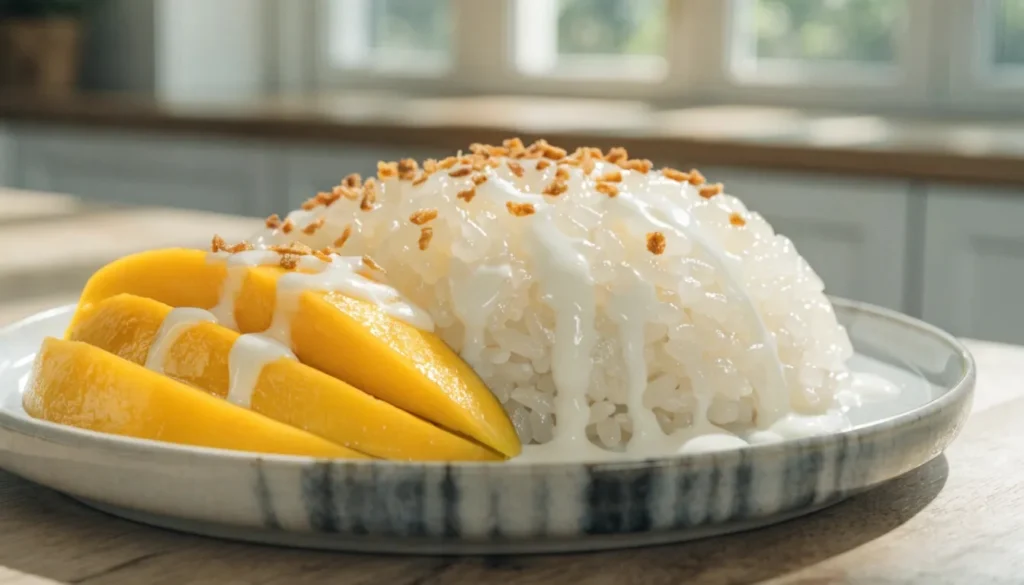
If you have ever visited Thailand or dined at a traditional Thai restaurant, you have likely fallen in love with the iconic dessert known as Khao Niao Mamuang. This classic treat perfectly balances the natural sweetness of ripe tropical fruit with the rich, creamy indulgence of salted coconut milk, all poured over perfectly tender glutinous rice.
Finding a mango sticky rice recipe easy enough to recreate at home can feel intimidating, but it is actually incredibly straightforward. With just a handful of pantry staples and the right technique, you can bring the vibrant flavors of Southeast Asia right into your own kitchen. Whether you know it from your local street food market or recognize it as the famous Mango Sticky Rice recipe Stardew Valley players cook up virtually, this dish is guaranteed to impress.
In this comprehensive guide, we will walk you through everything you need to know to achieve restaurant-quality results. From selecting the right type of rice to mastering the sweet coconut syrup, you will soon be making the best mango sticky rice recipe with absolute confidence.
Why This is the Best Mango Sticky Rice Recipe
When it comes to crafting a mango sticky rice recipe authentic to its roots, culinary technique is everything. The true secret to a mango sticky rice recipe Thai chefs swear by lies in the “maceration” process. Mixing piping hot steamed rice directly with hot, sweet coconut syrup allows the grains to absorb the rich liquid without becoming mushy.
While examining the health benefits of mangoes or the nutritional profile of coconut milk proves this dessert has wholesome, natural components, it remains a wonderfully indulgent treat. If you want to make this mango sticky rice recipe healthy-ish and are mindful of the impact of added sugars on health, you can slightly reduce the sugar in the syrup. Finally, garnishing with traditional yellow mung beans or sesame seeds adds essential crunch and the added nutritional value of sesame seeds.
The Essential Ingredients: What to Buy
To achieve the perfect chewy texture, you must buy the correct ingredients.
- The Rice: You absolutely must use Thai sweet rice (also labeled as glutinous rice or sticky rice). Do not substitute this with Japanese sushi rice or mochigome, as they have different starch contents and will become overly gummy.
- The Coconut Milk: Full-fat coconut milk is non-negotiable. We highly recommend using a premium brand like Aroy-D coconut milk for the most authentic, creamy consistency.
- The Equipment: While makeshift setups work, investing in a traditional bamboo steamer basket ensures the steam circulates perfectly around the grains.
Alternative Cooking Methods: Instant Pot & Rice Cooker
Traditional steaming yields the absolute best texture, but modern appliances can save time. If you are looking for a mango sticky rice recipe rice cooker method or want to use an Instant Pot, follow these adapted instructions:
Rice Cooker Method:
Glutinous rice requires significantly less water than standard jasmine rice. After soaking and draining your rice, place it in the rice cooker. Use a strict ratio of 1 cup of soaked rice to 3/4 cup of water. Press the standard “Cook” or “White Rice” button.
Instant Pot Method:
Place a steamer trivet in the Instant Pot and add 1 cup of water to the bottom. Put your soaked and drained rice into a heat-safe bowl, and add exactly 2/3 cup of boiling water to the rice bowl. Place the bowl on the trivet. Cook on High Pressure for 12 minutes, followed by a 10-minute natural release.
Ingredients
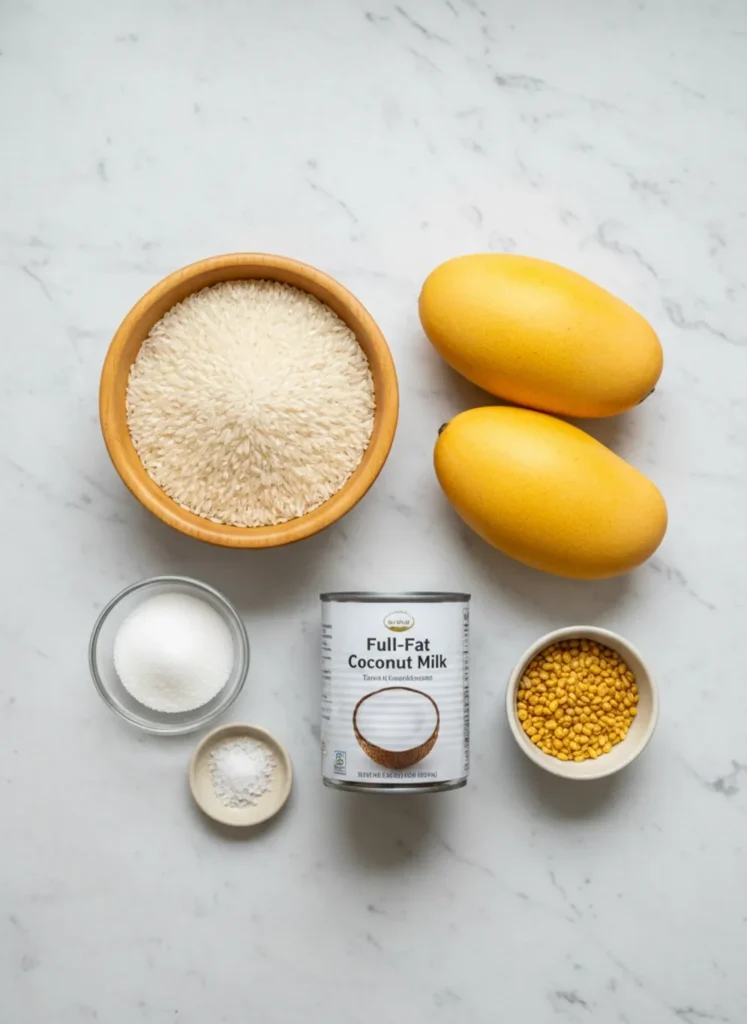
- 1 cup Thai glutinous sweet rice
- 2 ripe mangoes (Ataulfo, Manila, or Champagne)
- 1 can (13.5 oz) full-fat coconut milk
- 1/2 cup granulated white sugar or palm sugar
- 1/2 tsp salt
- 1 tbsp split yellow mung beans or toasted sesame seeds
- 1 tsp rice flour or cornstarch
Instructions
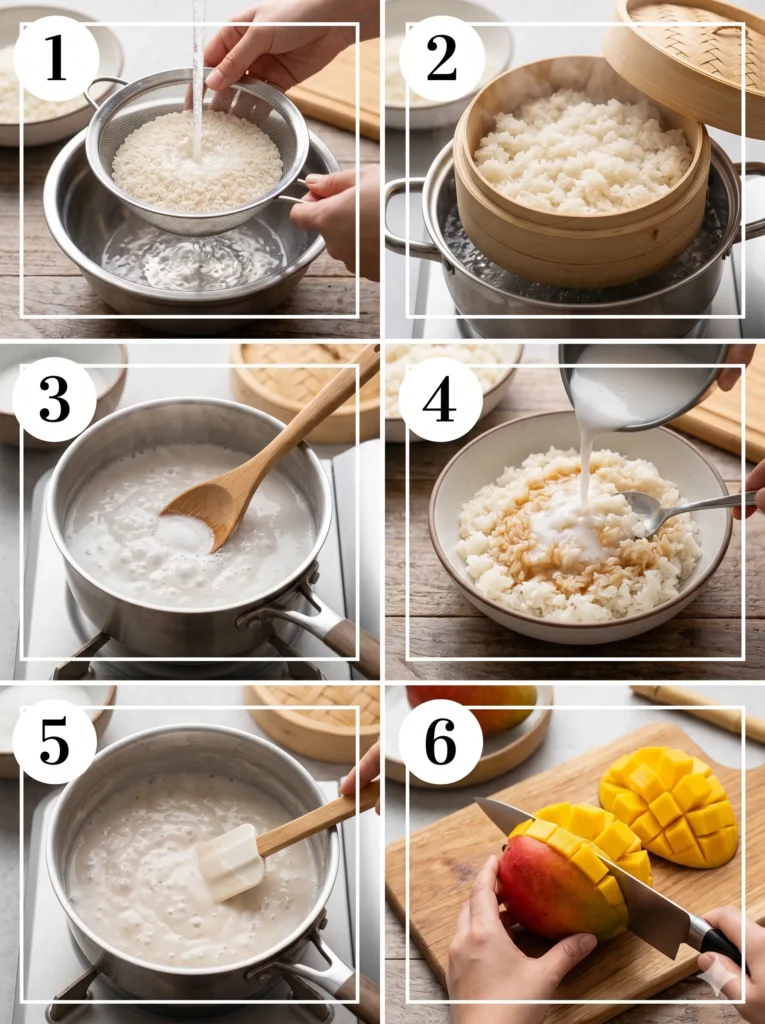
- Wash the glutinous rice thoroughly until the water runs clear, then soak it in water for 4 to 24 hours.
- Drain the soaked rice and steam it using a bamboo basket or makeshift steamer with cheesecloth for 20 to 25 minutes until tender.
- Prepare the sweet coconut syrup by gently heating 3/4 cup of the full-fat coconut milk with the sugar and 1/4 tsp salt in a saucepan until dissolved.
- Transfer the hot steamed rice to a bowl, pour the hot sweet coconut syrup over it, mix well, and let it macerate covered for 20 minutes.
- Make the salted coconut topping by simmering the remaining coconut milk, 1/4 tsp salt, and a slurry of rice flour or cornstarch until slightly thickened.
- Serve the warm sticky rice with sliced fresh mangoes, drizzle with the salted coconut cream sauce, and garnish with crispy yellow mung beans or sesame seeds.
Advance Prep, Storage, and Reheating
Sticky rice notoriously hardens when refrigerated, making proper storage and reheating crucial for leftover success.
- Storage: Store the components separately. Keep the mangoes and coconut sauce in separate airtight containers in the fridge for up to 3 days. Store the cooked sticky rice tightly wrapped in plastic wrap or in an airtight container at room temperature if consuming within 12 hours; otherwise, refrigerate it.
- Reheating: To soften hardened refrigerated sticky rice, place it in a microwave-safe bowl, cover it with a damp paper towel, and microwave in 30-second bursts until soft and steaming. Alternatively, re-steam the rice in your bamboo basket for 5-7 minutes until tender.
Serving Suggestions and Global Variations
This sweet, creamy dessert shines brightest when served after an authentic Thai main course like Pad Thai, Green Curry, or a spicy Papaya Salad (Som Tum). The rich coconut milk perfectly cools the palate after a chili-heavy meal.
However, home cooks often incorporate this dish into diverse, global fusion menus. If you are hosting a fusion dinner, you might creatively transition from hearty, savory dishes like a Cajun sausage and rice skillet or spicy hot honey chicken and rice bowls to this refreshing sweet finish. For an Asian-inspired banquet, serving an authentic Anjappar egg fried rice or a variation like this Anjappar egg fried rice recipe makes a fantastic savory prelude before bringing out the dessert.
The love for this flavor profile spans across cultures; for instance, you’ll find similar tropical flavor adaptations in the popular mango sticky rice recipe Panlasang Pinoy style, which caters beautifully to Filipino dessert palates using local mango varieties.
Frequently Asked Questions (FAQs)
What is the best variety of mango to use, and can I make this recipe with frozen mangoes during the off-season?
The best mangoes for this recipe are Ataulfo, Manila, or Champagne mangoes because of their buttery, melt-in-your-mouth texture and lack of fibrous strings. While fresh is always best, you can absolutely use thawed frozen mango chunks during the off-season. Just be aware the texture will be slightly softer.
Is mango sticky rice naturally vegan and gluten-free, and can I use low-fat coconut milk?
Yes, this recipe is naturally 100% vegan and gluten-free! While you can use low-fat coconut milk, we strongly advise against it. Full-fat coconut milk is essential for achieving the rich, luxurious consistency that makes this dessert iconic.
Why is my sticky rice too mushy or too hard, and how can I fix the texture?
If your rice is too mushy, it was likely boiled directly in too much water instead of steamed, or soaked for too long. If it is too hard, it may not have been soaked long enough (aim for at least 4 hours) or the steam couldn’t penetrate the rice evenly in the basket. Ensure your steamer allows for good airflow.
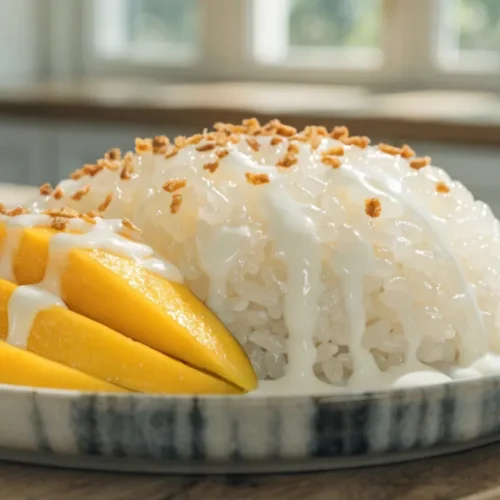
mango sticky rice recipe

Ingredients
- 1 cup Thai glutinous sweet rice
- 2 ripe mangoes Ataulfo, Manila, or Champagne
- 1 can 13.5 oz full-fat coconut milk
- 1/2 cup granulated white sugar or palm sugar
- 1/2 tsp salt
- 1 tbsp split yellow mung beans or toasted sesame seeds
- 1 tsp rice flour or cornstarch
Instructions
- Wash the glutinous rice thoroughly until the water runs clear, then soak it in water for 4 to 24 hours.
- Drain the soaked rice and steam it using a bamboo basket or makeshift steamer with cheesecloth for 20 to 25 minutes until tender.
- Prepare the sweet coconut syrup by gently heating 3/4 cup of the full-fat coconut milk with the sugar and 1/4 tsp salt in a saucepan until dissolved.
- Transfer the hot steamed rice to a bowl, pour the hot sweet coconut syrup over it, mix well, and let it macerate covered for 20 minutes.
- Make the salted coconut topping by simmering the remaining coconut milk, 1/4 tsp salt, and a slurry of rice flour or cornstarch until slightly thickened.
- Serve the warm sticky rice with sliced fresh mangoes, drizzle with the salted coconut cream sauce, and garnish with crispy yellow mung beans or sesame seeds.