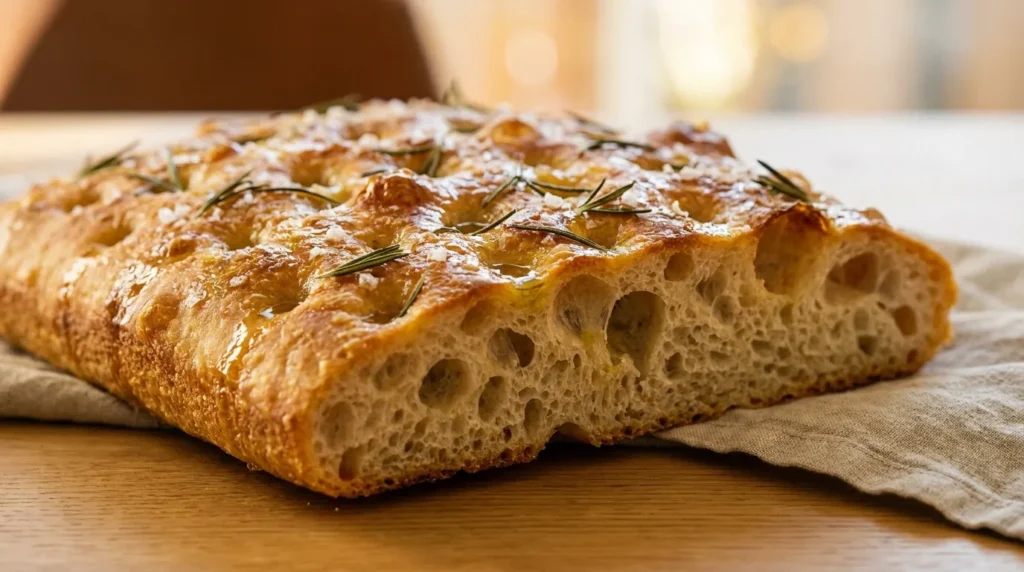
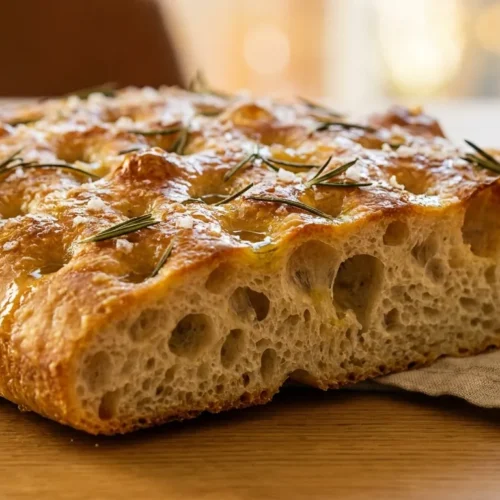
There is something deeply satisfying about pulling a sizzling, golden-brown pan of fresh Sourdough bread out of the oven. If you are looking for a baking project that yields spectacular results with minimal hands-on effort, you have found it. This naturally leavened dough creates an airy, bubbly crumb encased in a shatteringly crisp, olive-oil-infused crust.
Table of Contents
Whether you are an experienced baker or just starting your wild yeast journey, this guide will walk you through the process of making a bakery-quality loaf right in your home kitchen. The magic lies in the slow fermentation, which develops complex flavors and incredible textures that simply cannot be rushed.
The Magic of Naturally Leavened Dough
When it comes to artisanal baking, crafting a true sourdough bread is a rite of passage. In French baking circles, this style is often referred to as focaccia au levain, a beautiful hybrid of Italian tradition and wild yeast fermentation. If you are searching for the ultimate sourdough recette, this is the perfect starting point because the high hydration does all the heavy lifting for you.
Achieving what many consider focaccia the perfect loaf isn’t about intense kneading or complicated shaping techniques. Instead, it relies on time and a few gentle stretch-and-folds to build gluten. The long overnight fermentation allows the wild yeast to slowly work its magic, creating a web of gluten that traps gases and results in those highly sought-after, cavernous bubbles.
Health Benefits and Quality Ingredients
Choosing to bake with a wild yeast culture rather than commercial yeast offers more than just a superior flavor profile. The slow fermentation process helps break down phytates in the flour, unlocking the Health benefits of sourdough bread by making the nutrients more bioavailable and the bread generally easier to digest. Furthermore, the natural fermentation process supports the Role of prebiotics in gut health, feeding the good bacteria in your digestive system.
Another star component of this recipe is the generous pour of quality fat. Focaccia is inherently rich in oil, which gives it that signature fried-bread texture on the bottom. By using a high-quality extra virgin olive oil, you are infusing the dough with incredible flavor while also taking advantage of the Heart-healthy benefits of extra virgin olive oil.
If you happen to have any leftovers that go stale—though it rarely lasts that long—you can cube the bread and repurpose it. Leftover focaccia makes incredible croutons, or it can be used as a savory base for a hearty sourdough french toast casserole.
Understanding the Baker’s Math
Getting the right focaccia ratio is key to a successful bake. This specific recipe focaccia dough sits at around 80% hydration, meaning the weight of the water is 80% of the weight of the flour. This high water content is exactly what creates the light, jiggly dough necessary for those iconic dimples.
While this guide focuses on a classic savory preparation with sea salt and rosemary, the dough is incredibly versatile. You can even adapt the base to create sweet variations. For example, some inventive bakers top their dimpled dough with butter, cinnamon, and sugar to create a unique focaccia cinnamon roll hybrid that is perfect for a decadent weekend brunch.
Ingredients
To make this sourdough focaccia recipe, gather the following ingredients:
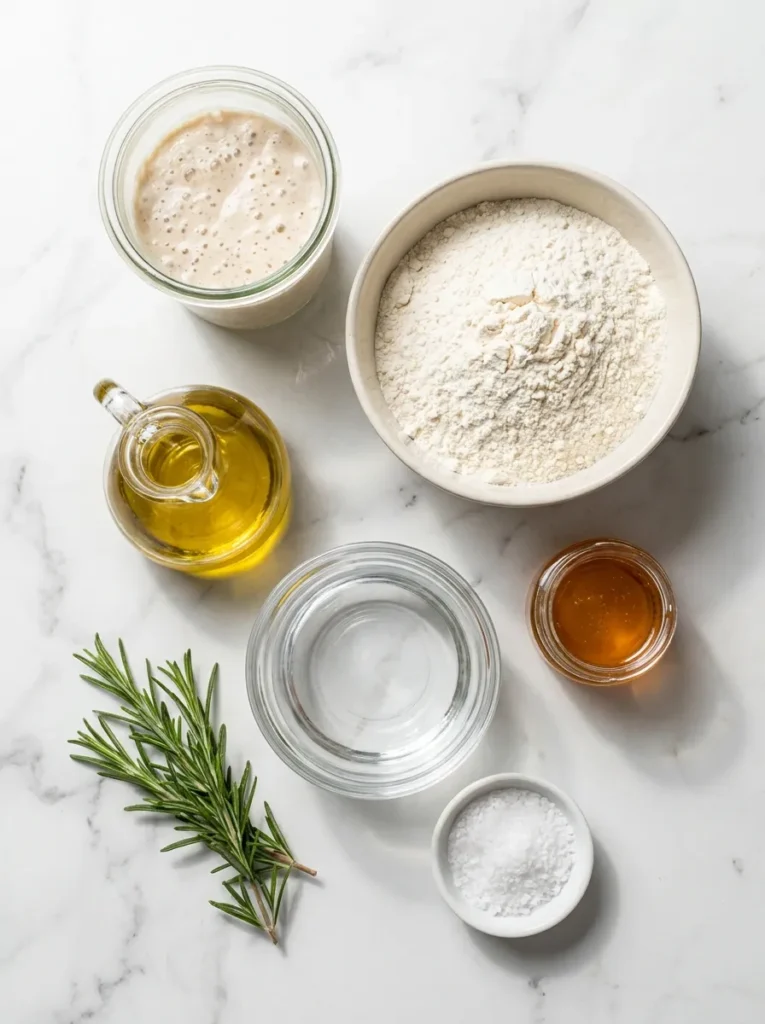
- 100g active sourdough starter
- 400g filtered water
- 15g honey
- 500g bread flour (or all-purpose flour)
- 10g flaky sea salt (like Maldon)
- 50g extra virgin olive oil (plus more for pan and dimpling)
- Optional toppings: fresh rosemary, olives, sun-dried tomatoes, or cheese
Instructions
Follow these steps carefully to achieve the perfect bake:
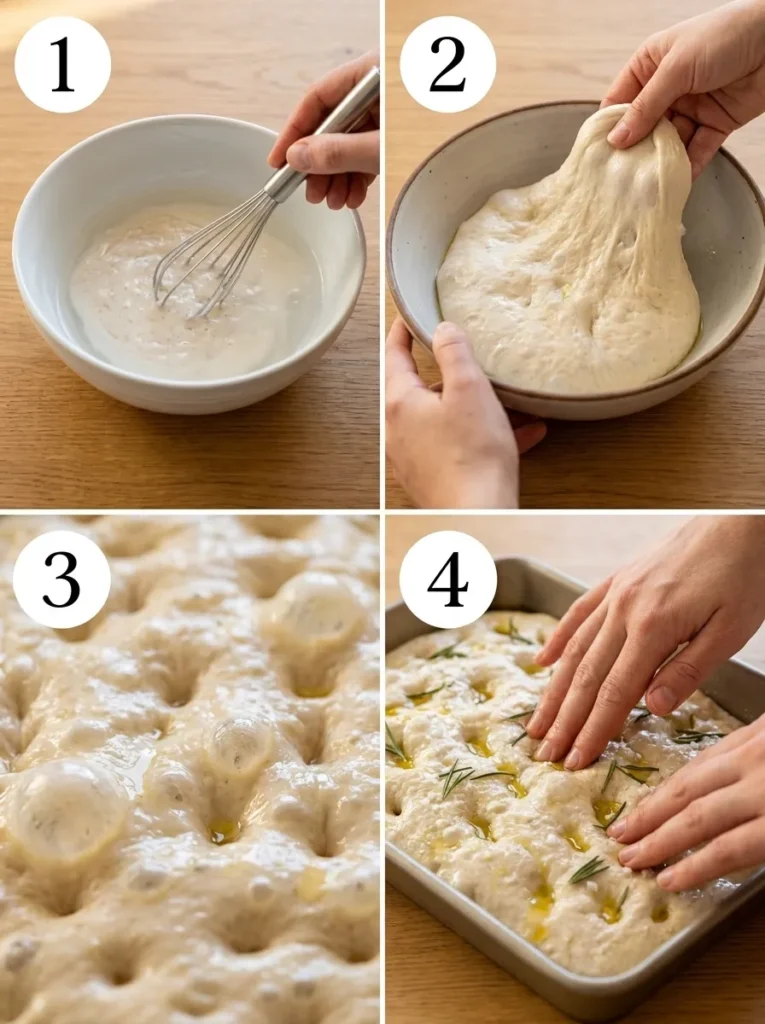
- Feed your sourdough starter and wait until it is active, bubbly, and passes the float test.
- In a large mixing bowl, whisk together the active sourdough starter, filtered water, and honey until dissolved.
- Add the bread flour and salt, mixing until a wet, sticky, and shaggy dough forms.
- Cover the bowl and perform a series of 3 to 4 stretch and folds every 30 minutes to build gluten structure and pass the windowpane test.
- Cover the bowl tightly and let the dough undergo a long, slow bulk fermentation overnight at room temperature until it has doubled in size and is full of bubbles.
- Generously coat a 9×13-inch baking pan with extra virgin olive oil.
- Transfer the dough into the pan, gently stretching it toward the edges, and let it proof for its second rise for 2 to 4 hours until very puffy and jiggly.
- Coat your hands in olive oil and press your fingers deep into the dough to create signature dimples all over the surface.
- Drizzle with additional olive oil, sprinkle generously with flaky sea salt, and add any desired toppings like rosemary or olives.
- Bake in a preheated oven until the crust is oil-crisped and deeply golden brown, then transfer to a wire rack to cool completely before slicing.
Frequently Asked Questions
How do I adjust my sourdough focaccia baking schedule for a cold kitchen versus a warm summer kitchen?
Temperature acts as an invisible ingredient in sourdough baking. In a warm summer kitchen, your bulk fermentation might only take 4 to 6 hours. Conversely, in a cold winter kitchen, the dough may need 10 to 14 hours overnight to double in size. Always watch the dough, looking for a jiggly texture and visible bubbles, rather than strictly watching the clock.
Can I use sourdough discard instead of active starter to make this focaccia without adding commercial yeast?
Making a true sourdough discard focaccia usually requires a pinch of commercial yeast for lift, as the wild yeast in discard is mostly dormant. If you want to avoid commercial yeast entirely, you must use an active, fed starter. If you attempt it with discard, be prepared for a significantly longer fermentation time, and the rise may be much denser.
The dough is very wet and sticky; how do I dimple it and handle it without it sticking to my fingers?
High hydration dough is notoriously sticky. The secret to handling it without frustration is oil. Before you attempt to dimple the dough, pour a generous amount of olive oil over the surface of the bread and coat your fingers entirely in oil. The oil creates a barrier, allowing your fingers to press deep into the pan without the dough clinging to your skin.
What is the best way to store and reheat sourdough focaccia to bring back its original crispy crust and soft interior?
To keep your bread fresh, store it in an airtight container at room temperature for up to 3 days. To bring back that glorious oil-crisped crust, do not use the microwave. Instead, place the slices on a baking sheet and reheat them in a 350°F (175°C) oven for 5 to 8 minutes until the exterior sizzles and the interior is warm and soft.
Sourdough Focaccia Recipe

Ingredients
- 100 g active sourdough starter
- 400 g filtered water
- 15 g honey
- 500 g bread flour or all-purpose flour
- 10 g flaky sea salt like Maldon
- 50 g extra virgin olive oil plus more for pan and dimpling
- Optional toppings: fresh rosemary olives, sun-dried tomatoes, or cheese
Instructions
- Feed your sourdough starter and wait until it is active, bubbly, and passes the float test.
- In a large mixing bowl, whisk together the active sourdough starter, filtered water, and honey until dissolved.
- Add the bread flour and salt, mixing until a wet, sticky, and shaggy dough forms.
- Cover the bowl and perform a series of 3 to 4 stretch and folds every 30 minutes to build gluten structure and pass the windowpane test.
- Cover the bowl tightly and let the dough undergo a long, slow bulk fermentation overnight at room temperature until it has doubled in size and is full of bubbles.
- Generously coat a 9×13-inch baking pan with extra virgin olive oil.
- Transfer the dough into the pan, gently stretching it toward the edges, and let it proof for its second rise for 2 to 4 hours until very puffy and jiggly.
- Coat your hands in olive oil and press your fingers deep into the dough to create signature dimples all over the surface.
- Drizzle with additional olive oil, sprinkle generously with flaky sea salt, and add any desired toppings like rosemary or olives.
- Bake in a preheated oven until the crust is oil-crisped and deeply golden brown, then transfer to a wire rack to cool completely before slicing.
Notes
Nutritional Information
Serving Size: 1 slice- Calories: 210
- Total Fat: 7g
- Saturated Fat: 1g
- Sodium: 320mg
- Carbohydrates: 31g
- Dietary Fiber: 1g
- Sugars: 1g
- Protein: 5g