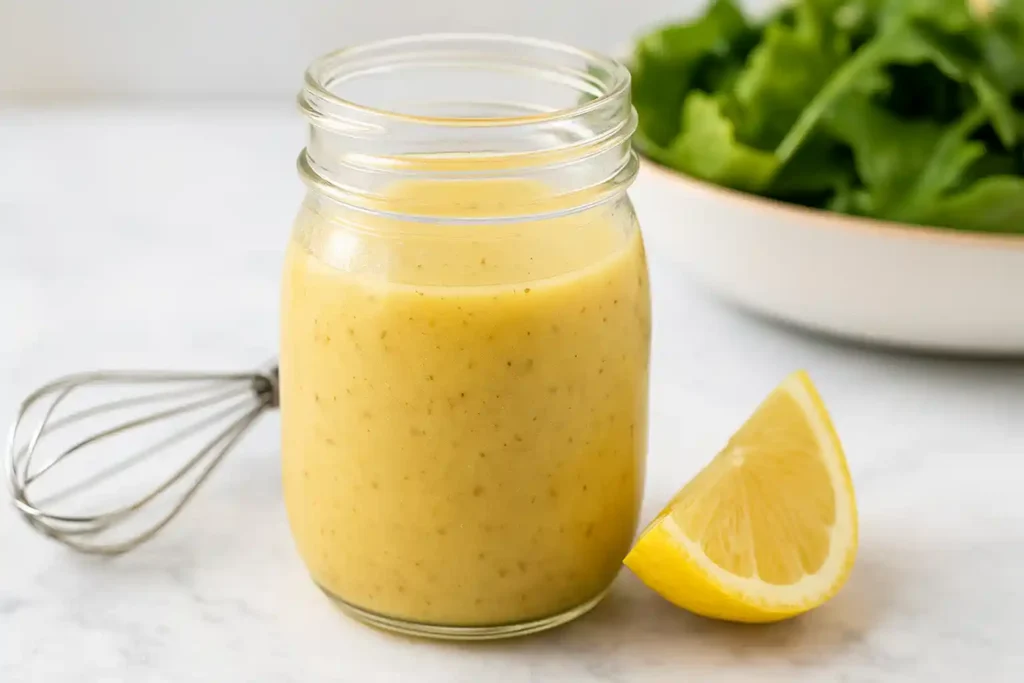
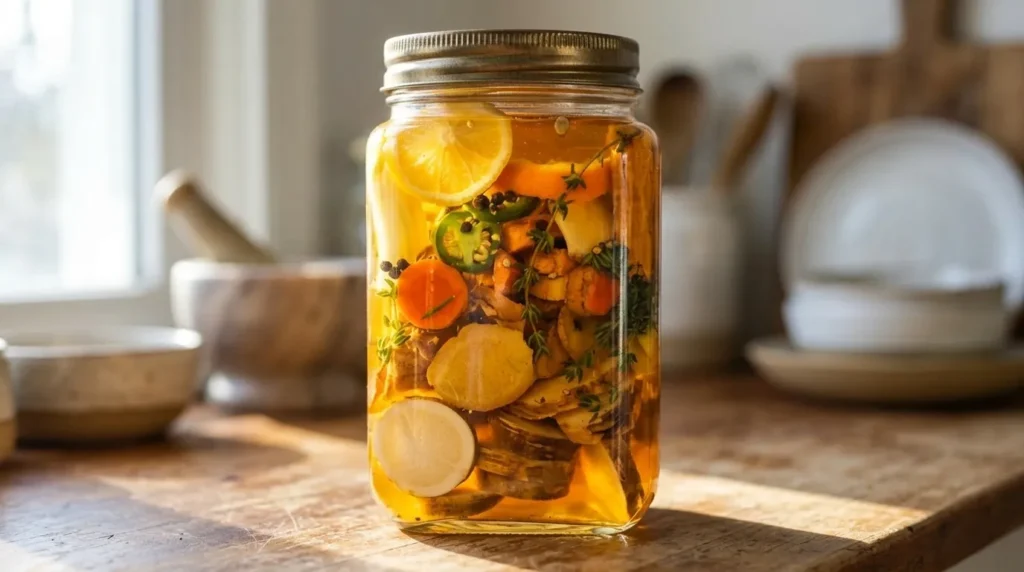
As the seasons shift and the chill in the air becomes more pronounced, many of us begin searching for natural ways to support our wellness and vitality. Enter one of the most revered and potent herbal tonics in the natural health world. Crafting the perfect fire cider recipe at home is not just a culinary project; it is a time-honored tradition of blending powerful, pungent ingredients into a daily wellness shot that invigorates the senses.
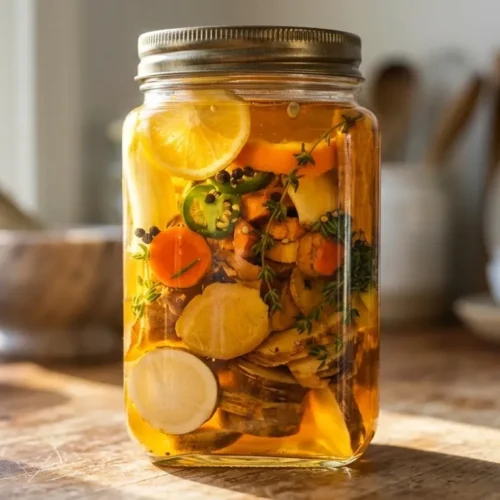
If you have never experienced the sharp, spicy, and sweet kick of this legendary tonic, you are in for a treat. A staple in folk herbalism, this infusion is renowned for its bold flavor profile and warming qualities. By combining everyday roots, alliums, and citrus, you create a dynamic liquid that serves as a kitchen remedy, a culinary flavor enhancer, and a daily ritual all rolled into one. Making your own brew at home is incredibly rewarding and surprisingly simple. You do not need specialized equipment—just a little bit of chopping, a reliable mason jar, and the patience to let time work its magic.
Table of Contents
The Roots of the Traditional Fire Cider Recipe
The concept of infusing vinegar with pungent herbs has been around for centuries, but the specific formulation we know and love today has a distinct origin. When exploring modern herbalism, you will inevitably encounter the famous fire cider recipe Rosemary Gladstar popularized in the late 1970s. As a renowned herbalist, she championed the idea of accessible, kitchen-based wellness, encouraging people to take their health into their own hands using common ingredients.
Since Gladstar introduced her foundational blend, countless variations have blossomed across the wellness community. Those studying formal herbal practices often rely on the foundational fire cider recipe Herbal Academy teaches its students. Meanwhile, wildcrafters might seek out a fire cider recipe Appalachian Forager style, incorporating wild-harvested roots and local hot peppers. Others are drawn to a fire cider recipe Matriarch medicine approach, which honors ancestral healing practices and intuitive ingredient blending.
Powerful Ingredients and Their Benefits
The secret to this potent tonic lies in its bold, raw ingredients. Each component is specifically chosen for its robust flavor and natural properties:
- Raw Apple Cider Vinegar: Serving as the base of the infusion, numerous studies have highlighted the health benefits of apple cider vinegar, particularly its role in supporting digestion and overall metabolic function.
- Ginger Root: Famous for its warming sensation, exploring the anti-inflammatory properties of ginger reveals why it is a staple in winter remedies.
- Turmeric Root: This golden root is essential for a well-rounded tonic. Understanding how turmeric helps reduce inflammation shows why it is so highly valued.
- Garlic and Onions: A heavy dose of alliums is non-negotiable. Researching garlic’s role in supporting the immune system proves why it is central to this brew.
- Citrus and Hot Peppers: Lemons, oranges, and spicy peppers round out the flavor, adding bright acidity, vitamin C, and a fiery kick that clears the sinuses.
Customizing Your Heat Scale and Kid-Friendly Guides
One of the best aspects of a homemade tonic is the ability to control the spice level. Customize your brew using this simple pepper heat scale:
- Mild & Zesty: Use 1 Jalapeño (seeds removed).
- Medium Fire: Use 1 to 2 Serrano peppers.
- Sinus-Clearing Heat: Use 1 Habanero or Cayenne pepper.
Kid-Friendly Administration:
Because this recipe contains raw honey and intense spices, it should never be given to infants under one year old. For older children, straight fire cider is usually too harsh. Instead, dilute 1/2 teaspoon of the finished tonic into a small cup of warm water or apple juice to provide a gentle, kid-friendly immune boost.
Culinary Uses and Creative Pairings
While many people take this tonic straight from the spoon, it is also a phenomenal culinary ingredient. If you are looking for a fire cider recipe for weight loss, incorporating it into your daily diet as a salad dressing base or a morning wellness shot is a highly effective strategy. While some wellness seekers explore trending metabolic aids like Japanese Mounjaro, many holistic practitioners prefer returning to foundational, natural tonics like fire cider to support daily digestion and vitality.
In the kitchen, the possibilities are endless:
- Digestive Starter: Try taking a shot of this spicy brew before sitting down to a comforting bowl of healthy lentil soup to stimulate your digestion.
- Cooling Contrast: If the heat is too intense, you can follow it up with a cooling, sweet strawberry banana milkshake to soothe your palate.
- Zero-Waste Cooking: Don’t throw away the solid ingredients once you strain your liquid! You can finely mince the leftover solids and fold them into a zesty black bean and corn relish, or blend a spoonful into a creamy artichoke spinach and white bean dip for an unexpected kick.
- Savory Marinades: The strained liquid makes an incredible, tenderizing marinade for rich, gamey meats like ground venison.
Troubleshooting & Spoilage Guide
Fermentation and infusions can sometimes look intimidating. Here is a quick guide to what is normal and what is not:
- Blue or Green Garlic: Do not panic! This is a completely harmless, natural enzymatic reaction that occurs when garlic mixes with the acidic vinegar. It is 100% safe to consume.
- Cloudy Floaters (The “Mother”): If you see cloudy, stringy blobs forming in your jar, congratulations! This is the ACV “mother” (beneficial bacteria) growing. It is highly nutritious and completely safe.
- Actual Mold: Mold will appear fuzzy and will only grow on the surface, usually on ingredients that have floated above the vinegar line. If you see fuzzy white, green, or black mold on the surface, discard the batch. Prevent this by ensuring all ingredients stay submerged.
Adapting the Brew to Your Needs
While the steeping process takes time, some people search for a quick fire cider recipe. If you are in a rush, you can gently heat the vinegar (without bringing it to a boil) and let the herbs steep for 3 to 4 days rather than weeks, though a traditional 4-week steep yields the most potent results.
During the winter months, a reliable fire cider recipe for colds becomes a household necessity. The combination of heat, acidity, and raw honey helps soothe the throat and clear the sinuses, making it a comforting companion when you are feeling under the weather.
Ingredients
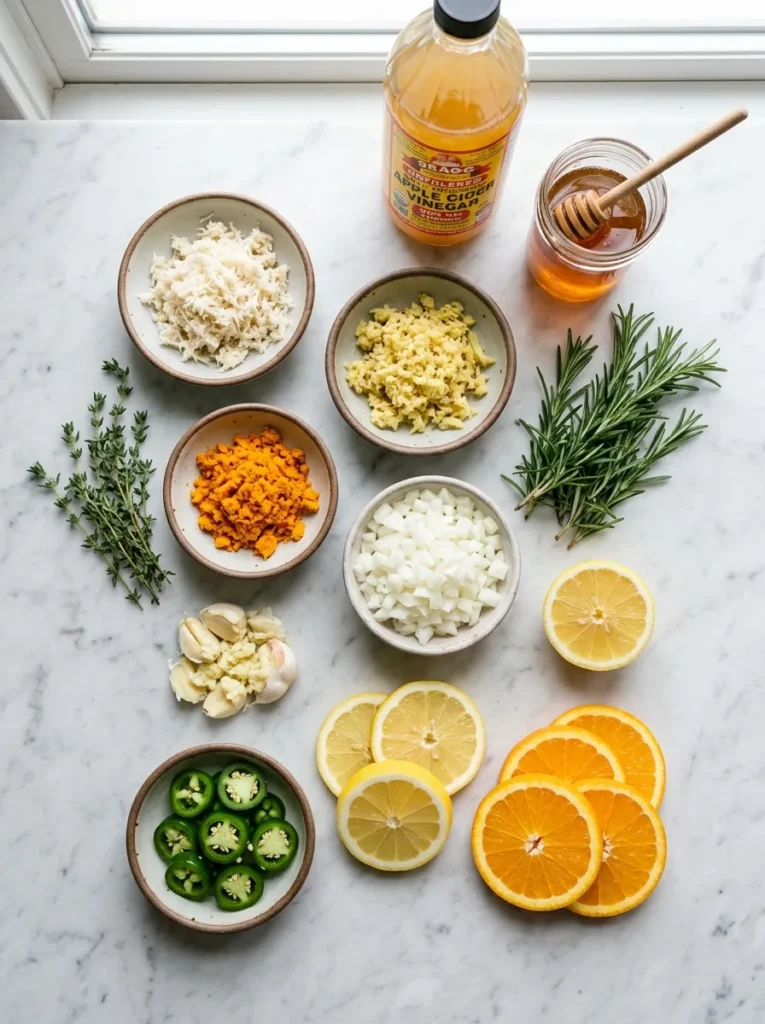
1/2 cup fresh horseradish root, grated
1/2 cup fresh ginger root, grated
1/2 cup fresh turmeric root, grated
1 medium onion, chopped
10 cloves garlic, crushed
1 to 2 hot peppers (jalapeno, habanero, or cayenne), sliced
1 lemon, sliced
1 orange, sliced
2 sprigs fresh rosemary
2 sprigs fresh thyme
3 to 4 cups raw unpasteurized Apple Cider Vinegar (ACV)
1/4 cup raw honey (added after infusion)
Instructions
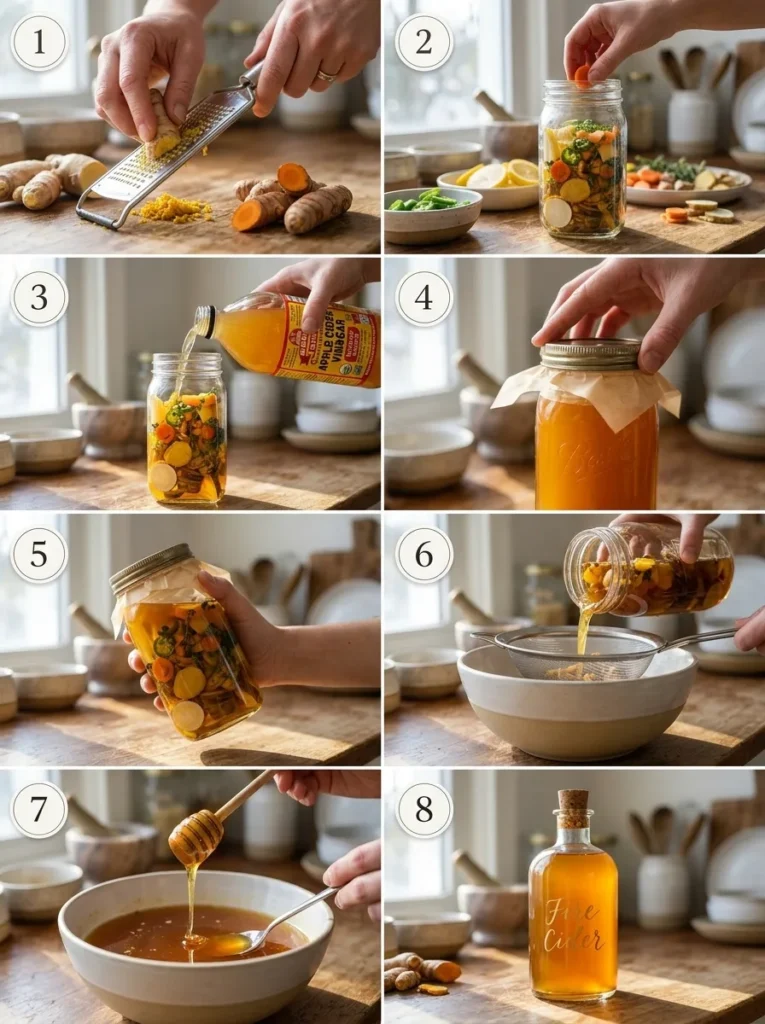
- Prepare all raw ingredients by grating, chopping, or slicing the horseradish, ginger, turmeric, onion, garlic, hot peppers, and citrus.
- Place all the prepared solid ingredients and fresh herbs into a large, clean glass mason jar.
- Pour the raw unpasteurized Apple Cider Vinegar into the jar, ensuring all ingredients are completely submerged to prevent spoilage.
- Place a piece of parchment or wax paper over the top of the jar before screwing on the metal lid to prevent the vinegar from rusting the metal.
- Store the sealed jar in a cool, dark place like a pantry for 2 to 6 weeks, shaking the jar daily to encourage infusion.
- Once the infusion period is complete, strain the mixture through cheesecloth, a fine mesh sieve, or a clean coffee filter into a clean bowl, squeezing the solids to extract all the liquid.
- Stir raw honey into the strained liquid to balance the heat and sweeten to your preference.
- Store the finished fire cider in a sealed jar in the refrigerator and take 1 to 2 tablespoons daily, or use as an addition to salad dressings, teas, and marinades.
Frequently Asked Questions
Who should not take fire cider?
Individuals with severe acid reflux, stomach ulcers, or gastrointestinal issues should exercise caution, as the high acidity and spicy peppers can cause irritation. Additionally, those on specific medications (like blood thinners or diabetes medications) should consult a healthcare provider before consuming it regularly.
What are the ingredients for fire cider?
A traditional blend includes grated horseradish, ginger, turmeric, chopped onions, crushed garlic, hot peppers, citrus slices, and fresh herbs like rosemary and thyme. These solid ingredients are submerged in raw, unpasteurized apple cider vinegar and later sweetened with raw honey.
How long does fire cider need to sit before drinking?
For the best flavor and maximum potency, the mixture should sit in a cool, dark place for 2 to 6 weeks. Four weeks is generally considered the sweet spot for a traditional infusion.
Do you drink fire cider daily?
Yes, many people take 1 to 2 tablespoons daily as a preventative wellness tonic. During times of seasonal illness, some choose to take a tablespoon every few hours. It can be taken straight, diluted in water, or mixed into teas and juices.
Medical Disclaimer: The information provided in this article is for educational purposes only and has not been evaluated by the Food and Drug Administration (FDA). This recipe is not intended to diagnose, treat, cure, or prevent any disease. Always consult with a qualified healthcare professional before adding new herbal remedies or supplements to your routine, especially if you are pregnant, nursing, or taking medications.
FIRE CIDER RECIPE

Ingredients
- 1/2 cup fresh horseradish root grated
- 1/2 cup fresh ginger root grated
- 1/2 cup fresh turmeric root grated
- 1 medium onion chopped
- 10 cloves garlic crushed
- 1 to 2 hot peppers jalapeno, habanero, or cayenne, sliced
- 1 lemon sliced
- 1 orange sliced
- 2 sprigs fresh rosemary
- 2 sprigs fresh thyme
- 3 to 4 cups raw unpasteurized Apple Cider Vinegar ACV
- 1/4 cup raw honey added after infusion
Instructions
- Prepare all raw ingredients by grating, chopping, or slicing the horseradish, ginger, turmeric, onion, garlic, hot peppers, and citrus.
- Place all the prepared solid ingredients and fresh herbs into a large, clean glass mason jar.
- Pour the raw unpasteurized Apple Cider Vinegar into the jar, ensuring all ingredients are completely submerged to prevent spoilage.
- Place a piece of parchment or wax paper over the top of the jar before screwing on the metal lid to prevent the vinegar from rusting the metal.
- Store the sealed jar in a cool, dark place like a pantry for 2 to 6 weeks, shaking the jar daily to encourage infusion.
- Once the infusion period is complete, strain the mixture through cheesecloth, a fine mesh sieve, or a clean coffee filter into a clean bowl, squeezing the solids to extract all the liquid.
- Stir raw honey into the strained liquid to balance the heat and sweeten to your preference.
- Store the finished fire cider in a sealed jar in the refrigerator and take 1 to 2 tablespoons daily, or use as an addition to salad dressings, teas, and marinades.